


 Cart
Cart
 sales@molnova.com



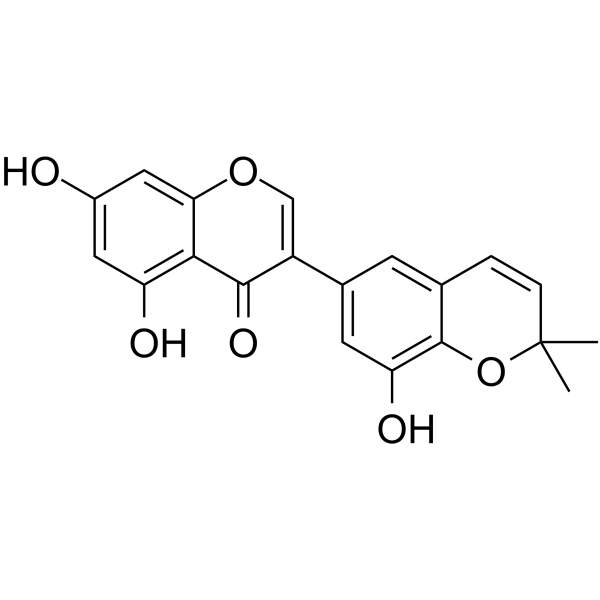
Semilicoisoflavone B
CAS No. 129280-33-7
Semilicoisoflavone B( —— )
Catalog No. M31447 CAS No. 129280-33-7
Semilicoisoflavone B can inhibit sorbitol formation of rat lens incubated with a high concentration of glucose, indicates that it may be effective for preventing osmotic stress in hyperglycemia.
Purity : >98% (HPLC)
 COA
Datasheet
HNMR
HPLC
MSDS
Handing Instructions
COA
Datasheet
HNMR
HPLC
MSDS
Handing Instructions
| Size | Price / USD | Stock | Quantity |
| 2MG | 525 | In Stock |


|
| 5MG | 1007 | In Stock |
|
| 100MG | Get Quote | In Stock |
|
| 200MG | Get Quote | In Stock |
|
| 500MG | Get Quote | In Stock |
|
| 1G | Get Quote | In Stock |
|
Biological Information
-
Product NameSemilicoisoflavone B
-
NoteResearch use only, not for human use.
-
Brief DescriptionSemilicoisoflavone B can inhibit sorbitol formation of rat lens incubated with a high concentration of glucose, indicates that it may be effective for preventing osmotic stress in hyperglycemia.
-
DescriptionSemilicoisoflavone B can inhibit sorbitol formation of rat lens incubated with a high concentration of glucose, indicates that it may be effective for preventing osmotic stress in hyperglycemia.
-
In Vitro——
-
In Vivo——
-
Synonyms——
-
PathwayOthers
-
TargetOther Targets
-
Recptor——
-
Research Area——
-
Indication——
Chemical Information
-
CAS Number129280-33-7
-
Formula Weight352.3
-
Molecular FormulaC20H16O6
-
Purity>98% (HPLC)
-
SolubilityIn Vitro:?DMSO : 50 mg/mL (141.91 mM)
-
SMILES——
-
Chemical Name——
Shipping & Storage Information
-
Storage(-20℃)
-
ShippingWith Ice Pack
-
Stability≥ 2 years
Reference



-
3-Methylhistamine di...
N tau-methylhistamine is one of the histamine metabolites. N tau-methylhistamine in plasma and urine is a good parameter for histamine release and the determination of this histamine metabolite is generally less hampered by possible artifacts (due to basophil disrupture a very short half-life time or bacterial production) than determinations of histamine itself.
-
Apraglutide TFA
Apraglutide TFA (FE 203799 TFA), a synthetic 33-amino-acid peptide and a long-acting GLP-2 analogue, enhances adaptation and linear intestinal growth in a neonatal piglet model of short bowel syndrome with total resection of the ileum.
-
Concizumab
Concizumab is an anti-TFPI monoclonal antibody (IgG4 type) that selectively binds to the Kunitz protease inhibitor (KPI) 2 domain of TFPI, blocking its interaction with the FXa active site.
