


 Cart
Cart
 sales@molnova.com



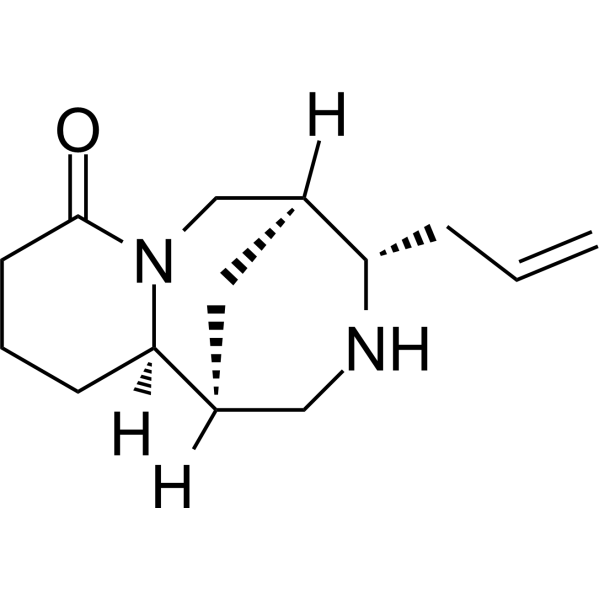
Angustifoline
CAS No. 550-43-6
Angustifoline( —— )
Catalog No. M31233 CAS No. 550-43-6
Angustifoline has activity against gram-positive bacteria. It inhibits human colon cancer cell growth by inducing autophagy along with mitochondrial-mediated apoptosis, suppression of cell invasion and migration and stimulating G2/M cell cycle arrest.
Purity : >98% (HPLC)
 COA
Datasheet
HNMR
HPLC
MSDS
Handing Instructions
COA
Datasheet
HNMR
HPLC
MSDS
Handing Instructions
| Size | Price / USD | Stock | Quantity |
| 5MG | 414 | In Stock |


|
| 50MG | Get Quote | In Stock |
|
| 100MG | Get Quote | In Stock |
|
| 200MG | Get Quote | In Stock |
|
| 500MG | Get Quote | In Stock |
|
| 1G | Get Quote | In Stock |
|
Biological Information
-
Product NameAngustifoline
-
NoteResearch use only, not for human use.
-
Brief DescriptionAngustifoline has activity against gram-positive bacteria. It inhibits human colon cancer cell growth by inducing autophagy along with mitochondrial-mediated apoptosis, suppression of cell invasion and migration and stimulating G2/M cell cycle arrest.
-
DescriptionAngustifoline has activity against gram-positive bacteria. It inhibits human colon cancer cell growth by inducing autophagy along with mitochondrial-mediated apoptosis, suppression of cell invasion and migration and stimulating G2/M cell cycle arrest.
-
In Vitro——
-
In Vivo——
-
Synonyms——
-
PathwayOthers
-
TargetOther Targets
-
Recptor——
-
Research Area——
-
Indication——
Chemical Information
-
CAS Number550-43-6
-
Formula Weight234.3
-
Molecular FormulaC14H22N2O
-
Purity>98% (HPLC)
-
Solubility——
-
SMILES——
-
Chemical Name——
Shipping & Storage Information
-
Storage(-20℃)
-
ShippingWith Ice Pack
-
Stability≥ 2 years
Reference
molnova catalog



related products
-
L-Glutamic Acid γ-p-...
L-γ-Glutamyl-p-nitroanilide Monohydrate is a glutamic acid derivative.
-
cis-Aegineoside
cis-Aegineoside
-
Garetosmab
Garetosmab (REGN 2477) is A whole-human IgG4 monoclonal antibody that selectively inhibits activin A and acts on COVID-19 44.
