


 Cart
Cart
 sales@molnova.com



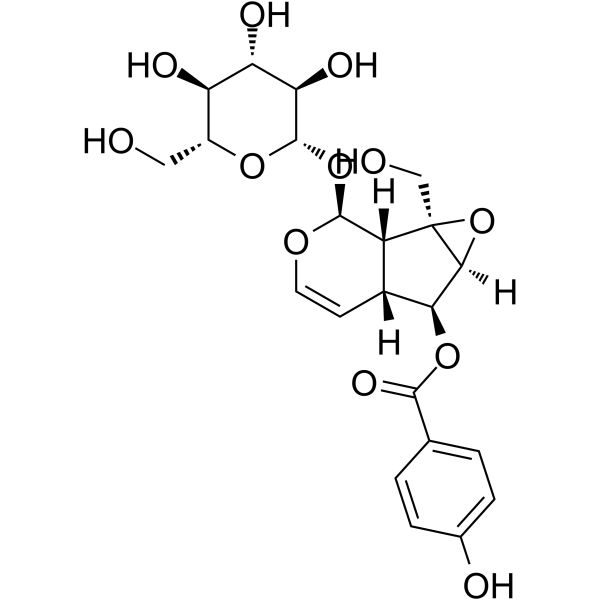
Catalposide
CAS No. 6736-85-2
Catalposide( —— )
Catalog No. M31039 CAS No. 6736-85-2
Catalposide is a potent inducer of (HO)-1 isolated from Catalpa ovate G. Don (Bignoniaceae). Catalposide possesses antioxidant, anti-apoptotic, anti-microbial, anti-tumoral, and anti-inflammatory properties.
Purity : >98% (HPLC)
 COA
Datasheet
HNMR
HPLC
MSDS
Handing Instructions
COA
Datasheet
HNMR
HPLC
MSDS
Handing Instructions
| Size | Price / USD | Stock | Quantity |
| 2MG | 364 | In Stock |


|
| 5MG | 652 | In Stock |
|
| 10MG | 928 | In Stock |
|
| 25MG | 1378 | In Stock |
|
| 50MG | 1823 | In Stock |
|
| 100MG | Get Quote | In Stock |
|
| 200MG | Get Quote | In Stock |
|
| 500MG | Get Quote | In Stock |
|
| 1G | Get Quote | In Stock |
|
Biological Information
-
Product NameCatalposide
-
NoteResearch use only, not for human use.
-
Brief DescriptionCatalposide is a potent inducer of (HO)-1 isolated from Catalpa ovate G. Don (Bignoniaceae). Catalposide possesses antioxidant, anti-apoptotic, anti-microbial, anti-tumoral, and anti-inflammatory properties.
-
DescriptionCatalposide is a potent inducer of (HO)-1 isolated from Catalpa ovate G. Don (Bignoniaceae). Catalposide possesses antioxidant, anti-apoptotic, anti-microbial, anti-tumoral, and anti-inflammatory properties.
-
In VitroCatalposide (1-1000 ng/mL) could inhibit TNF-a, IL-1β, and IL-6 productions in RAW 264.7 macrophages.
-
In Vivo——
-
Synonyms——
-
PathwayOthers
-
TargetOther Targets
-
Recptor——
-
Research Area——
-
Indication——
Chemical Information
-
CAS Number6736-85-2
-
Formula Weight482.4
-
Molecular FormulaC22H26O12
-
Purity>98% (HPLC)
-
Solubility——
-
SMILES——
-
Chemical Name——
Shipping & Storage Information
-
Storage(-20℃)
-
ShippingWith Ice Pack
-
Stability≥ 2 years
Reference
molnova catalog



related products
-
Methyl glycyrrhizate
Methyl Glycyrrhizate, is the ester of methyl alcohol and Glycyrrhizic Acid,derived from Glycyrrhiza uralensis Fisch.
-
Dulozafone
Dulozafone (F1933) has an anti- showed anticonvulsant activity in a brain amygdala ignition model and protected fully ignited rats from generalized seizures.
-
Tezepelumab
Tezepelumab (AMG 157) is a humanized monoclonal antibody (IgG2λ) targeting TSLP that prevents TSLP from interacting with its heterodimer receptor. Tezepelumab can be used to study advanced asthma disease.
