


 Cart
Cart
 sales@molnova.com



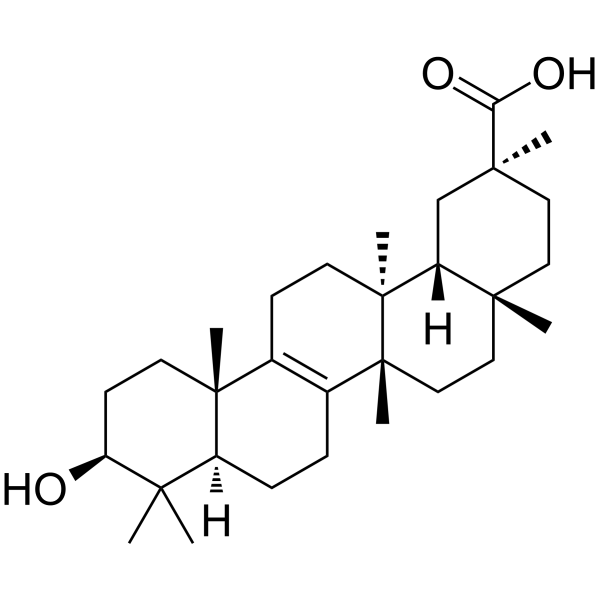
Bryonolic acid
CAS No. 24480-45-3
Bryonolic acid( —— )
Catalog No. M30903 CAS No. 24480-45-3
Bryonolic acid is a triterpenoid found in the Cucurbitaceae family of plants. Bryonolic acid has anti-inflammatory and antioxidant activities. It has been found to exhibit antineoplastic activity.
Purity : >98% (HPLC)
 COA
Datasheet
HNMR
HPLC
MSDS
Handing Instructions
COA
Datasheet
HNMR
HPLC
MSDS
Handing Instructions
| Size | Price / USD | Stock | Quantity |
| 5MG | 731 | In Stock |


|
| 10MG | 1026 | In Stock |
|
| 100MG | Get Quote | In Stock |
|
| 200MG | Get Quote | In Stock |
|
| 500MG | Get Quote | In Stock |
|
| 1G | Get Quote | In Stock |
|
Biological Information
-
Product NameBryonolic acid
-
NoteResearch use only, not for human use.
-
Brief DescriptionBryonolic acid is a triterpenoid found in the Cucurbitaceae family of plants. Bryonolic acid has anti-inflammatory and antioxidant activities. It has been found to exhibit antineoplastic activity.
-
DescriptionBryonolic acid is a triterpenoid found in the Cucurbitaceae family of plants. Bryonolic acid has anti-inflammatory and antioxidant activities. It has been found to exhibit antineoplastic activity.
-
In VitroBryonolic acid exerts anti-allergic activity by inhibiting homologous passive cutaneous anaphylaxis and delayed hypersensitivity. Bryonolic acid reduces nitric oxide by suppressing inducible nitric oxide synthase expression, indicating anti-inflammatory activity. In rat adrenal pheochromocytoma (PC12) cells, Bryonolic acid against N-methyl-D-aspartate (NMDA)-induced neurotoxicity, indicating it as a candidate neuroprotective agent for cerebral ischemic treatment.Bryonolic acid (1-200 μM) inhibits acyl-coA: cholesterol acyl transferase (ACAT) activity in rat liver microsomes in a concentration-dependent manner, blocking the biosynthesis of the cholesterol fatty acid ester tumour promoter. Bryonolic acid inhibits ACAT in intact cancer cells with an IC50 of 12.6 μM. Bryonolic acid inhibits both clonogenicity and invasiveness in MCF-7 MB-231, U87 and 3T3-EA cells.
-
In VivoBryonolic acid (500 mg/kg; i.p.; once) potently induces HO-1 in a manner dependent on the Nrf2-Keap1 pathway. Animal Model:Wild-type and Nrf2-/- mice Dosage:500 mg/kg.Administration:i.p.; once Result:Induced HO-1 in a manner dependent on the Nrf2-Keap1 pathway.
-
Synonyms——
-
PathwayOthers
-
TargetOther Targets
-
Recptor——
-
Research Area——
-
Indication——
Chemical Information
-
CAS Number24480-45-3
-
Formula Weight456.7
-
Molecular FormulaC30H48O3
-
Purity>98% (HPLC)
-
Solubility——
-
SMILES——
-
Chemical Name——
Shipping & Storage Information
-
Storage(-20℃)
-
ShippingWith Ice Pack
-
Stability≥ 2 years
Reference
molnova catalog



related products
-
Epoxomicin
Epoxomicin is a selective proteasome inhibitor with anti-inflammatory activity, inhibits primarily the CH-L activity of the 20S proteasome.
-
Turkesterone
Turkesterone is a phytoecdysteroid possessing an 11alpha-hydroxyl group, also is an analogue of the insect steroid hormone 20-hydroxyecdysone.
-
RG 14620
RG14620 is an epidermal growth factor receptor (EGFR) inhibitor.
