


 Cart
Cart
 sales@molnova.com



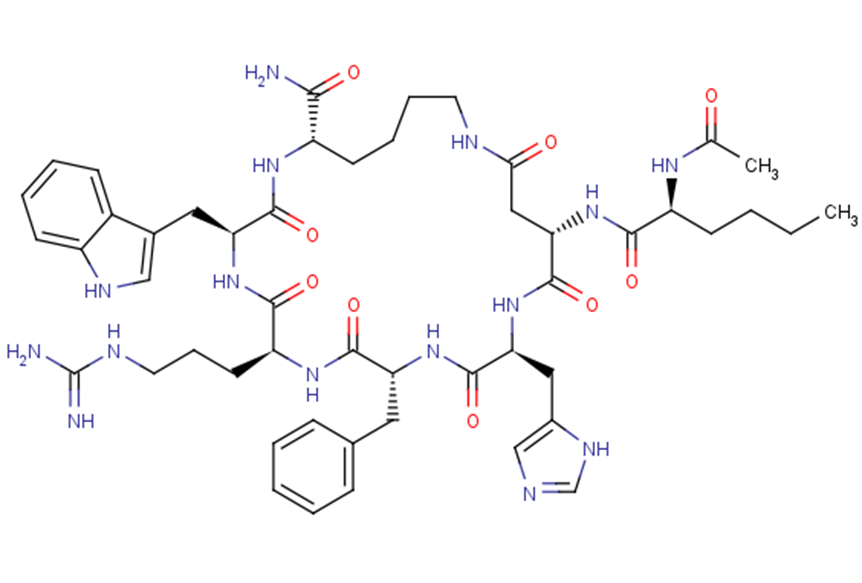
Melanotan (MT)-II
CAS No. 121062-08-6
Melanotan (MT)-II( —— )
Catalog No. M30023 CAS No. 121062-08-6
Melanotan (MT)-II, a synthetic melanocortin receptor agonist, is a synthetic analogue of the peptide hormone α-melanocyte-stimulating hormone (α-MSH).
Purity : >98% (HPLC)
 COA
Datasheet
HNMR
HPLC
MSDS
Handing Instructions
COA
Datasheet
HNMR
HPLC
MSDS
Handing Instructions
| Size | Price / USD | Stock | Quantity |
| 2MG | 39 | In Stock |


|
| 5MG | 61 | In Stock |
|
| 10MG | 90 | In Stock |
|
| 25MG | 155 | In Stock |
|
| 50MG | 245 | In Stock |
|
| 100MG | 398 | In Stock |
|
| 200MG | 579 | In Stock |
|
| 500MG | Get Quote | In Stock |
|
| 1G | Get Quote | In Stock |
|
Biological Information
-
Product NameMelanotan (MT)-II
-
NoteResearch use only, not for human use.
-
Brief DescriptionMelanotan (MT)-II, a synthetic melanocortin receptor agonist, is a synthetic analogue of the peptide hormone α-melanocyte-stimulating hormone (α-MSH).
-
DescriptionMelanotan (MT)-II, a synthetic melanocortin receptor agonist, is a synthetic analogue of the peptide hormone α-melanocyte-stimulating hormone (α-MSH).
-
In Vitro——
-
In Vivo——
-
Synonyms——
-
PathwayOthers
-
TargetOther Targets
-
Recptor——
-
Research Area——
-
Indication——
Chemical Information
-
CAS Number121062-08-6
-
Formula Weight1024.18
-
Molecular FormulaC50H69N15O9
-
Purity>98% (HPLC)
-
SolubilityIn Vitro:?H2O : 6.67 mg/mL (6.51 mM)
-
SMILES——
-
Chemical Name——
Shipping & Storage Information
-
Storage(-20℃)
-
ShippingWith Ice Pack
-
Stability≥ 2 years
Reference
molnova catalog



related products
-
Juglanin D
1-(4-Hydroxyphenyl)-2,3-dihydroxypropan-1-one is a compound that can be isolated from the leaves of C. formosensis.
-
Casein Kinase II Sub...
Casein Kinase II Substrate
-
Phytic acid dipotass...
Phytic acid exists in all eukaryotic cells. In plants it is known to function as a [PO4]3? storage depot and precursor for other inositol phosphates and pyrophosphates. It can be used clinically as a complexing agent for removal of traces of heavy metal ions. It acts also as a hypocalcemic agent.
