


 Cart
Cart
 sales@molnova.com



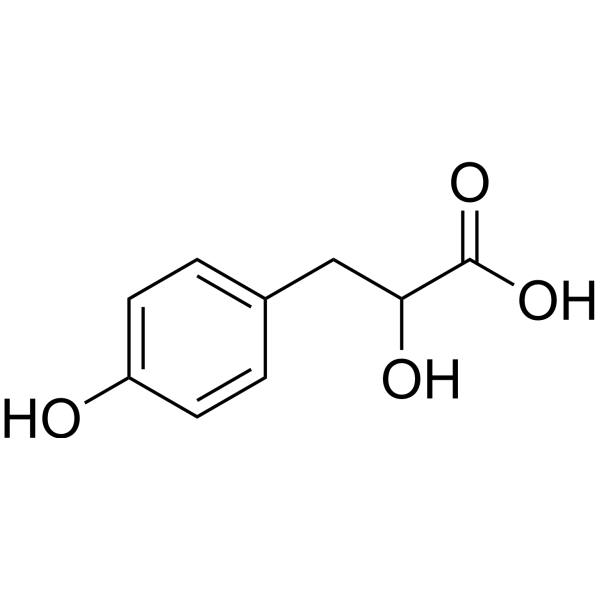
Hydroxyphenyllactic acid
CAS No. 306-23-0
Hydroxyphenyllactic acid( —— )
Catalog No. M29624 CAS No. 306-23-0
Hydroxyphenyllactic acid is an antifungal metabolite, fungi such as Lactobacillus sp. SK007.
Purity : >98% (HPLC)
 COA
Datasheet
HNMR
HPLC
MSDS
Handing Instructions
COA
Datasheet
HNMR
HPLC
MSDS
Handing Instructions
| Size | Price / USD | Stock | Quantity |
| 1 mL x 10 mM in DMSO | 37 | In Stock |


|
| 5MG | 33 | In Stock |
|
| 10MG | 53 | In Stock |
|
| 25MG | 107 | In Stock |
|
| 50MG | 156 | In Stock |
|
| 100MG | 231 | In Stock |
|
| 200MG | 343 | In Stock |
|
| 500MG | Get Quote | In Stock |
|
| 1G | Get Quote | In Stock |
|
Biological Information
-
Product NameHydroxyphenyllactic acid
-
NoteResearch use only, not for human use.
-
Brief DescriptionHydroxyphenyllactic acid is an antifungal metabolite, fungi such as Lactobacillus sp. SK007.
-
DescriptionHydroxyphenyllactic acid is an antifungal metabolite, fungi such as Lactobacillus sp. SK007.
-
In VitroHydroxyphenyllactic acid (4-hydroxyphenyllactic acid) is an antifungal metabolite.
-
In Vivo——
-
Synonyms——
-
PathwayProteasome/Ubiquitin
-
TargetEndogenous Metabolite
-
RecptorEndogenous Metabolite
-
Research Area——
-
Indication——
Chemical Information
-
CAS Number306-23-0
-
Formula Weight182.175
-
Molecular FormulaC9H10O4
-
Purity>98% (HPLC)
-
SolubilityIn Vitro:?DMSO : 125 mg/mL (686.17 mM)
-
SMILESOC(Cc1ccc(O)cc1)C(O)=O
-
Chemical Name——
Shipping & Storage Information
-
Storage(-20℃)
-
ShippingWith Ice Pack
-
Stability≥ 2 years
Reference
molnova catalog



related products
-
(L)-Dehydroascorbic ...
L-Dehydro Ascorbic Acid is the reversibly oxidized form of ascorbic acid;Dehydroascorbic acid a blood-brain barrier transportable form of vitamin C mediates potent cerebroprotection in experimental stroke.
-
Flavin adenine dinuc...
Flavin adenine dinucleotide (FAD) is a REDOX cofactor and protein cogroup involved in various metabolic reactions.
-
(S)-b-aminoisobutyri...
(S)-b-aminoisobutyric acid is a non-protein amino acid originating from the catabolism of thymine and valine.
