


 Cart
Cart
 sales@molnova.com



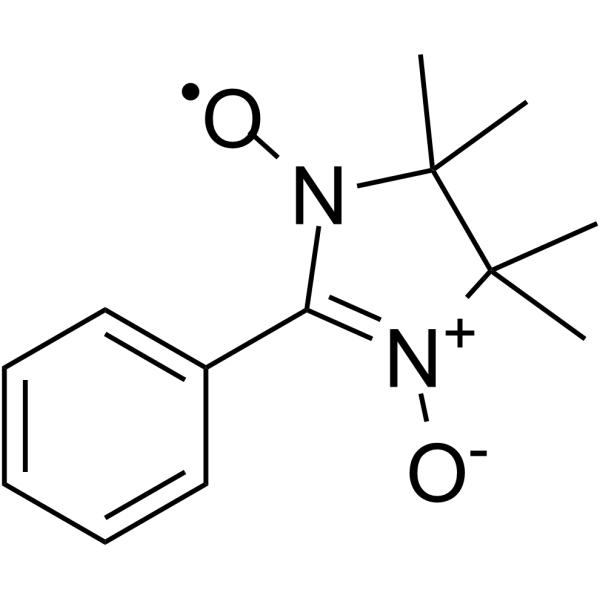
PTIO
CAS No. 18390-00-6
PTIO( —— )
Catalog No. M28070 CAS No. 18390-00-6
PTIO is a specific scavenger of NO. PTIO reacts with nitric oxide to form nitric dioxide and corresponding imino nitroxides. PTIO can be used to examine nitric oxide synthase inhibitory activity.
Purity : >98% (HPLC)
 COA
Datasheet
HNMR
HPLC
MSDS
Handing Instructions
COA
Datasheet
HNMR
HPLC
MSDS
Handing Instructions
| Size | Price / USD | Stock | Quantity |
| 5MG | 45 | In Stock |


|
| 100MG | Get Quote | In Stock |
|
| 200MG | Get Quote | In Stock |
|
| 500MG | Get Quote | In Stock |
|
| 1G | Get Quote | In Stock |
|
Biological Information
-
Product NamePTIO
-
NoteResearch use only, not for human use.
-
Brief DescriptionPTIO is a specific scavenger of NO. PTIO reacts with nitric oxide to form nitric dioxide and corresponding imino nitroxides. PTIO can be used to examine nitric oxide synthase inhibitory activity.
-
DescriptionPTIO is a specific scavenger of NO. PTIO reacts with nitric oxide to form nitric dioxide and corresponding imino nitroxides. PTIO can be used to examine nitric oxide synthase inhibitory activity.
-
In Vitro——
-
In Vivo——
-
Synonyms——
-
PathwayImmunology/Inflammation
-
TargetNOS
-
RecptorPDE3A|PDE3B
-
Research Area——
-
Indication——
Chemical Information
-
CAS Number18390-00-6
-
Formula Weight233.291
-
Molecular FormulaC13H17N2O2
-
Purity>98% (HPLC)
-
SolubilityIn Vitro:?DMSO : 100 mg/mL (428.65 mM)
-
SMILESCC1(C)N([O])C(c2ccccc2)=[N+]([O-])C1(C)C
-
Chemical Name——
Shipping & Storage Information
-
Storage(-20℃)
-
ShippingWith Ice Pack
-
Stability≥ 2 years
Reference
1.Manuel ELLERMANN, et al. Dihydrooxadiazinones. WO2019025562A1.
molnova catalog



related products
-
L-NMMA acetate
L-NMMA acetate is an inhibitor of nitric oxide synthase of all NOS isoforms (i.e. NOS1, NOS2, and NOS3).
-
Hydrangenol
Hydrangenol is isolated from Hydrangea serrata leaves exerts antiphotoaging activity in vitro.
-
1400W dihydrochlorid...
1400 W is a highly potent and selective inhibitor of inducible NOS2 (iNOS).
