


 Cart
 sales@molnova.com




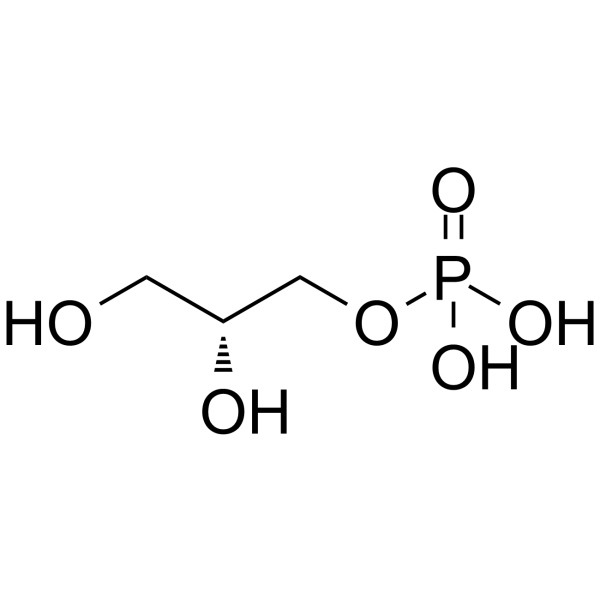
sn-Glycerol 3-phosphate
CAS No. 17989-41-2
sn-Glycerol 3-phosphate( Glycerol 3-phosphate | sn-Glycerol 3-phosphate lithium salt | sn-Glycerol 3-phosphate )
Catalog No. M27079 CAS No. 17989-41-2
Glycerol 3-phosphate is produced by the reduction of dihydroxyacetone phosphate by NADH formed during glycolysis of the cytoplasmic glycerol 3-phosphate dehydrogenase pathway.
Purity : >98% (HPLC)
 COA
Datasheet
HNMR
HPLC
MSDS
Handing Instructions
| Size | Price / USD | Stock | Quantity |
| 5MG | 677 | Get Quote |


|
| 10MG | 1074 | Get Quote |
|
| 25MG | 1853 | Get Quote |
|
| 50MG | 2911 | Get Quote |
|
| 100MG | Get Quote | Get Quote |
|
| 200MG | Get Quote | Get Quote |
|
| 500MG | Get Quote | Get Quote |
|
| 1G | Get Quote | Get Quote |
|
Biological Information
-
Product Namesn-Glycerol 3-phosphate
-
NoteResearch use only, not for human use.
-
Brief DescriptionGlycerol 3-phosphate is produced by the reduction of dihydroxyacetone phosphate by NADH formed during glycolysis of the cytoplasmic glycerol 3-phosphate dehydrogenase pathway.
-
DescriptionGlycerol 3-phosphate is produced by the reduction of dihydroxyacetone phosphate by NADH formed during glycolysis of the cytoplasmic glycerol 3-phosphate dehydrogenase pathway.
-
In Vitro——
-
In Vivo——
-
SynonymsGlycerol 3-phosphate | sn-Glycerol 3-phosphate lithium salt | sn-Glycerol 3-phosphate
-
PathwayProteasome/Ubiquitin
-
TargetEndogenous Metabolite
-
RecptorCalcium Channel| NO Synthase| ROS
-
Research Area——
-
Indication——
Chemical Information
-
CAS Number17989-41-2
-
Formula Weight172.073
-
Molecular FormulaC3H9O6P
-
Purity>98% (HPLC)
-
SolubilityIn Vitro:?H2O : 125 mg/mL (726.45 mM)
-
SMILESOC[C@@H](O)COP(O)(O)=O
-
Chemical Name——
Shipping & Storage Information
-
Storage(-20℃)
-
ShippingWith Ice Pack
-
Stability≥ 2 years
Reference
1.Jiao Y, et al. Toxic Effects of Ethyl Cinnamate on the Photosynthesis and Physiological Characteristics of Chlorella vulgaris Based on Chlorophyll Fluorescence and Flow Cytometry Analysis. ScientificWorldJournal. 2015;2015:107823.
molnova catalog



related products
-
Taurodeoxycholate so...
Taurodeoxycholate sodium salt is a bile salt-related anionic detergent used for isolation of membrane proteins including inner mitochondrial membrane proteins. and it inhibits various inflammatory responses
-
1-Methylhistamine di...
1-Methylhistamine dihydrochloride is a major metabolite of histamine by histamine N-methyltransferase in the pathway of histidine metabolism.?It has been used as a biomarker of histaminergic system activity in the brains of Alzheimer's disease patients as well as those with hypersomnia and other neurological conditions.
-
ADR-925
ADR-925, an active chelated iron metabolite of dexrazoxane, has the ability to protect neonatal rat cardiomyocytes from doxorubicin-induced injury.
