


 Cart
Cart
 sales@molnova.com



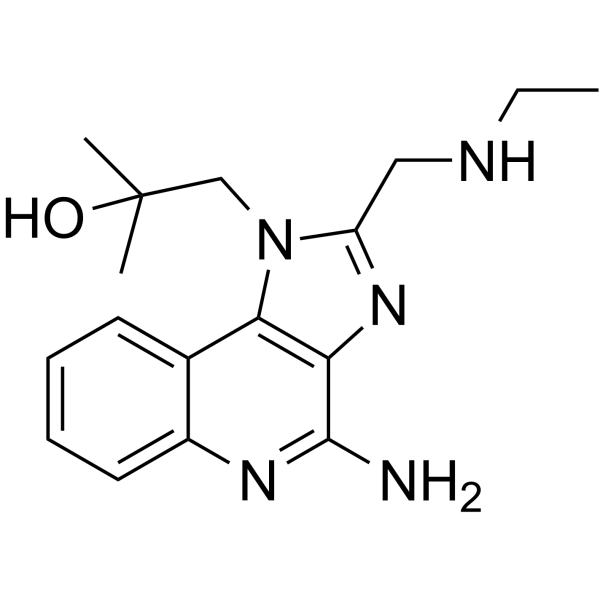
Gardiquimod
CAS No. 1020412-43-4
Gardiquimod( —— )
Catalog No. M26693 CAS No. 1020412-43-4
Gardiquimod could inhibit HIV-1 infection of macrophages and activated peripheral blood mononuclear cells.
Purity : >98% (HPLC)
 COA
Datasheet
HNMR
HPLC
MSDS
Handing Instructions
COA
Datasheet
HNMR
HPLC
MSDS
Handing Instructions
| Size | Price / USD | Stock | Quantity |
| 1 mL x 10 mM in DMSO | 42 | In Stock |


|
| 5MG | 38 | In Stock |
|
| 10MG | 61 | In Stock |
|
| 25MG | 140 | In Stock |
|
| 100MG | Get Quote | In Stock |
|
| 200MG | Get Quote | In Stock |
|
| 500MG | Get Quote | In Stock |
|
| 1G | Get Quote | In Stock |
|
Biological Information
-
Product NameGardiquimod
-
NoteResearch use only, not for human use.
-
Brief DescriptionGardiquimod could inhibit HIV-1 infection of macrophages and activated peripheral blood mononuclear cells.
-
DescriptionGardiquimod could inhibit HIV-1 infection of macrophages and activated peripheral blood mononuclear cells. Gardiquimod is an imidazoquinoline analog and is a TLR7/8 agonist. When used at concentrations below 10 μM, Gardiquimod specifically activates TLR7.(In Vitro):Administration of 6-60 μM Gardiquimod obviously inhibits HIV-1 reverse transcriptase cDNA synthesis.(In Vivo):Gardiquimod (1 mg/kg per mouse; i.p.; daily for 7 days) in combination with Dendritic cells (DCs) enhance the anti-tumor effects of NK cells.
-
In VitroGardiquimod (6-60?μM ) significantly inhibits cDNA synthesis by HIV-1 reverse transcriptase.
-
In VivoDendritic cells (DCs) in combination with Gardiquimod (1 mg/kg per mouse; i.p.; daily for 7 days) improves the anti-tumor effects of NK cells. Animal Model:Male athymic nude mice (Balb-nu/nu, 5 weeks old) (bearing human HepG2 liver carcinoma xenografts)Dosage:1 mg/kg per mouse Administration:i.p.; daily for 7 days Result:Significantly suppressed the growth of human HepG2 liver carcinoma xenografts.
-
Synonyms——
-
PathwayImmunology/Inflammation
-
TargetTLR
-
RecptorEstrogen Receptor/ERR| Human Endogenous Metabolite
-
Research Area——
-
Indication——
Chemical Information
-
CAS Number1020412-43-4
-
Formula Weight313.405
-
Molecular FormulaC17H23N5O
-
Purity>98% (HPLC)
-
SolubilityIn Vitro:?DMF : ≥ 20 mg/mL (63.82 mM)DM)
-
SMILESCCNCc1nc2c(N)nc3ccccc3c2n1CC(C)(C)O
-
Chemical Name——
Shipping & Storage Information
-
Storage(-20℃)
-
ShippingWith Ice Pack
-
Stability≥ 2 years
Reference
1.Hernández N, et al. 4-Hydroxyestradiol improves mouse embryo quality, epidermal growth factor-binding capability in vitro and implantation rates. Mol Hum Reprod. 2021 Feb 5;27(2):gaaa075.
molnova catalog



related products
-
Poly(I:C)
Poly (I:C) is a synthetic double-stranded RNA (dsRNA) analog and is an immunostimulant that acts as the most potent interferon (IFN) inducer. It also is a Toll-like receptor- 3 (TLR3) agonist.Mixtures that included the TLR7/8 agonists R848 or CL075, combined with the poly (I:C) can produce 3-d mature dendritic cells.
-
Procyanidin B1
Procyanidin B1, isolated from commonly eaten fruits, binds to the TLR4/MD-2 complex and has anti-inflammatory activity.Procyanidin B1 (100 μg/mL) inhibits LPS-induced TNF-α production, and expression of MD-2, TRAF6, NF-κB mRNA, phosphorylated p38 MAPK and NF-κB protein in THP1 cells.
-
CU-115
CU-115 is a selective antagonist of TLR8 with IC50s of 1.04 μM and >50 μM for TLR8 and TLR7, respectively.
