


 Cart
Cart
 sales@molnova.com



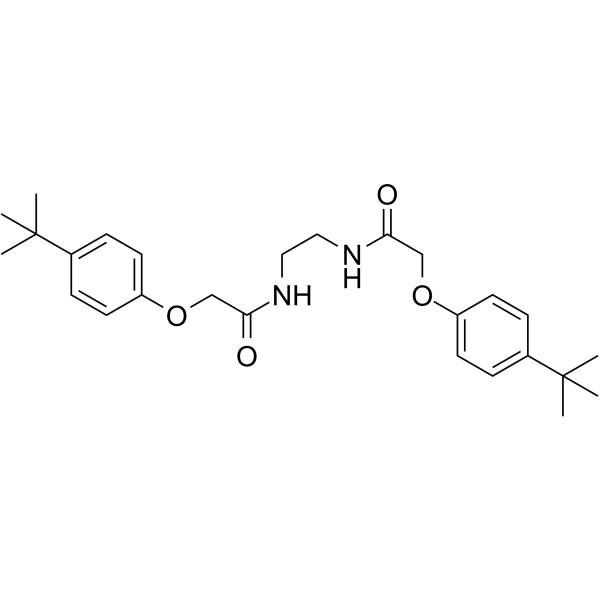
NIC3
CAS No. 494830-67-0
NIC3( —— )
Catalog No. M26332 CAS No. 494830-67-0
NIC3 is a selective nucleus accumbens-associated protein-1 (NAC1) inhibitor, with anti-cancer activity.
Purity : >98% (HPLC)
 COA
Datasheet
HNMR
HPLC
MSDS
Handing Instructions
COA
Datasheet
HNMR
HPLC
MSDS
Handing Instructions
| Size | Price / USD | Stock | Quantity |
| 1 mL x 10 mM in DMSO | 67 | In Stock |


|
| 2MG | 37 | In Stock |
|
| 5MG | 61 | In Stock |
|
| 10MG | 92 | In Stock |
|
| 25MG | 187 | In Stock |
|
| 50MG | 291 | In Stock |
|
| 100MG | 500 | In Stock |
|
| 200MG | 699 | In Stock |
|
| 500MG | 1070 | In Stock |
|
| 1G | Get Quote | In Stock |
|
Biological Information
-
Product NameNIC3
-
NoteResearch use only, not for human use.
-
Brief DescriptionNIC3 is a selective nucleus accumbens-associated protein-1 (NAC1) inhibitor, with anti-cancer activity.
-
DescriptionNIC3 is a selective nucleus accumbens-associated protein-1 (NAC1) inhibitor, with anti-cancer activity.
-
In Vitro——
-
In Vivo——
-
Synonyms——
-
PathwayOthers
-
TargetOther Targets
-
RecptorPEGs
-
Research Area——
-
Indication——
Chemical Information
-
CAS Number494830-67-0
-
Formula Weight440.58
-
Molecular FormulaC26H36N2O4
-
Purity>98% (HPLC)
-
SolubilityIn Vitro:?DMSO : 50 mg/mL (113.49 mM)
-
SMILESCC(C)(C)C1=CC=C(OCC(NCCNC(COC2=CC=C(C(C)(C)C)C=C2)=O)=O)C=C1
-
Chemical Name——
Shipping & Storage Information
-
Storage(-20℃)
-
ShippingWith Ice Pack
-
Stability≥ 2 years
Reference
1.An S, et al. Small-molecule PROTACs: An emerging and promising approach for the development of targeted therapy drugs. EBioMedicine. 2018 Oct;36:553-562
molnova catalog



related products
-
Methoxyfenozide
Methoxyfenozide is an insect growth regulator. Methoxyfenozide used in the control of lepidopteran insect pests.
-
PTC299
PTC299 (PTC-299) is a novel potent inhibitor of dihydroorotate dehydrogenase (DHODH), inhibits hypoxia-induced VEGFA protein production in HeLa cells with IC50 of 1.64 nM.
-
11-O-β-D-Glucopyrano...
11-O-β-D-glucopyranosyl thamnosmonin, a coumarin glucosides, can be isolated from the roots of Angelica apaensis. 11-O-β-D-glucopyranosyl thamnosmonin has weak inhibitory activity on the aggregation of rabbit platelets induced by PAF, AA, and ADP.
