


 Cart
Cart
 sales@molnova.com



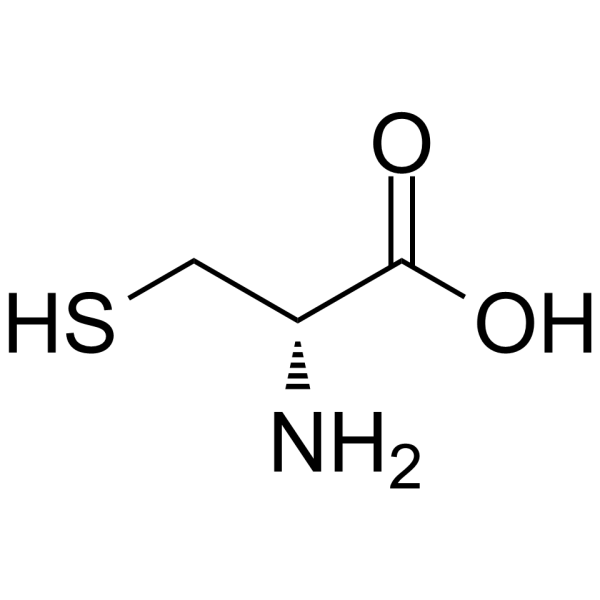
D-Cysteine
CAS No. 921-01-7
D-Cysteine( —— )
Catalog No. M26137 CAS No. 921-01-7
D-Cysteine is the D-isomer of cysteine and a powerful inhibitor of the growth of E. coli.
Purity : >98% (HPLC)
 COA
Datasheet
HNMR
HPLC
MSDS
Handing Instructions
COA
Datasheet
HNMR
HPLC
MSDS
Handing Instructions
| Size | Price / USD | Stock | Quantity |
| 100MG | Get Quote | In Stock |


|
| 200MG | Get Quote | In Stock |
|
| 500MG | 27 | In Stock |
|
| 1G | Get Quote | In Stock |
|
Biological Information
-
Product NameD-Cysteine
-
NoteResearch use only, not for human use.
-
Brief DescriptionD-Cysteine is the D-isomer of cysteine and a powerful inhibitor of the growth of E. coli.
-
DescriptionD-Cysteine is the D-isomer of cysteine and a powerful inhibitor of the growth of E. coli. D-cysteine is mediated by D-amino acid oxidase to produce H2S, and is a neuroprotective agent against cerebellar ataxia. D-cysteine can inhibit the growth and cariogenicity of a two-species biofilm formed by Streptococcus mutans and Streptococcus hemoglobin.
-
In Vitro——
-
In Vivo——
-
Synonyms——
-
PathwayProteasome/Ubiquitin
-
TargetEndogenous Metabolite
-
RecptorAminopeptidase A
-
Research Area——
-
Indication——
Chemical Information
-
CAS Number921-01-7
-
Formula Weight121.15
-
Molecular FormulaC3H7NO2S
-
Purity>98% (HPLC)
-
SolubilityIn Vitro:?DMSO : 1 mg/mL (8.25 mM)
-
SMILESN[C@H](CS)C(O)=O
-
Chemical Name——
Shipping & Storage Information
-
Storage(-20℃)
-
ShippingWith Ice Pack
-
Stability≥ 2 years
Reference
1.?Ferdinand KC, et al. Efficacy and Safety of Firibastat, A First-in-Class Brain Aminopeptidase A Inhibitor, in Hypertensive Overweight Patients of Multiple Ethnic Origins. Circulation. 2019;140(2):138-146.
molnova catalog



related products
-
7-Ketolithocholic ac...
7-Ketolithocholic acid (3α-Hydroxy-7-oxo-5β-cholanic acid) can be absorbed and suppresses endogenous bile acid production and biliary cholesterol secretion.
-
10 FTHF disodium
10 FTHF disodium (10-Formyltetrahydrofolic acid disodium) is a form of tetrahydrofolate, a formyl donor in anabolism, involved in the synthesis of purine compounds.
-
3-Hydroxyanthranilic...
3-Hydroxyanthranilic acid also known as 2-amino-3-hydroxy-benzoate or 3-ohaa belongs to the class of organic compounds known as hydroxybenzoic acid derivatives. 3-Hydroxyanthranilic acid has been found in human epidermis and bladder tissues and has also been detected in multiple biofluids such as urine and blood.
