


 Cart
Cart
 sales@molnova.com



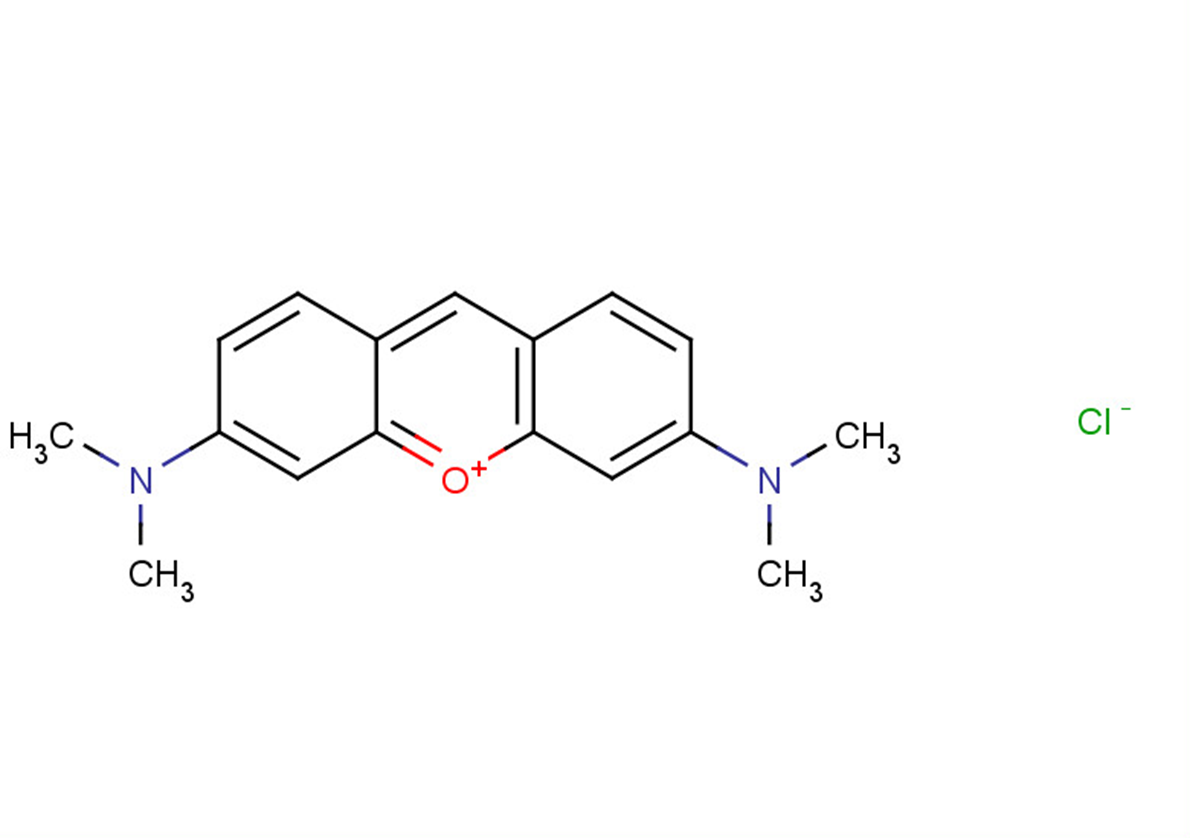
Pyronin Y
CAS No. 92-32-0
Pyronin Y( Pyronine G | C.I. 45005 )
Catalog No. M24971 CAS No. 92-32-0
Pyronin Y is an intercalating cationic dye that shows specificity towards RNA.
Purity : >98% (HPLC)
 COA
Datasheet
HNMR
HPLC
MSDS
Handing Instructions
COA
Datasheet
HNMR
HPLC
MSDS
Handing Instructions
| Size | Price / USD | Stock | Quantity |
| 1 mL x 10 mM in DMSO | 28 | In Stock |


|
| 100MG | 27 | In Stock |
|
| 200MG | 36 | In Stock |
|
| 500MG | Get Quote | In Stock |
|
| 1G | Get Quote | In Stock |
|
Biological Information
-
Product NamePyronin Y
-
NoteResearch use only, not for human use.
-
Brief DescriptionPyronin Y is an intercalating cationic dye that shows specificity towards RNA.
-
DescriptionPyronin Y is an intercalating cationic dye that shows specificity towards RNA.
-
In Vitro——
-
In Vivo——
-
SynonymsPyronine G | C.I. 45005
-
PathwayOthers
-
TargetOther Targets
-
RecptorOthers
-
Research Area——
-
Indication——
Chemical Information
-
CAS Number92-32-0
-
Formula Weight302.8
-
Molecular FormulaC17H19ClN2O
-
Purity>98% (HPLC)
-
SolubilityDMSO:25 mg/mL (82.56 mM; Need ultrasonic);H2O:4 mg/mL (13.21 mM; Need ultrasonic)
-
SMILESCN(C1=CC2=[O+]C3=C(C=CC(N(C)C)=C3)C=C2C=C1)C.[Cl-]
-
Chemical Name——
Shipping & Storage Information
-
Storage(-20℃)
-
ShippingWith Ice Pack
-
Stability≥ 2 years
Reference
1.Pollack A, et al. Flow cytometric analysis of RNA content in different cell populations using pyronin Yand methyl green. Cytometry. 1982 Jul;3(1):28-35.
molnova catalog



related products
-
1,3-diethyl 2-(3-met...
1,3-diethyl 2-(3-methoxyphenyl)propanedioate is a compound used as a molecular building block.
-
(Iso)-MS4322
(Iso)-MS4322 ((Iso)-YS43-22) is a selective and potent protein arginine methyltransferase 5 (PRMT5) degrader with potential anticancer activity that effectively reduces PRMT5 protein levels in MCF-7 cells and inhibits the growth of a wide range of cancer cells.
-
Dimethylmatairesinol
Dimethylmatairesinol (compound 8) is a lignan compound isolated from the seed of Hernandia nymphaeifolia. Dimethylmatairesinol shows cytotoxicity against the KKU-M156 and HepG2 cell line with IC50s of 5.4 μM (Emax 59%) and 5.2 μM (Emax 78%), respectively.
