


 Cart
Cart
 sales@molnova.com



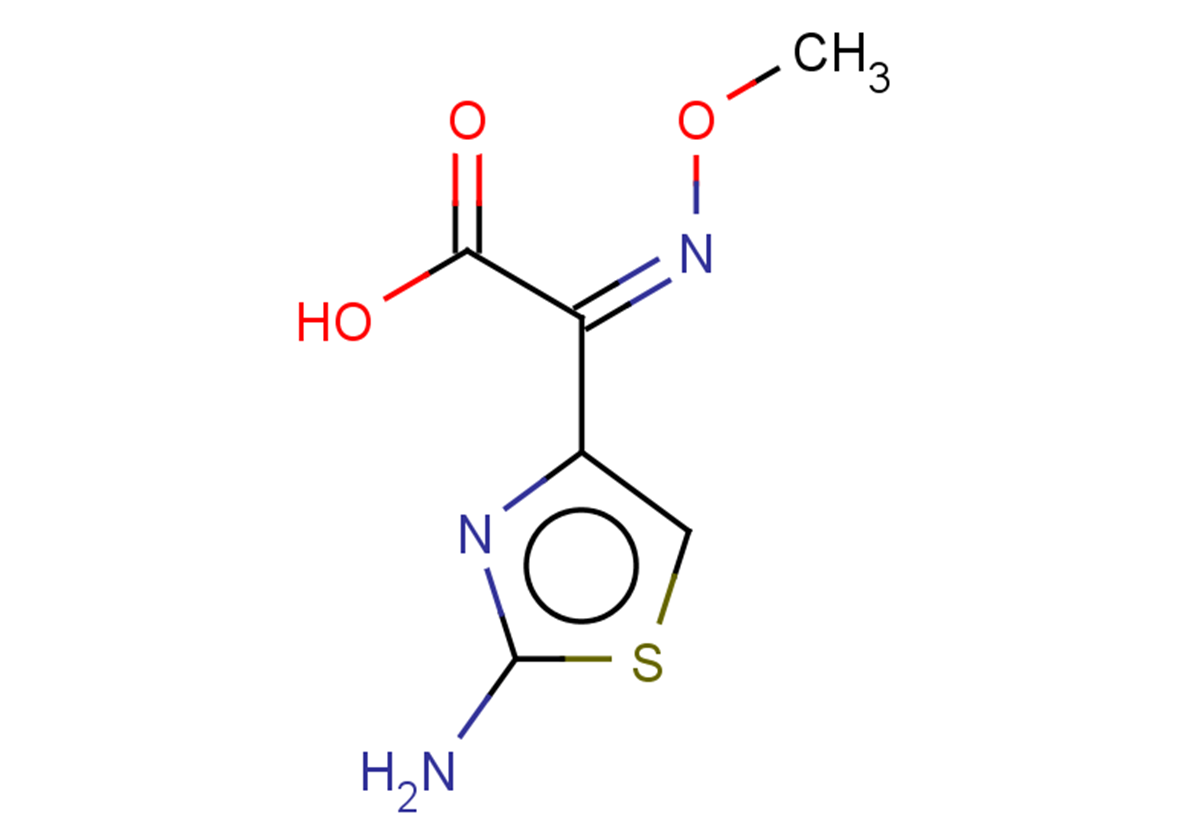
2-(2-Aminothiazole-4-yl)-2-methoxyiminoa
CAS No. 65872-41-5
2-(2-Aminothiazole-4-yl)-2-methoxyiminoa( —— )
Catalog No. M24669 CAS No. 65872-41-5
2-(2-Aminothiazole-4-yl)-2-methoxyiminoa is a compound.
Purity : >98% (HPLC)
 COA
Datasheet
HNMR
HPLC
MSDS
Handing Instructions
COA
Datasheet
HNMR
HPLC
MSDS
Handing Instructions
| Size | Price / USD | Stock | Quantity |
| 1 mL x 10 mM in DMSO | 28 | In Stock |


|
| 10MG | 29 | In Stock |
|
| 25MG | 51 | In Stock |
|
| 50MG | 75 | In Stock |
|
| 100MG | 112 | In Stock |
|
| 200MG | Get Quote | In Stock |
|
| 500MG | 276 | In Stock |
|
| 1G | Get Quote | In Stock |
|
Biological Information
-
Product Name2-(2-Aminothiazole-4-yl)-2-methoxyiminoa
-
NoteResearch use only, not for human use.
-
Brief Description2-(2-Aminothiazole-4-yl)-2-methoxyiminoa is a compound.
-
Description2-(2-Aminothiazole-4-yl)-2-methoxyiminoa is a compound.
-
In Vitro——
-
In Vivo——
-
Synonyms——
-
PathwayOthers
-
TargetOther Targets
-
RecptorOthers
-
Research Area——
-
Indication——
Chemical Information
-
CAS Number65872-41-5
-
Formula Weight201.2
-
Molecular FormulaC6H7N3O3S
-
Purity>98% (HPLC)
-
SolubilityH2O : < 1 mg/mL (heat to 20°C) (insoluble or slightly soluble)
-
SMILESCO/N=C(\C(O)=O)/c1csc(N)n1
-
Chemical Name——
Shipping & Storage Information
-
Storage(-20℃)
-
ShippingWith Ice Pack
-
Stability≥ 2 years
Reference
molnova catalog



related products
-
VIP-Lys(Biotin), hum...
VIP-Lys(Biotin), human, porcine, rat
-
Tarasaponin VI
Tarasaponin VI is isolated from Aralia elata with potent inhibitory activity on ethanol absorption.
-
Quercetin 3-O-6-O-(E...
Antioxidant agent-18 (compound 5) is a flavonol glycoside with antioxidant activity isolated from Ginkgo biloba. Antioxidant agent-18 scavenges DPPH radicals (IC50: 15.8 μM) and reduces cytochrome c (IC50: 14.7 μM).
