


 Cart
Cart
 sales@molnova.com



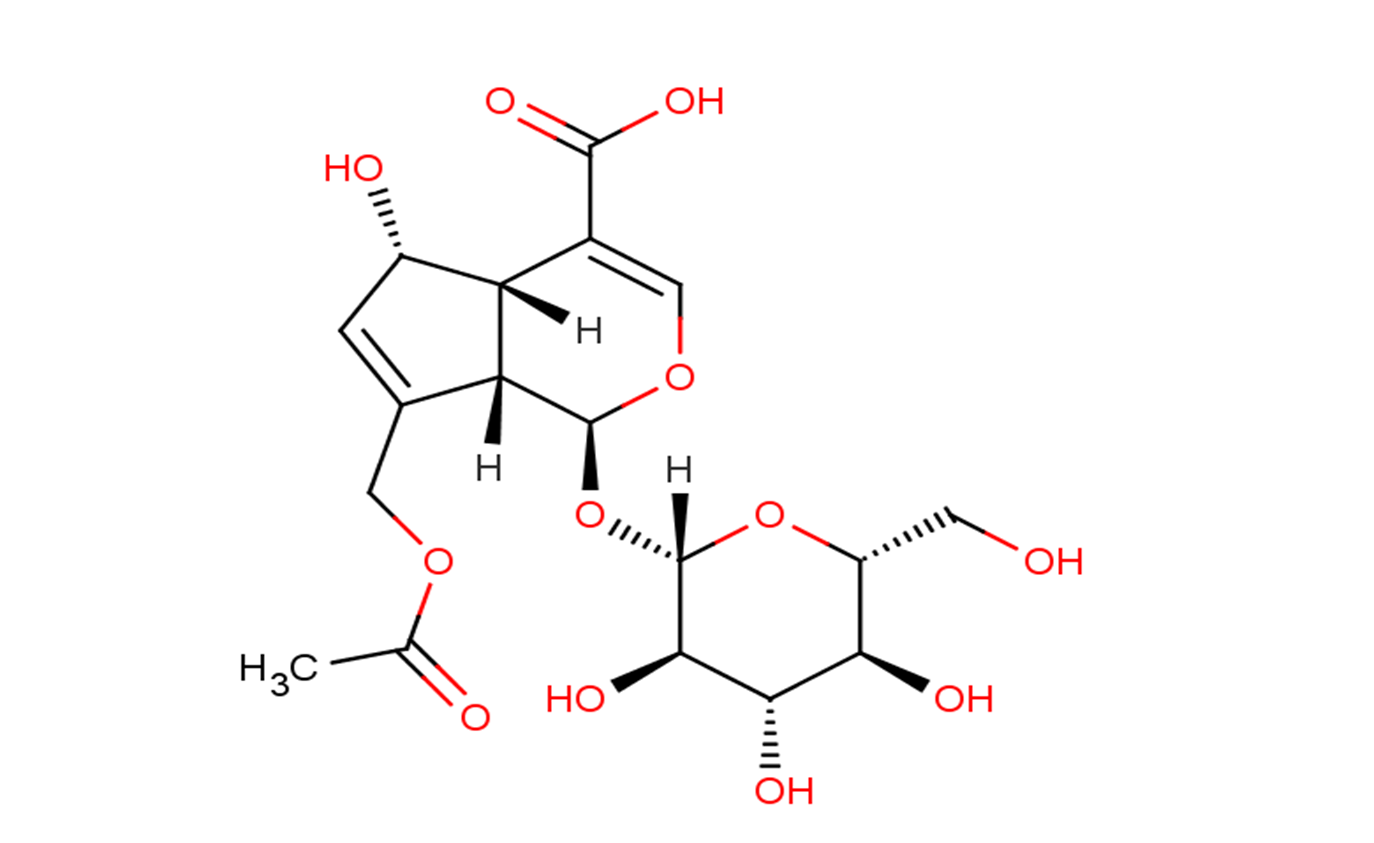
Asperulosidic acid
CAS No. 25368-11-0
Asperulosidic acid( ASPA )
Catalog No. M24146 CAS No. 25368-11-0
Asperulosidic acid has anti-tumor, anti-oxidant, and anti-inflammatory activities.ASPA is related to the inhibition of inflammatory cytokines (TNF-α, IL-6) and mediators via suppression of the NF-κB and mitogen-activated protein kinase (MAPK) signaling pathways.
Purity : >98% (HPLC)
 COA
Datasheet
HNMR
HPLC
MSDS
Handing Instructions
COA
Datasheet
HNMR
HPLC
MSDS
Handing Instructions
| Size | Price / USD | Stock | Quantity |
| 1 mL x 10 mM in DMSO | 302 | In Stock |


|
| 2MG | 174 | In Stock |
|
| 5MG | 275 | In Stock |
|
| 10MG | 455 | In Stock |
|
| 25MG | 748 | In Stock |
|
| 50MG | 995 | In Stock |
|
| 100MG | 1330 | In Stock |
|
| 200MG | Get Quote | In Stock |
|
| 500MG | Get Quote | In Stock |
|
| 1G | Get Quote | In Stock |
|
Biological Information
-
Product NameAsperulosidic acid
-
NoteResearch use only, not for human use.
-
Brief DescriptionAsperulosidic acid has anti-tumor, anti-oxidant, and anti-inflammatory activities.ASPA is related to the inhibition of inflammatory cytokines (TNF-α, IL-6) and mediators via suppression of the NF-κB and mitogen-activated protein kinase (MAPK) signaling pathways.
-
DescriptionAsperulosidic acid has anti-tumor, anti-oxidant, and anti-inflammatory activities.ASPA is related to the inhibition of inflammatory cytokines (TNF-α, IL-6) and mediators via suppression of the NF-κB and mitogen-activated protein kinase (MAPK) signaling pathways.
-
In VitroAsperulosidic Acid (ASPA) (40-160 μg/mL; pre- 1 hour) significantly down-regulates the mRNA levels of TNF-α and IL-6 in LPS-induced RAW 264.7 cells compared with the group treated with LPS alone .Asperulosidic Acid (ASPA) (40-160 μg/mL; pre- 1 hour) decreases IκB-α phosphorylation in a concentration-dependent manner, decreases Erk1/2 phosphorylation at all concentration levels, but there was no effect on p-p38 . RT-PCR Cell Line:RAW 264.7 cells Concentration:40 μg/mL, 80 μg/mL, and 160 μg/mL Incubation Time:Pre-treatment 1 hour Result:Decreased TNF-α and IL-6 mRNA expression.Western Blot Analysis Cell Line:RAW 264.7 cells Concentration:40 μg/mL, 80 μg/mL, and 160 μg/mL Incubation Time:Pre-treatment 1 hour Result:Decreased IκB-α phosphorylationand Erk1/2 phosphorylation.
-
In Vivo——
-
SynonymsASPA
-
PathwayMAPK/ERK Signaling
-
TargetERK
-
RecptorERK|NF-κB
-
Research Area——
-
Indication——
Chemical Information
-
CAS Number25368-11-0
-
Formula Weight432.4
-
Molecular FormulaC18H24O12
-
Purity>98% (HPLC)
-
SolubilityIn Vitro:?DMSO : 100 mg/mL (231.28 mM)
-
SMILESOC[C@H]([C@@H](O)[C@H](O)[C@H]1O)O[C@@]1([H])O[C@H]2[C@@]3([H])[C@@]([C@@H](O)C=C3COC(C)=O)([H])C(C(O)=O)=CO2
-
Chemical Name——
Shipping & Storage Information
-
Storage(-20℃)
-
ShippingWith Ice Pack
-
Stability≥ 2 years
Reference
1.Two novel glycosides from the fruits of Morinda citrifolia (noni) inhibit AP-1 transactivation and cell transformation in the mouse epidermal JB6 cell line.Yakugaku Zasshi. 1981 Jul;101(7):657-9.
molnova catalog



related products
-
Poncirin
Poncirin shows a significant in vitro inhibitory effect on the growth of the human gastric cancer cells, SGC-791, in a dose-dependent manner.
-
Decursinol angelate
Decursinol angelate has anti-tumor, anti-inflammatory, anti-oxidant, and hepatoprotective activities, it inhibits VEGF-induced angiogenesis via suppression of the VEGFR-2-signaling pathway.
-
ZINC12409120
ZINC12409120 (R-4584) is a selective ERK inhibitor.ZINC12409120 inhibits ERK with an IC50 of 5.0 μM.ZINC12409120 inhibits ERK activity by interfering with FGF23:α-Klotho interaction.
