


 Cart
Cart
 sales@molnova.com



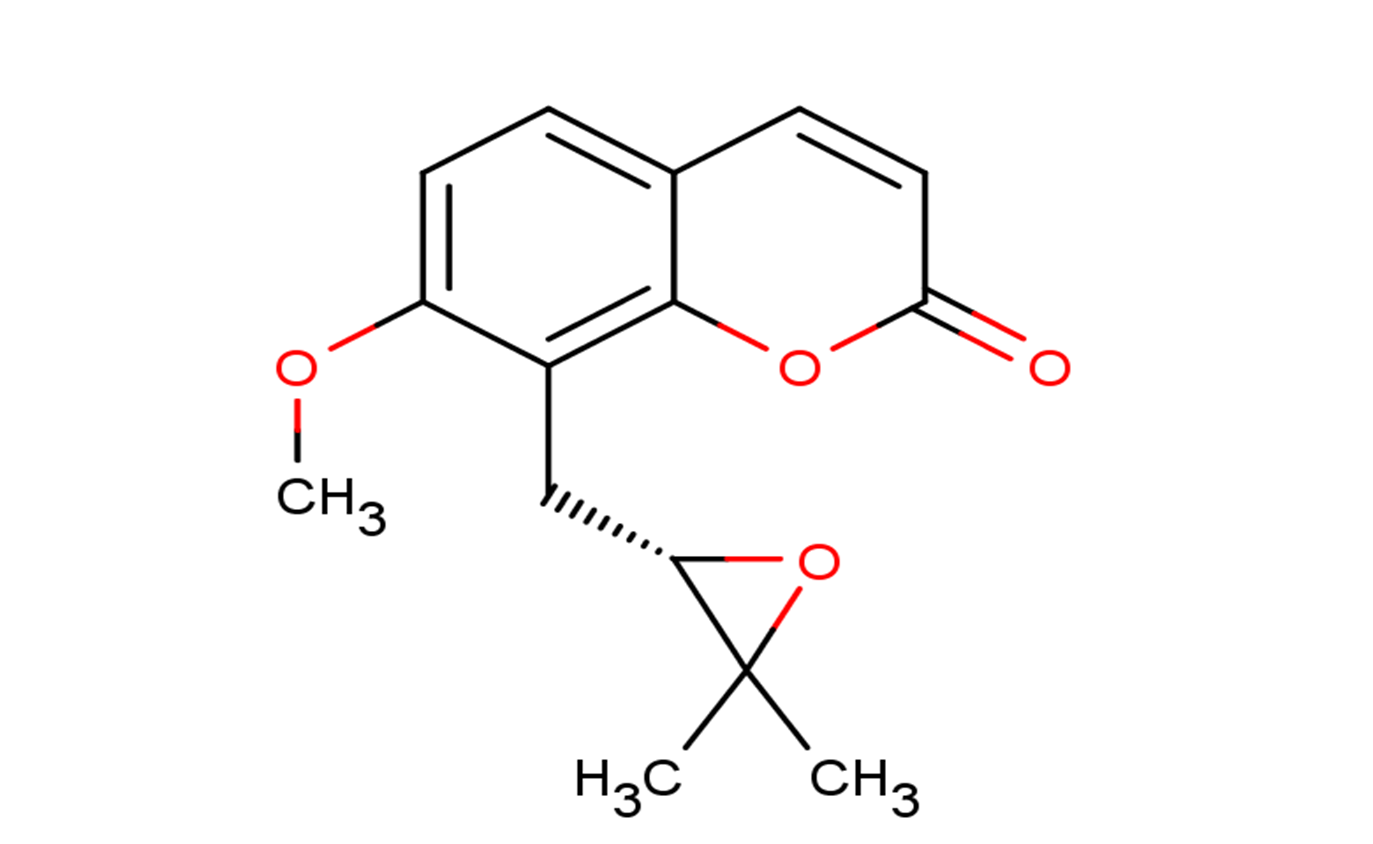
Meranzin
CAS No. 23971-42-8
Meranzin( —— )
Catalog No. M24101 CAS No. 23971-42-8
Meranzin is an absorbed bioactive compound from the Traditional Chinese Medicine (TCM) Chaihu-Shugan-San (CSS).
Purity : >98% (HPLC)
 COA
Datasheet
HNMR
HPLC
MSDS
Handing Instructions
COA
Datasheet
HNMR
HPLC
MSDS
Handing Instructions
| Size | Price / USD | Stock | Quantity |
| 1 mL x 10 mM in DMSO | 188 | In Stock |


|
| 5MG | 258 | In Stock |
|
| 10MG | 376 | In Stock |
|
| 25MG | 630 | In Stock |
|
| 50MG | 862 | In Stock |
|
| 100MG | Get Quote | In Stock |
|
| 200MG | Get Quote | In Stock |
|
| 500MG | Get Quote | In Stock |
|
| 1G | Get Quote | In Stock |
|
Biological Information
-
Product NameMeranzin
-
NoteResearch use only, not for human use.
-
Brief DescriptionMeranzin is an absorbed bioactive compound from the Traditional Chinese Medicine (TCM) Chaihu-Shugan-San (CSS).
-
DescriptionMeranzin is an absorbed bioactive compound from the Traditional Chinese Medicine (TCM) Chaihu-Shugan-San (CSS). Meranzin, isolated from leaves of Murraya exotica L., regulates the shared alpha 2-adrenoceptor and involves the AMPA-ERK1/2–BDNF signaling pathway.Meranzin has the potential for the prevention of the comorbidity of atherosclerosis and depression. Meranzin exhibits strong anti-inflammatory and analgesic activity.
-
In Vitro——
-
In Vivo——
-
Synonyms——
-
PathwayOthers
-
TargetOther Targets
-
RecptorImmunology & Inflammation related
-
Research Area——
-
Indication——
Chemical Information
-
CAS Number23971-42-8
-
Formula Weight260.29
-
Molecular FormulaC15H16O4
-
Purity>98% (HPLC)
-
SolubilityIn Vitro:?DMSO : 100 mg/mL (384.19 mM)
-
SMILESCOC1=CC=C(C=C2)C(OC2=O)=C1C[C@H](O3)C3(C)C
-
Chemical Name——
Shipping & Storage Information
-
Storage(-20℃)
-
ShippingWith Ice Pack
-
Stability≥ 2 years
Reference
molnova catalog



related products
-
Ganoderic acid beta
Ganoderic acid beta is a constituent from the fruiting body of Ganoderma lucidum (Fr.) Karst.
-
Methylophiopogonone ...
Methylophiopogonone A, a homoisoflavonoid isolated from the tuberous roots of?Ophiopogon japonicas, shows anti-inflammatory activity.
-
Prolactin-Releasing ...
Prolactin-Releasing Peptide (12-31), rat is a fragment of the prolactin releasing peptide (PrRP). Prolactin-Releasing Peptide (12-31), rat shows high affinity for GPR10 receptors. Prolactin-Releasing Peptide (12-31), stimulates calcium mobilization in CHOK1 cells transfected with the PrRP receptor.
