


 Cart
Cart
 sales@molnova.com



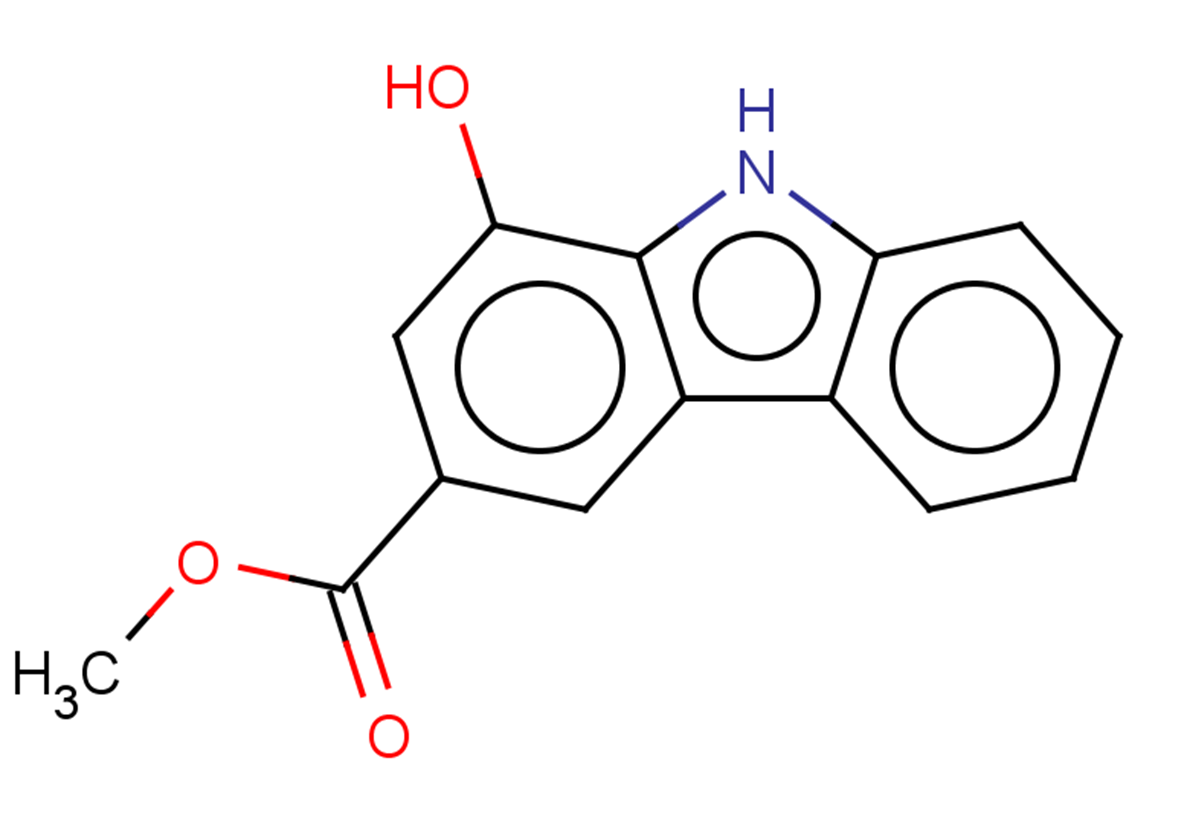
Clausine E
CAS No. 182261-83-2
Clausine E( —— )
Catalog No. M23829 CAS No. 182261-83-2
Clausine E is an inhibitor of fat mass and obesity-associated protein (FTO) demethylase activity.
Purity : >98% (HPLC)
 COA
Datasheet
HNMR
HPLC
MSDS
Handing Instructions
COA
Datasheet
HNMR
HPLC
MSDS
Handing Instructions
| Size | Price / USD | Stock | Quantity |
| 1 mL x 10 mM in DMSO | 372 | In Stock |


|
| 5MG | 361 | In Stock |
|
| 10MG | 537 | In Stock |
|
| 25MG | 846 | In Stock |
|
| 50MG | 1144 | In Stock |
|
| 100MG | Get Quote | In Stock |
|
| 200MG | Get Quote | In Stock |
|
| 500MG | Get Quote | In Stock |
|
| 1G | Get Quote | In Stock |
|
Biological Information
-
Product NameClausine E
-
NoteResearch use only, not for human use.
-
Brief DescriptionClausine E is an inhibitor of fat mass and obesity-associated protein (FTO) demethylase activity.
-
DescriptionClausine E is an inhibitor of fat mass and obesity-associated protein (FTO) demethylase activity. The binding of Clausine E to FTO was driven by positive entropy and negative enthalpy changes.
-
In Vitro——
-
In Vivo——
-
Synonyms——
-
PathwayOthers
-
TargetOther Targets
-
RecptorFTO
-
Research Area——
-
Indication——
Chemical Information
-
CAS Number182261-83-2
-
Formula Weight241.24
-
Molecular FormulaC14H11NO3
-
Purity>98% (HPLC)
-
Solubility——
-
SMILESCOC(c1cc(O)c2[nH]c(cccc3)c3c2c1)=O
-
Chemical Name——
Shipping & Storage Information
-
Storage(-20℃)
-
ShippingWith Ice Pack
-
Stability≥ 2 years
Reference
1.Wang Y, et al. Identification of Clausine E as an inhibitor of fat mass and obesity-associated protein (FTO) demethylase activity. J Mol Recognit. 2019 Oct;32(10):e2800.
molnova catalog



related products
-
Methylsyringin
Methylsyringin exhibits anti-inflammatory activity in the LPS-stimulated RAW264.7 cells.
-
Neurogranin (30-45) ...
Neurogranin 28-43 is a biological active peptide. (selective PKC substrate)
-
DB818
DB818 is a synthetic Homeobox A9 (HOXA9) inhibitor and can be used for research on the treatment of acute myeloid leukaemia associated with HOXA9 overexpression.
