


 Cart
Cart
 sales@molnova.com



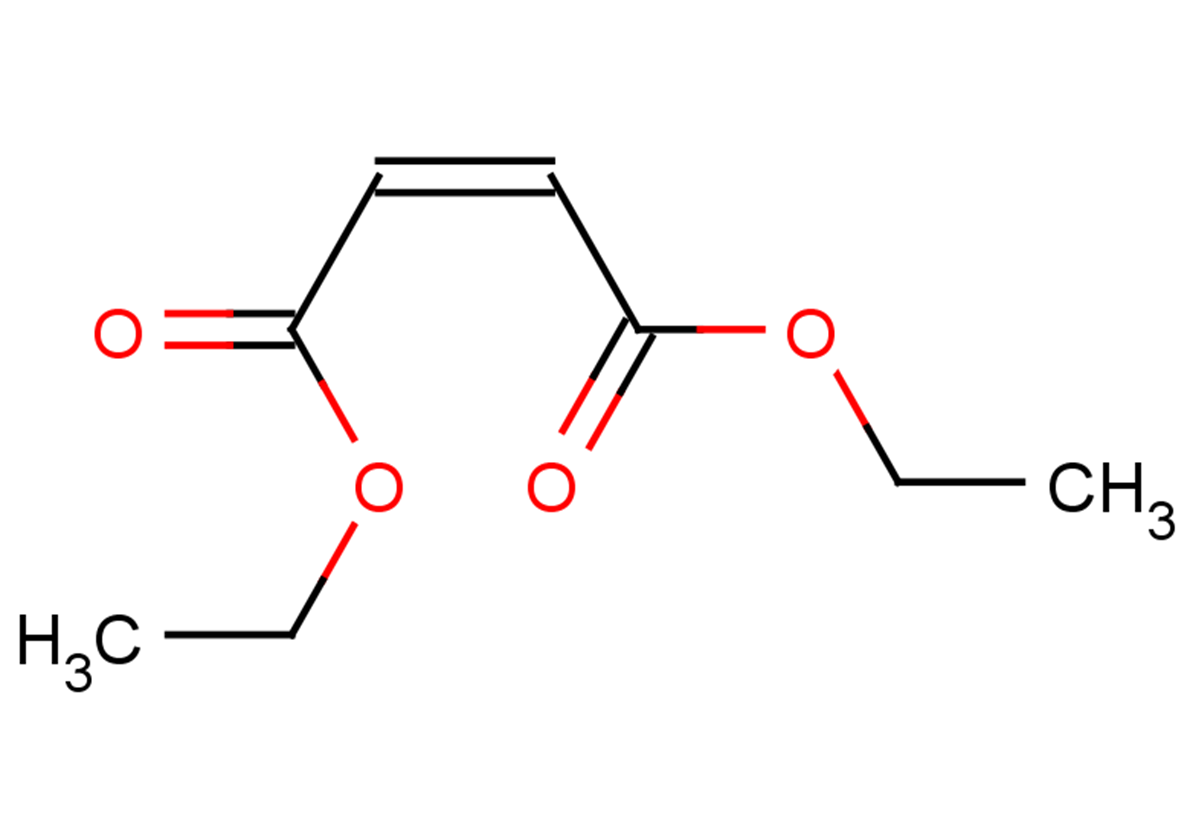
Diethylmaleate
CAS No. 141-05-9
Diethylmaleate( DIETHYL MALEATE | Maleic acid, diethyl ester | Diethylmaleate )
Catalog No. M23567 CAS No. 141-05-9
Diethylmaleate is the diethyl ester of maleic acid and a glutathione-depleting compound that inhibits NF-kB.
Purity : >98% (HPLC)
 COA
Datasheet
HNMR
HPLC
MSDS
Handing Instructions
COA
Datasheet
HNMR
HPLC
MSDS
Handing Instructions
| Size | Price / USD | Stock | Quantity |
| 1 mL x 10 mM in DMSO | 37 | In Stock |


|
| 50MG | 28 | In Stock |
|
| 100MG | 37 | In Stock |
|
| 200MG | Get Quote | In Stock |
|
| 500MG | 68 | In Stock |
|
| 1G | 91 | In Stock |
|
Biological Information
-
Product NameDiethylmaleate
-
NoteResearch use only, not for human use.
-
Brief DescriptionDiethylmaleate is the diethyl ester of maleic acid and a glutathione-depleting compound that inhibits NF-kB.
-
DescriptionDiethylmaleate is the diethyl ester of maleic acid and a glutathione-depleting compound that inhibits NF-kB.
-
In Vitro——
-
In Vivo——
-
SynonymsDIETHYL MALEATE | Maleic acid, diethyl ester | Diethylmaleate
-
PathwayApoptosis
-
TargetNF-κB
-
RecptorNF-κB
-
Research Area——
-
Indication——
Chemical Information
-
CAS Number141-05-9
-
Formula Weight172.18
-
Molecular FormulaC8H12O4
-
Purity>98% (HPLC)
-
SolubilityIn Vitro:?Ethanol : ≥ 100 mg/mL (580.79)
-
SMILESO=C(OCC)/C=C\C(OCC)=O
-
Chemical Name——
Shipping & Storage Information
-
Storage(-20℃)
-
ShippingWith Ice Pack
-
Stability≥ 2 years
Reference
1.Liao, S.-L, Y.-C, et al. Diethylmaleate and iodoacetate in combination caused profound cell death in astrocytes[J]. Journal of Neurochemistry: Offical Journal of the International Society for Neurochemistry, 2013, 127(1/2):271-282.
molnova catalog



related products
-
DMAPT
DMAPT is a water-soluble analogue of Parthenolide (PTL).
-
Sinomenine hydrochlo...
Extracted from Sinomenium Acutum Rehderett Wilson.
-
Andrographolide
Andrographolide(Andrographis) is an irreversible antagonist of NF-κB and prevents in vitro T cell activation.
