


 Cart
Cart
 sales@molnova.com



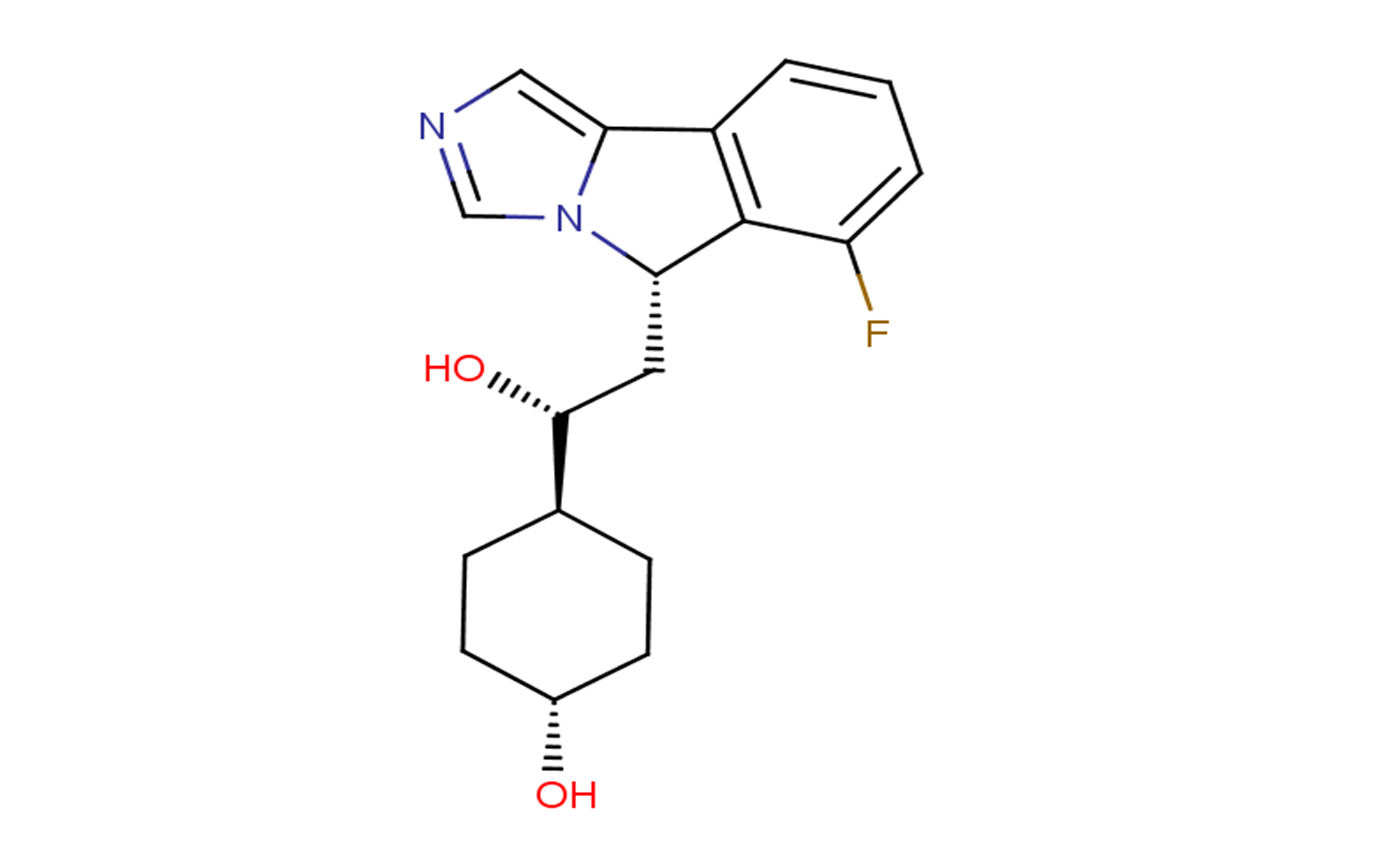
Navoximod
CAS No. 1402837-78-8
Navoximod( GDC-0919 | NLG-?919 )
Catalog No. M23561 CAS No. 1402837-78-8
Navoximod (NLG- 919, GDC-0919) is a potent indoleamine-(2,3)-dioxygenase (IDO) pathway inhibitor (Ki/EC50: 7 nM/75 nM).
Purity : >98% (HPLC)
 COA
Datasheet
HNMR
HPLC
MSDS
Handing Instructions
COA
Datasheet
HNMR
HPLC
MSDS
Handing Instructions
| Size | Price / USD | Stock | Quantity |
| 1 mL x 10 mM in DMSO | 335 | In Stock |


|
| 5MG | 330 | In Stock |
|
| 10MG | 496 | In Stock |
|
| 25MG | 634 | In Stock |
|
| 50MG | 770 | In Stock |
|
| 100MG | 1079 | In Stock |
|
| 200MG | Get Quote | In Stock |
|
| 500MG | Get Quote | In Stock |
|
| 1G | Get Quote | In Stock |
|
Biological Information
-
Product NameNavoximod
-
NoteResearch use only, not for human use.
-
Brief DescriptionNavoximod (NLG- 919, GDC-0919) is a potent indoleamine-(2,3)-dioxygenase (IDO) pathway inhibitor (Ki/EC50: 7 nM/75 nM).
-
DescriptionNavoximod (NLG- 919, GDC-0919) is a potent indoleamine-(2,3)-dioxygenase (IDO) pathway inhibitor (Ki/EC50: 7 nM/75 nM).(In Vitro):Using IDO-expressing human monocyte-derived dendritic cells (DCs) in allogeneic mixed lymphocyte reaction (MLR) reactions, Navoximod (NLG919) potently blocks IDO-induced T cell suppression and restores robust T cell responses with an ED50=80 nM. Similarly, using IDO-expressing mouse DCs from tumor-draining lymph nodes, Navoximod abrogates IDO-induced suppression of antigen-specific T cells (OT-I) in vitro, with ED50=120 nM. Navoximod inhibits the IDO activity in a concentration-dependent manner with an EC50 of 0.95 μM. PEG2k-Fmoc-NLG(L) is less active (EC50 of 3.4 μM) in inhibiting IDO compared with free Navoximod while PEG2k-Fmoc-NLG(S) is least active (EC50>10 μM). Coculture of IDO+tumor cells with splenocytes isolated from BALB/c mice leads to significant inhibition of T-cell proliferation. This inhibition is significantly attenuated when the mixed cells are treated with Navoximod. PEG2k-Fmoc-NLG(L) is also active in reversing the inhibitory effect of tumour cells although slightly less potent than Navoximod . (In Vivo):VNavoximod (NLG919) is orally bioavailable (F>70%); and has a favorable pharmacokinetic and toxicity profile. In mice, a single oral administration of Navoximod reduces the concentration of plasma and tissue Kyn by ~50%. In vivo, in mice bearing large established B16F10 tumors, administration of Navoximod markedly enhances the anti-tumor responses of na ve, resting pmel-1 cells to vaccination with cognate hgp100 peptide plus CpG-1826 in IFA. In this stringent established-tumor model, Navoximod plus pmel-1/vaccine produce a dramatic collapse of tumor size within 4 days of vaccination (~95% reduction in tumor volume compare to control animals receiving pmel-1/vaccine alone without Navoximod). When combined with NSC 362856 (TMZ)+radiation therapy (RT), both Navoximod and D-1MT (Indoximod) enhance survival relative to mice treated with TMZ+RT alone.
-
In VitroUsing IDO-expressing human monocyte-derived dendritic cells (DCs) in allogeneic mixed lymphocyte reaction (MLR) reactions, Navoximod (NLG919) potently blocks IDO-induced T cell suppression and restores robust T cell responses with an ED50=80 nM. Similarly, using IDO-expressing mouse DCs from tumor-draining lymph nodes, Navoximod abrogates IDO-induced suppression of antigen-specific T cells (OT-I) in vitro, with ED50=120 nM. Navoximod inhibits the IDO activity in a concentration-dependent manner with an EC50 of 0.95?μM. PEG2k-Fmoc-NLG(L) is less active (EC50 of 3.4?μM) in inhibiting IDO compared with free Navoximod while PEG2k-Fmoc-NLG(S) is least active (EC50>10?μM). Coculture of IDO+tumor cells with splenocytes isolated from BALB/c mice leads to significant inhibition of T-cell proliferation. This inhibition is significantly attenuated when the mixed cells are treated with Navoximod. PEG2k-Fmoc-NLG(L) is also active in reversing the inhibitory effect of tumour cells although slightly less potent than Navoximod .
-
In VivoVNavoximod (NLG919) is orally bioavailable (F>70%); and has a favorable pharmacokinetic and toxicity profile. In mice, a single oral administration of Navoximod reduces the concentration of plasma and tissue Kyn by ~50%. In vivo, in mice bearing large established B16F10 tumors, administration of Navoximod markedly enhances the anti-tumor responses of na?ve, resting pmel-1 cells to vaccination with cognate hgp100 peptide plus CpG-1826 in IFA. In this stringent established-tumor model, Navoximod plus pmel-1/vaccine produce a dramatic collapse of tumor size within 4 days of vaccination (~95% reduction in tumor volume compare to control animals receiving pmel-1/vaccine alone without Navoximod). When combined with NSC 362856 (TMZ)+radiation therapy (RT), both Navoximod and D-1MT (Indoximod) enhance survival relative to mice treated with TMZ+RT alone.
-
SynonymsGDC-0919 | NLG-?919
-
PathwayMetabolic Enzyme/Protease
-
TargetIDO
-
RecptorIDO
-
Research Area——
-
Indication——
Chemical Information
-
CAS Number1402837-78-8
-
Formula Weight316.37
-
Molecular FormulaC18H21FN2O2
-
Purity>98% (HPLC)
-
SolubilityDMSO:100 mg/mL (316.09 mM; Need ultrasonic)
-
SMILESO[C@@H]([C@H]1CC[C@H](O)CC1)C[C@@H](C2=C3C=CC=C2F)N4C3=CN=C4
-
Chemical Name——
Shipping & Storage Information
-
Storage(-20℃)
-
ShippingWith Ice Pack
-
Stability≥ 2 years
Reference
1.Mario R. Mautino, et al. Abstract 491: NLG919, a novel indoleamine-2,3-dioxygenase (IDO)-pathway inhibitor drug candidate for cancer therapy. AACR 104th Annual Meeting 2013; Apr 6-10, 2013.
molnova catalog



related products
-
Chelidonine
Chelidonine isolated from Chelidonium majus efficiently induced apoptosis in HeLa cells through possible alteration of p38-p53 and AKT/PI3 kinase signalling pathways.
-
Ferrous Bisglycinate
Ferrous Bisglycinate is used in the fortification of infant formulations and foods.
-
1-Hexadecanol
1-Hexadecanol, a fatty alcoholis, is utilized for making other chemicals.
