


 Cart
Cart
 sales@molnova.com



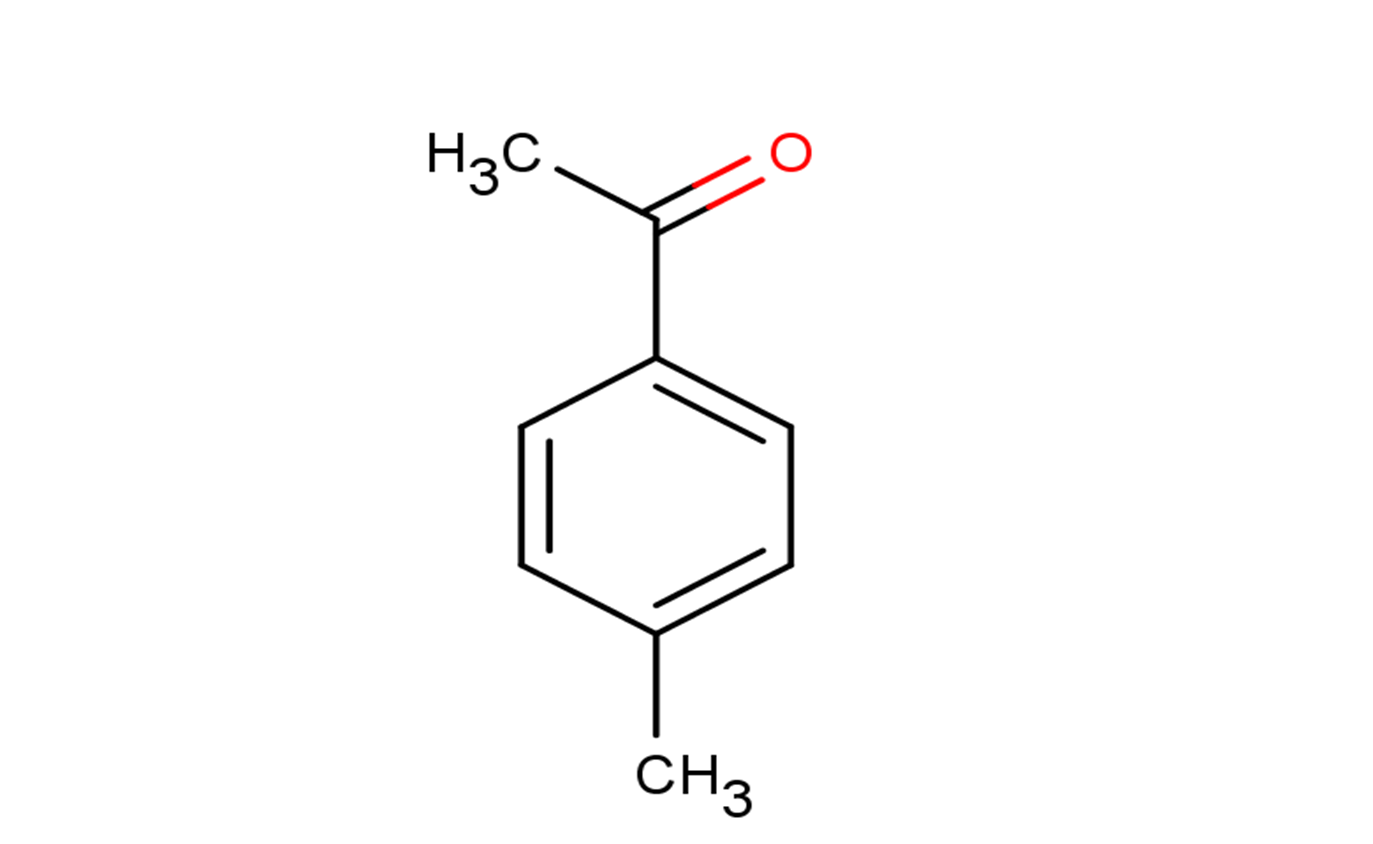
4-Methylacetophenone
CAS No. 122-00-9
4-Methylacetophenone( —— )
Catalog No. M23388 CAS No. 122-00-9
4'-Methylacetophenone can be used as a fragrance material. It is wildly occurred in volatile compounds in food and in some natural complex substances.
Purity : >98% (HPLC)
 COA
Datasheet
HNMR
HPLC
MSDS
Handing Instructions
COA
Datasheet
HNMR
HPLC
MSDS
Handing Instructions
| Size | Price / USD | Stock | Quantity |
| 1 mL x 10 mM in DMSO | 28 | In Stock |


|
| 100MG | Get Quote | In Stock |
|
| 200MG | Get Quote | In Stock |
|
| 500MG | Get Quote | In Stock |
|
| 1G | 27 | In Stock |
|
Biological Information
-
Product Name4-Methylacetophenone
-
NoteResearch use only, not for human use.
-
Brief Description4'-Methylacetophenone can be used as a fragrance material. It is wildly occurred in volatile compounds in food and in some natural complex substances.
-
Description4'-Methylacetophenone can be used as a fragrance material. It is wildly occurred in volatile compounds in food and in some natural complex substances.
-
In Vitro——
-
In Vivo——
-
Synonyms——
-
PathwayOthers
-
TargetOther Targets
-
RecptorOthers
-
Research Area——
-
Indication——
Chemical Information
-
CAS Number122-00-9
-
Formula Weight134.18
-
Molecular FormulaC9H10O
-
Purity>98% (HPLC)
-
SolubilityDMSO:10 mM
-
SMILESCC(C1=CC=C(C)C=C1)=O
-
Chemical Name——
Shipping & Storage Information
-
Storage(-20℃)
-
ShippingWith Ice Pack
-
Stability≥ 2 years
Reference
1.Api AM, et al. RIFM fragrance ingredient safety assessment, 4'-methylacetophenone, CAS Registry Number 122-00-9. Food Chem Toxicol. 2018 Dec;122 Suppl 1:S75-S83.
molnova catalog



related products
-
IL-17 modulator 4
IL-17 modulator 4 is a prodrug of IL-17 modulator 1 . IL-17 modulator 1 is an orally active, highly efficacious IL-17 modulator.
-
[Cys0]-GTP-Binding P...
[Cys0]-GTP-Binding Protein Gsa (28-42); GTP-Binding Protein Fragment, Gs alpha
-
6-Diazo-5-oxo-L-nor-...
6-Diazo-5-oxo-L-nor-Leucine (L-6-Diazo-5-oxonorleucine) is a glutaminase antagonist (Ki: 6 μM) and an antineoplastic antibiotic produced by an unidentified Streptomyces species from Peruvian soil.
