


 Cart
Cart
 sales@molnova.com



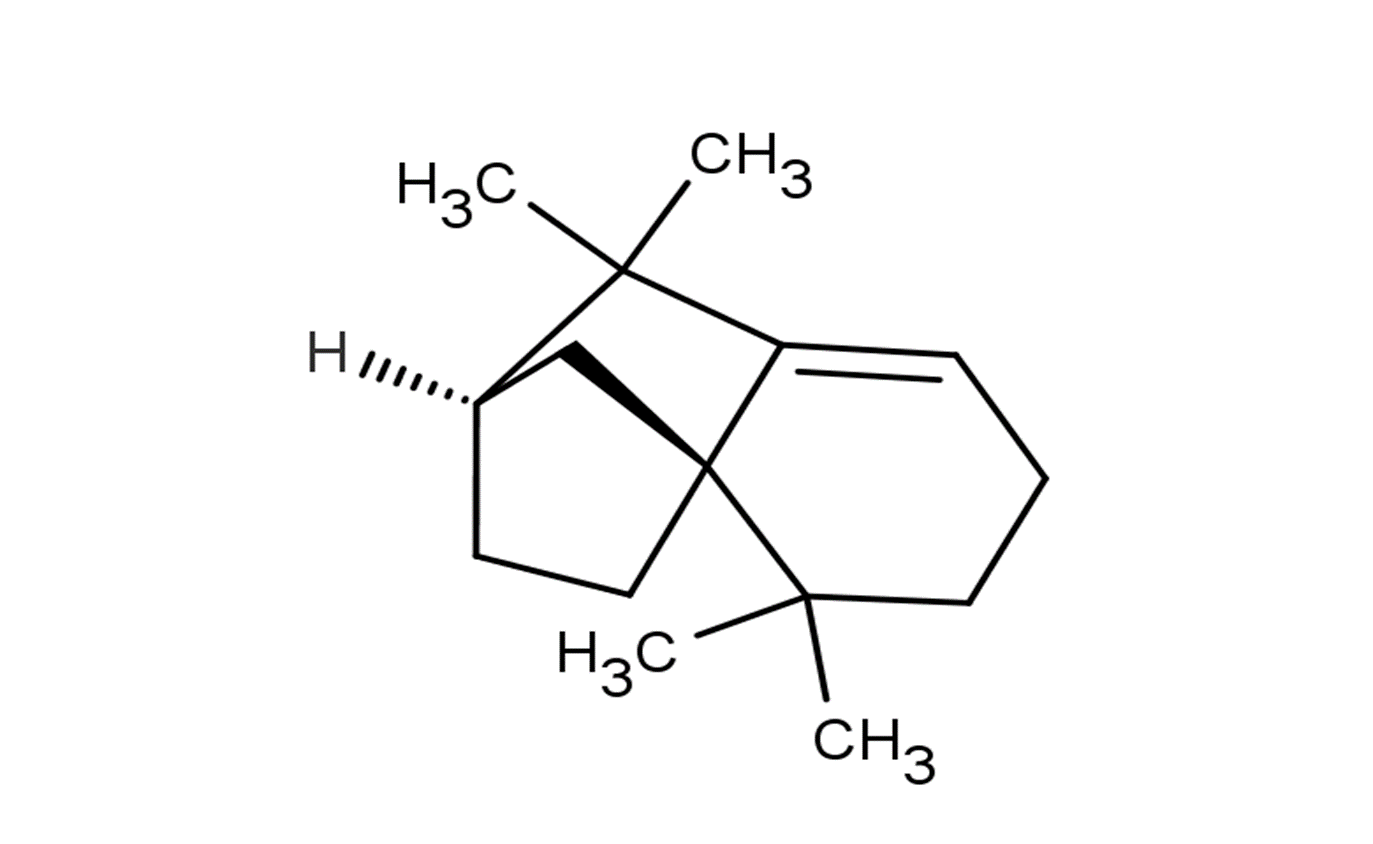
Isolongifolene
CAS No. 1135-66-6
Isolongifolene( (-)-Isolongifolene )
Catalog No. M23324 CAS No. 1135-66-6
Isolongifolene has antioxidant, anti-inflammatory, anticancer and neuroprotective properties.
Purity : >98% (HPLC)
 COA
Datasheet
HNMR
HPLC
MSDS
Handing Instructions
COA
Datasheet
HNMR
HPLC
MSDS
Handing Instructions
| Size | Price / USD | Stock | Quantity |
| 1 mL x 10 mM in DMSO | 103 | In Stock |


|
| 2MG | 56 | In Stock |
|
| 5MG | 93 | In Stock |
|
| 10MG | 148 | In Stock |
|
| 25MG | 250 | In Stock |
|
| 100MG | Get Quote | In Stock |
|
| 200MG | Get Quote | In Stock |
|
| 500MG | Get Quote | In Stock |
|
| 1G | Get Quote | In Stock |
|
Biological Information
-
Product NameIsolongifolene
-
NoteResearch use only, not for human use.
-
Brief DescriptionIsolongifolene has antioxidant, anti-inflammatory, anticancer and neuroprotective properties.
-
DescriptionIsolongifolene has antioxidant, anti-inflammatory, anticancer and neuroprotective properties. Isolongifolene is a tricyclic sesquiterpene isolated from Murraya koenigii. Isolongifolene attenuates Rotenone-induced oxidative stress, mitochondrial dysfunction and apoptosis through the regulation of P13K/AKT/GSK-3β signaling pathways.
-
In VitroIsolongifolene (0-50 μM; 26 hours; SH-SY5Y neuroblastoma cells) treatment significantly alleviates Rotenone-induced cytotoxicity in SH-SY5Y cells in a dose-dependent manner.Isolongifolene (10 μM; 26 hours; SH-SY5Y neuroblastoma cells) treatment attenuates Rotenone-induced apoptosis in SH-SY5Y cells.Isolongifolene (10 μM; 26 hours; SH-SY5Y neuroblastoma cells) treatment attenuates Rotenone induced toxicity by down-regulating Bax, caspases-3, 6, 8 and 9 expression and up-regulating of Bcl-2 expression. Furthermore regulation of p-P13K, p-AKT and p-GSK-3β expression by Isolongifolene. Cell Viability Assay Cell Line:SH-SY5Y neuroblastoma cells Concentration:0 μM, 1 μM, 2.5 μM, 5 μM, 10 μM, 20 μM and 50 μM Incubation Time:26 hours Result:Significantly alleviated Rotenone-induced cytotoxicity in SH-SY5Y cells.Apoptosis Analysis Cell Line:SH-SY5Y neuroblastoma cells Concentration:10 μMIncubation Time:26 hours Result:Attenuated Rotenone-induced apoptosis in SH-SY5Y cells.Western Blot AnalysisCell Line:SH-SY5Y neuroblastoma cells Concentration:10 μM Incubation Time:26 hours Result:Attenuated rotenone induced toxicity by down-regulatingBax, caspases-3, 6, 8 and 9 expression and up-regulating of Bcl-2 expression. Prevented the rotenone-induced decreased phosphorylation of GSK-3β.
-
In Vivo——
-
Synonyms(-)-Isolongifolene
-
PathwayOthers
-
TargetOther Targets
-
RecptorOthers
-
Research Area——
-
Indication——
Chemical Information
-
CAS Number1135-66-6
-
Formula Weight204.35
-
Molecular FormulaC15H24
-
Purity>98% (HPLC)
-
SolubilityDMSO:10 mM
-
SMILESCC1(C)[C@]23CC[C@](C3)([H])C(C)(C)C2=CCC1
-
Chemical Name——
Shipping & Storage Information
-
Storage(-20℃)
-
ShippingWith Ice Pack
-
Stability≥ 2 years
Reference
1.Balakrishnan R, et al. Isolongifolene attenuates rotenone-induced mitochondrial dysfunction, oxidative stress and apoptosis. Front Biosci (Schol Ed). 2018 Jan 1;10:248-261.
molnova catalog



related products
-
NMDAR antagonist 1
NMDAR antagonist 1 is a potent and orally bioavailable NR2B-selective antagonist of NMDAR.
-
5-amino-2-(2,6-dioxo...
5-amino-2-(2,6-dioxopiperidin-3-yl)isoindoline-1,3-dione is a E3 ligase ligand used in PROTAC technology.
-
Quercetin-3-gentiobi...
Quercetin 3-gentiobioside is an inhibitor of AR and AGE formation and can be extracted from A. iwayomogi.Quercetin 3-gentiobioside inhibits the biological activity of aldose reductase (AR) and the formation of advanced glycosylation end products (AGEs).
