


 Cart
Cart
 sales@molnova.com



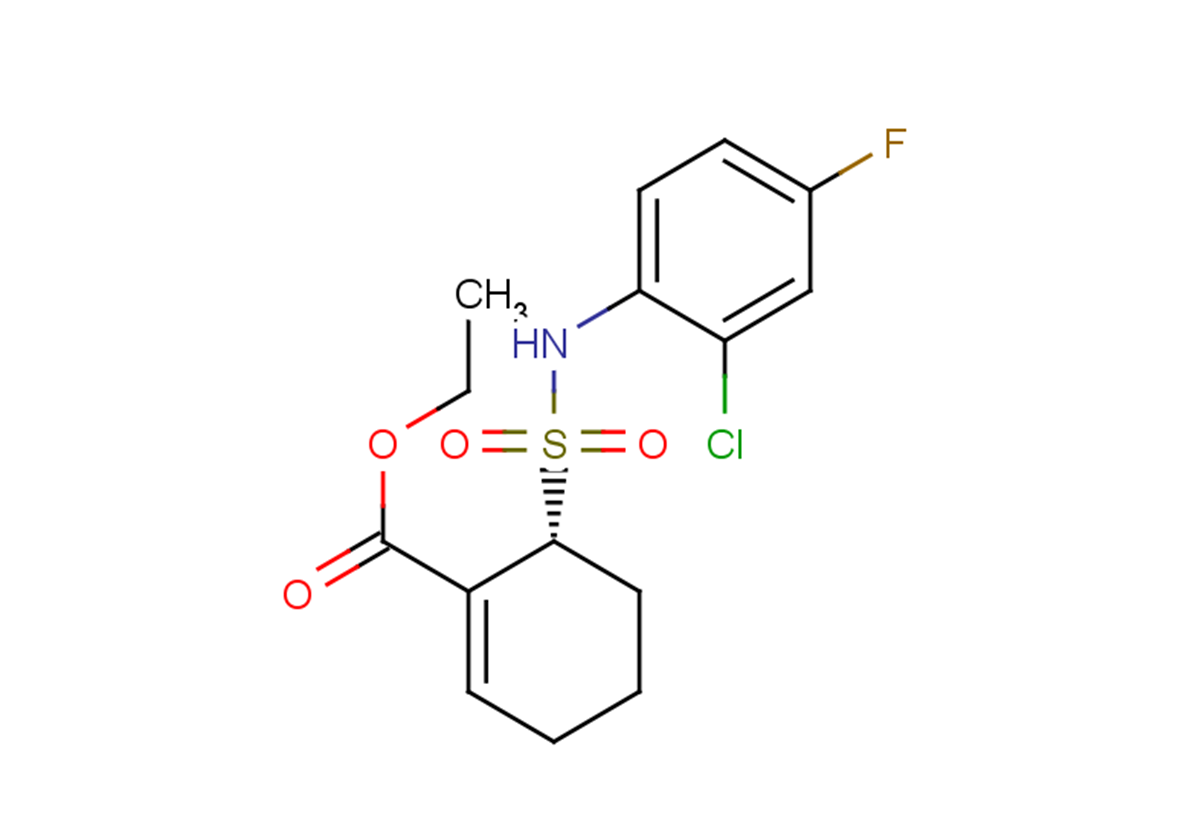
Resatorvid
CAS No. 243984-11-4
Resatorvid( TAK-242,CLI-095 )
Catalog No. M22910 CAS No. 243984-11-4
Resatorvid (TAK-242) is a selective inhibitor of Toll-like receptor 4 (TLR4). Resatorvid inhibits IL-6, TNF-R and NO production (IC50s: 1.3 nM, 1.9 nM, and 1.8 nM).Resatorvid suppresses the production of NO, TNF-α, and IL-6 from LPS-stimulated human peripheral blood mononuclear cells (PBMCs, IC50s: 11-33 nM).
Purity : >98% (HPLC)
 COA
Datasheet
HNMR
HPLC
MSDS
Handing Instructions
COA
Datasheet
HNMR
HPLC
MSDS
Handing Instructions
| Size | Price / USD | Stock | Quantity |
| 1 mL x 10 mM in DMSO | 112 | In Stock |


|
| 2MG | 61 | In Stock |
|
| 5MG | 92 | In Stock |
|
| 10MG | 159 | In Stock |
|
| 25MG | 307 | In Stock |
|
| 50MG | 491 | In Stock |
|
| 100MG | 789 | In Stock |
|
| 200MG | Get Quote | In Stock |
|
| 500MG | Get Quote | In Stock |
|
| 1G | Get Quote | In Stock |
|
Biological Information
-
Product NameResatorvid
-
NoteResearch use only, not for human use.
-
Brief DescriptionResatorvid (TAK-242) is a selective inhibitor of Toll-like receptor 4 (TLR4). Resatorvid inhibits IL-6, TNF-R and NO production (IC50s: 1.3 nM, 1.9 nM, and 1.8 nM).Resatorvid suppresses the production of NO, TNF-α, and IL-6 from LPS-stimulated human peripheral blood mononuclear cells (PBMCs, IC50s: 11-33 nM).
-
DescriptionResatorvid (TAK-242) is a selective inhibitor of Toll-like receptor 4 (TLR4). Resatorvid inhibits IL-6, TNF-R and NO production (IC50s: 1.3 nM, 1.9 nM, and 1.8 nM).Resatorvid suppresses the production of NO, TNF-α, and IL-6 from LPS-stimulated human peripheral blood mononuclear cells (PBMCs, IC50s: 11-33 nM). Resatorvid (1-100 nM; 15 minutes; PBMCs cells) markedly inhibits the LPS-induced phosphorylation of extracellular signal-regulated kinase 1/2 (Erk1/2), p38, and JNK/SAPK as well as degradation of IκBβ at a concentration of 100 nM. Resatorvid (1-100 nM; 4 hours) inhibits mRNA expression of IL-6 and TNF-α induced by LPS and IFN-γ in RAW264.7 cells.In ApoE knockout and wild-type mice, Resatorvid (0.3 mg/kg; intraperitoneal injection; twice a week; for 4 weeks) treatment inhibits serum autoantibodies (ANA and anti-dsDNA), cytokines (IFN-γ, TNF-α, IL-1β), lung inflammation, and intima-media thickness in brachiocephalic artery.
-
In VitroRT-PCRCell Line:RAW264.7 cells Concentration:1 nM, 10 nM, 100 nM Incubation Time:4 hours Result:TNF-α and IL-6 mRNA expression levels were clearly suppressed at concentrations of 10 to 100 nM.Western Blot Analysis Cell Line:PBMCs cells Concentration:1 nM, 10 nM, 100 nM Incubation Time:15 minutes Result:The phosphorylation of mitogen-activated protein kinases induced by LPS was also inhibited in a concentration-dependent manner.
-
In VivoAnimal Model:Male C57BL/6 mice (8-12 weeks of age) treated with lipopolysaccharide (LPS)Dosage:3?mg/kg Administration:Intraperitoneal injection; for 2 days Result:Pretreatment of mice reduced or reversed all the detrimental effects of LPS.
-
SynonymsTAK-242,CLI-095
-
PathwayImmunology/Inflammation
-
TargetTLR
-
RecptorTLR4|TNF-R
-
Research AreaInflammation
-
IndicationSeptic shock
Chemical Information
-
CAS Number243984-11-4
-
Formula Weight361.82
-
Molecular FormulaC15H17ClFNO4S
-
Purity>98% (HPLC)
-
SolubilityDMSO:100 mg/mL (276.38 mM; Need ultrasonic)
-
SMILESO=S([C@H]1C(C(OCC)=O)=CCCC1)(NC2=CC=C(C=C2Cl)F)=O
-
Chemical Name——
Shipping & Storage Information
-
Storage(-20℃)
-
ShippingWith Ice Pack
-
Stability≥ 2 years
Reference
1. Ii M, et al. A novel cyclohexene derivative, ethyl (6R)-6-[N-(2-Chloro-4-fluorophenyl)sulfamoyl]cyclohex-1-ene-1-carboxylate (TAK-242), selectively inhibits toll-like receptor 4-mediated cytokine production through suppression of intracellular signaling. Mol Pharmacol, 69 (4), 1288-95, Apr 2006.
molnova catalog



related products
-
Imiquimod 2HCl
Imiquimod 2HCl is a toll-like receptor 7 (TLR7) agonist and an immunomodulator with antiviral and antitumor activity.
-
CU CPT 4a
CU CPT 4a is a selective TLR3 inhibitor (IC50: 3.44 μM in RAW 264.7 cells).
-
Pam3CSK4
Pam3CSK4 is a synthetic triacylated lipopeptide (LP) that mimics the acylated amino terminus of bacterial LPs.
