


 Cart
Cart
 sales@molnova.com



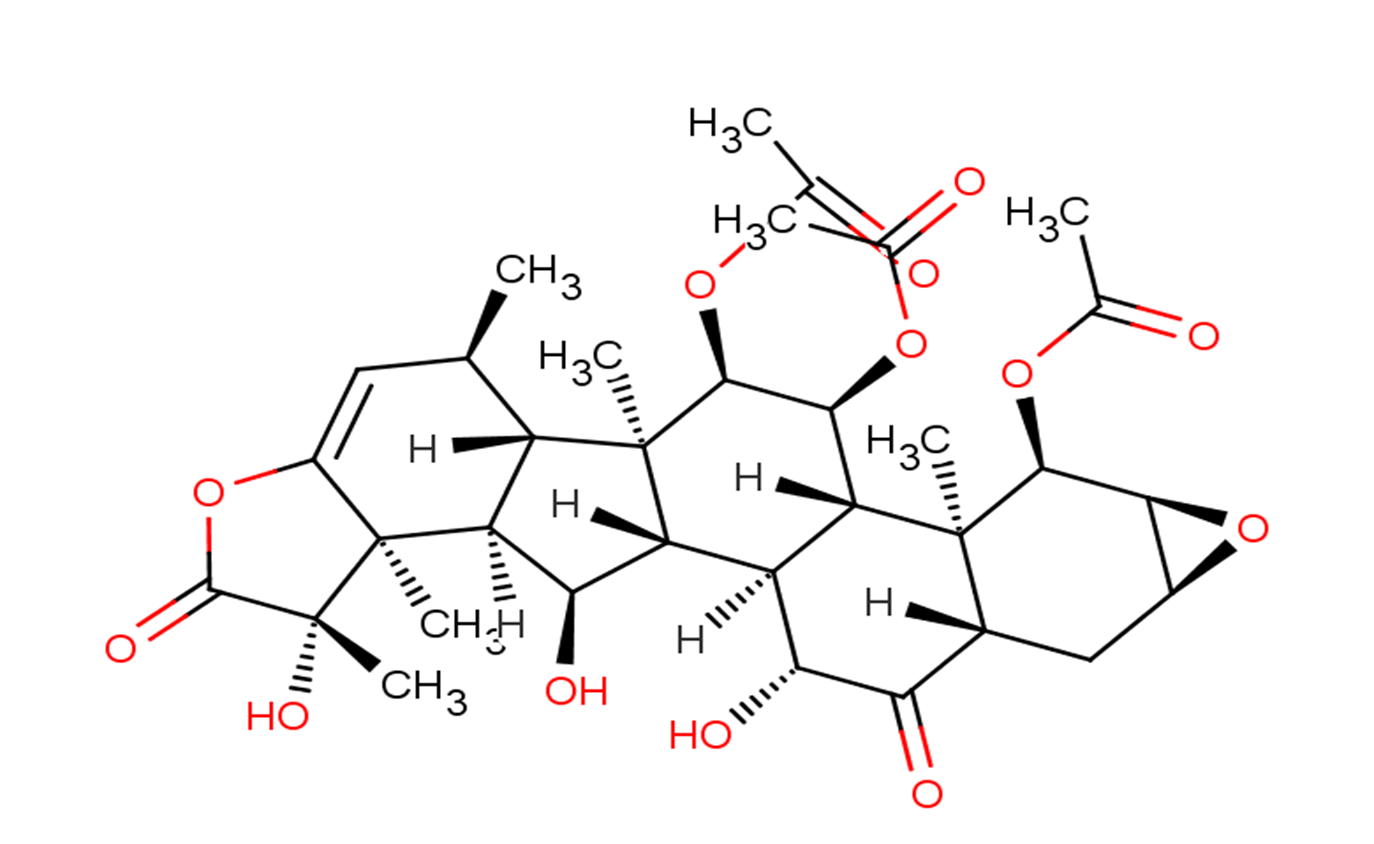
Taccalonolide B
CAS No. 108885-69-4
Taccalonolide B( —— )
Catalog No. M22825 CAS No. 108885-69-4
Taccalonolide B is effective in vitro against cell lines that overexpress P-glycoprotein (Pgp) and multidrug-resistance protein (MRP7). Taccalonolide B inhibits growth of SK-OV-3 cells with an IC50 of 208 nM.The structures were elucidated using a combination of spectroscopic methods, including 1D and 2D NMR and HR-ESI-MS.
Purity : >98% (HPLC)
 COA
Datasheet
HNMR
HPLC
MSDS
Handing Instructions
COA
Datasheet
HNMR
HPLC
MSDS
Handing Instructions
| Size | Price / USD | Stock | Quantity |
| 5MG | 112 | In Stock |


|
| 10MG | 188 | In Stock |
|
| 100MG | Get Quote | In Stock |
|
| 200MG | Get Quote | In Stock |
|
| 500MG | Get Quote | In Stock |
|
| 1G | Get Quote | In Stock |
|
Biological Information
-
Product NameTaccalonolide B
-
NoteResearch use only, not for human use.
-
Brief DescriptionTaccalonolide B is effective in vitro against cell lines that overexpress P-glycoprotein (Pgp) and multidrug-resistance protein (MRP7). Taccalonolide B inhibits growth of SK-OV-3 cells with an IC50 of 208 nM.The structures were elucidated using a combination of spectroscopic methods, including 1D and 2D NMR and HR-ESI-MS.
-
DescriptionTaccalonolide B is effective in vitro against cell lines that overexpress P-glycoprotein (Pgp) and multidrug-resistance protein (MRP7). Taccalonolide B inhibits growth of SK-OV-3 cells with an IC50 of 208 nM.The structures were elucidated using a combination of spectroscopic methods, including 1D and 2D NMR and HR-ESI-MS. Taccalonolide AJ, an epoxidation product of Taccalonolide B, was generated by semisynthesis. Five of these taccalonolides demonstrated cellular microtubule-stabilizing activities and antiproliferative actions against cancer cells, with taccalonolide AJ exhibiting the highest potency with an IC50 value of 4.2 nM. The range of potencies of these compounds, from 4.2 nM to >50 μM, for the first time provides the opportunity to identify specific structural moieties crucial for potent biological activities as well as those that impede optimal cellular effects. In mechanistic assays, taccalonolides AF and AJ stimulated the polymerization of purified tubulin, an activity that had not previously been observed for taccalonolides A and B, providing the first evidence that this class of microtubule stabilizers can interact directly with tubulin/microtubules. Taccalonolides AF and AJ were able to enhance tubulin polymerization to the same extent as paclitaxel but exhibited a distinct kinetic profile, suggesting a distinct binding mode or the possibility of a new binding site.
-
In Vitro——
-
In Vivo——
-
Synonyms——
-
PathwayCytoskeleton/Cell Adhesion Molecules
-
TargetMicrotubule/Tubulin
-
Recptormicrotubule
-
Research Area——
-
Indication——
Chemical Information
-
CAS Number108885-69-4
-
Formula Weight660.71
-
Molecular FormulaC34H44O13
-
Purity>98% (HPLC)
-
Solubility——
-
SMILESC[C@]1([C@]2([H])C[C@H](O3)[C@H]3[C@@H]1OC(C)=O)[C@]4([H])[C@]([C@@H](O)C2=O)([H])[C@@]5([H])[C@@](C)([C@]6([H])[C@@]([C@](C(OC7=O)=C[C@H]6C)([C@@]7(O)C)C)([H])[C@@H]5O)[C@@H](OC(C)=O)[C@H]4OC(C)=O
-
Chemical Name——
Shipping & Storage Information
-
Storage(-20℃)
-
ShippingWith Ice Pack
-
Stability≥ 2 years
Reference
Potent Taccalonolides, AF and AJ, Inform Significant Structure??Activity Relationships and Tubulin as the Binding Site of These Microtubule StabilizersJ. Am. Chem. Soc., 2011, 133 (47), pp 19064??19067
molnova catalog



related products
-
Oxymatrine
Oxymatrine is an alkaloid isolated from Sophora flavescens, used as the antibiotic. It is a traditional Chinese medicine used in the treatment against hepatitis B virus.
-
VERU-111 analogue 13...
VERU-111 analogue 13f is a novel potent colchicine binding site inhibitor (CBSI) in tubulin with potential anticancer activities.
-
cis-trismethoxy Resv...
cis-trismethoxy Resveratrol inhibits tubulin polymerization (IC50 = 4 μM) and has anti-mitotic effects.
