


 Cart
Cart
 sales@molnova.com



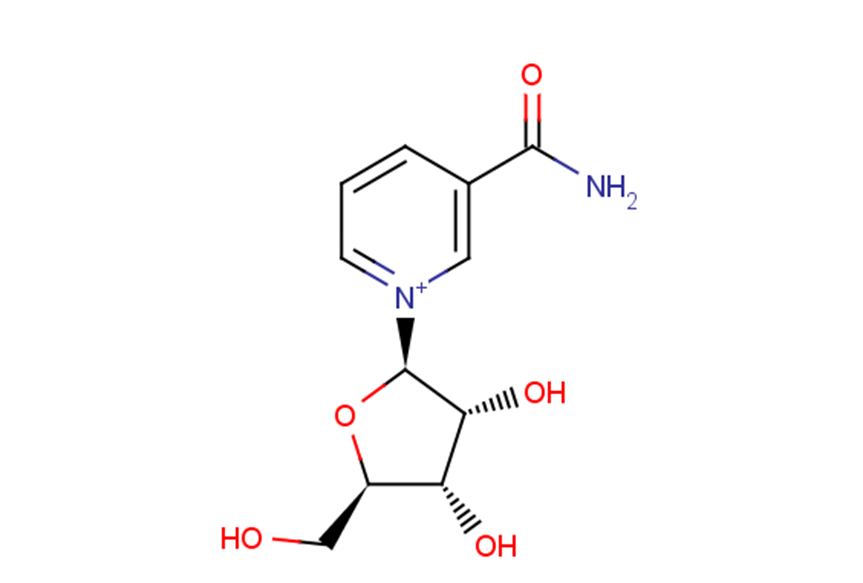
Nicotinamide riboside
CAS No. 1341-23-7
Nicotinamide riboside( —— )
Catalog No. M22482 CAS No. 1341-23-7
Nicotinamide riboside increases NAD[+] levels and activates SIRT1 and SIRT3, culminating in enhanced oxidative metabolism and protection against high fat diet-induced metabolic abnormalities.
Purity : >98% (HPLC)
 COA
Datasheet
HNMR
HPLC
MSDS
Handing Instructions
COA
Datasheet
HNMR
HPLC
MSDS
Handing Instructions
| Size | Price / USD | Stock | Quantity |
| 5MG | 48 | In Stock |


|
| 100MG | Get Quote | In Stock |
|
| 200MG | 223 | In Stock |
|
| 500MG | Get Quote | In Stock |
|
| 1G | Get Quote | In Stock |
|
Biological Information
-
Product NameNicotinamide riboside
-
NoteResearch use only, not for human use.
-
Brief DescriptionNicotinamide riboside increases NAD[+] levels and activates SIRT1 and SIRT3, culminating in enhanced oxidative metabolism and protection against high fat diet-induced metabolic abnormalities.
-
DescriptionNicotinamide riboside increases NAD[+] levels and activates SIRT1 and SIRT3, culminating in enhanced oxidative metabolism and protection against high fat diet-induced metabolic abnormalities.Nicotinamide riboside (NR) supplementation in mammalian cells and mouse tissues increases NAD(+) levels and activates SIRT1 and SIRT3, culminating in enhanced oxidative metabolism and protection against high-fat diet-induced metabolic abnormalities.The natural vitamin Nicotinamide riboside (NR) could be used as a nutritional supplement to ameliorate metabolic and age-related disorders characterized by defective mitochondrial function.
-
In VitroNicotinamide riboside (0.5 nM; 24 hours) reduces the acetylation status of Ndufa9 and SOD2.Nicotinamide riboside increases intracellular and mitochondrial NAD+ content in C2C12, Hepa1.6, and HEK293 cells in a concentration-dependent manner at concentrations ranging from 1-1000 μM.Nicotinamide riboside boosts NAD to restore antiviral poly(ADP-ribose) polymerase (PARP) functions to support innate immunity for coronavirus (CoVs), a cause of COVID-19.Western Blot Analysis Cell Line:HEK293T cells Concentration:0.5 nM Incubation Time:24 hours Result:Reduced the acetylation status of Ndufa9 and SOD2.
-
In VivoChronic Nicotinamide riboside (p.o.; 400 mg/kg/day; for 16 weeks) supplementation increases plasma and intracellular NAD+ content in a tissue-specific manner. Animal Model:10-week-old C57Bl/6J mice Dosage:400 mg/kg Administration:p.o.; daily; for 16 weeks Result:Increased plasma and intracellular NAD+ content in a tissue-specific manner.
-
Synonyms——
-
PathwayChromatin/Epigenetic
-
TargetSirtuin
-
RecptorSIRT1|SIRT3
-
Research Area——
-
Indication——
Chemical Information
-
CAS Number1341-23-7
-
Formula Weight255.25
-
Molecular FormulaC11H15N2O5
-
Purity>98% (HPLC)
-
Solubility——
-
SMILESNC(=O)c1ccc[n+](c1)[C@@H]1O[C@H](CO)[C@@H](O)[C@H]1O
-
Chemical Name——
Shipping & Storage Information
-
Storage(-20℃)
-
ShippingWith Ice Pack
-
Stability≥ 2 years
Reference
1. Cantó C, et al. The NAD(+) precursor nicotinamide riboside enhances oxidative metabolism and protectsagainst high-fat diet-induced obesity. Cell Metab. 2012 Jun 6;15(6):838-47.
molnova catalog



related products
-
MZ-242
A novel potent, selective Sirt2 inhibitor with IC50 of 0.118 uM.
-
Fisetin
Extracted from Rhus succedanea L;Store the product in sealed, cool and dry condition.
-
Tenovin-D3
A novel selective, small-molecule inhibitor of sirtuin SITR2 with IC50 of 21.8 uM.
