


 Cart
Cart
 sales@molnova.com



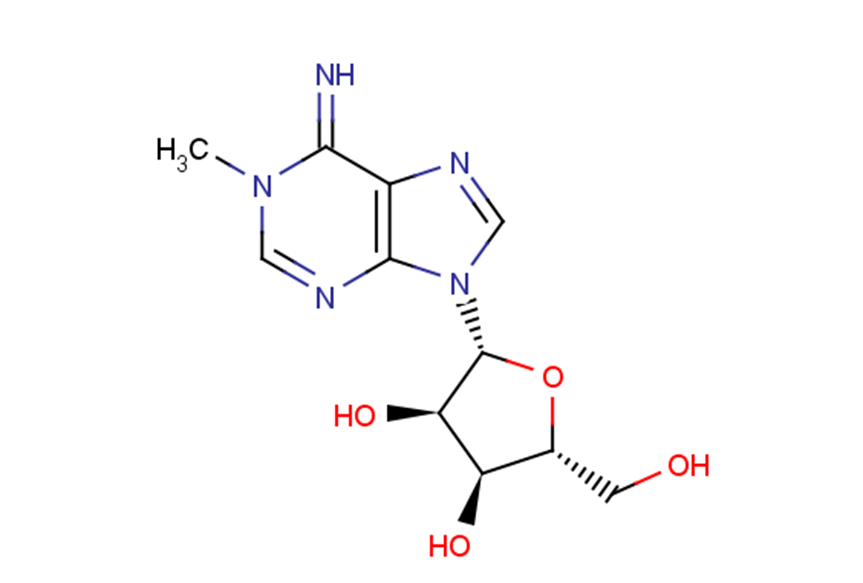
1-Methyladenosine
CAS No. 15763-06-1
1-Methyladenosine( —— )
Catalog No. M22280 CAS No. 15763-06-1
1-Methyladenosine (M1A) belongs to the class of organic compounds known as purine nucleosides.
Purity : >98% (HPLC)
 COA
Datasheet
HNMR
HPLC
MSDS
Handing Instructions
COA
Datasheet
HNMR
HPLC
MSDS
Handing Instructions
| Size | Price / USD | Stock | Quantity |
| 1 mL x 10 mM in DMSO | 37 | In Stock |


|
| 25MG | 31 | In Stock |
|
| 50MG | 44 | In Stock |
|
| 100MG | 63 | In Stock |
|
| 200MG | Get Quote | In Stock |
|
| 500MG | Get Quote | In Stock |
|
| 1G | Get Quote | In Stock |
|
Biological Information
-
Product Name1-Methyladenosine
-
NoteResearch use only, not for human use.
-
Brief Description1-Methyladenosine (M1A) belongs to the class of organic compounds known as purine nucleosides.
-
Description1-Methyladenosine (M1A) belongs to the class of organic compounds known as purine nucleosides.
-
In Vitro——
-
In Vivo——
-
Synonyms——
-
PathwayProteasome/Ubiquitin
-
TargetEndogenous Metabolite
-
RecptorEndogenous Metabolite
-
Research Area——
-
Indication——
Chemical Information
-
CAS Number15763-06-1
-
Formula Weight281.27
-
Molecular FormulaC11H15N5O4
-
Purity>98% (HPLC)
-
SolubilityDMSO:145 mg/mL (515.52 mM; Need ultrasonic)
-
SMILESCN(C=Nc1c2ncn1[C@@H]([C@@H]1O)O[C@H](CO)[C@H]1O)C2=N
-
Chemical Name——
Shipping & Storage Information
-
Storage(-20℃)
-
ShippingWith Ice Pack
-
Stability≥ 2 years
Reference
1.Hauenschild R, et al. The reverse transcription signature of N-1-methyladenosine in RNA-Seq is sequence dependent. Nucleic Acids Res. 2015 Nov 16;43(20):9950-64.
molnova catalog



related products
-
N8-Acetylspermidine ...
N8-Acetylspermidine dihydrochloride is a polyamine that regulates ischemic cardiac apoptosis and resultant cardiac dysfunction.
-
Enterostatin, human,...
Enterostatin, human, mouse, rat is a pentapeptide that reduces fat intake.
-
L-Homoserine
Homoserine is a more reactive variant of the amino acid serine. In this variant the hydroxyl side chain contains an additional CH2 group which brings the hydroxyl group closer to its own carboxyl group allowing it to chemically react to form a five-membered ring.
