


 Cart
Cart
 sales@molnova.com



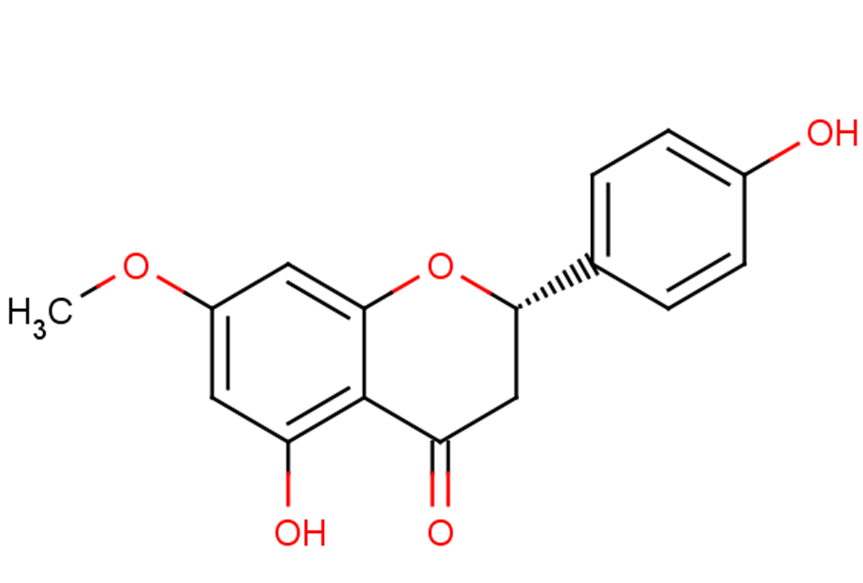
Sakuranetin
CAS No. 2957-21-3
Sakuranetin( —— )
Catalog No. M22168 CAS No. 2957-21-3
Sakuranetin, a flavanone phytoalexin from ultraviolet-irradiated rice leaves, it has antifungal, antimutagenic, anti-inflammatory and antioxidant effects.
Purity : >98% (HPLC)
 COA
Datasheet
HNMR
HPLC
MSDS
Handing Instructions
COA
Datasheet
HNMR
HPLC
MSDS
Handing Instructions
| Size | Price / USD | Stock | Quantity |
| 1 mL x 10 mM in DMSO | 93 | In Stock |


|
| 5MG | 85 | In Stock |
|
| 10MG | 116 | In Stock |
|
| 25MG | 217 | In Stock |
|
| 50MG | 319 | In Stock |
|
| 100MG | 462 | In Stock |
|
| 200MG | Get Quote | In Stock |
|
| 500MG | Get Quote | In Stock |
|
| 1G | Get Quote | In Stock |
|
Biological Information
-
Product NameSakuranetin
-
NoteResearch use only, not for human use.
-
Brief DescriptionSakuranetin, a flavanone phytoalexin from ultraviolet-irradiated rice leaves, it has antifungal, antimutagenic, anti-inflammatory and antioxidant effects.
-
DescriptionSakuranetin, a flavanone phytoalexin from ultraviolet-irradiated rice leaves, it has antifungal, antimutagenic, anti-inflammatory and antioxidant effects. Young rice leaves in a resistant line exhibited hypersensitive reaction (HR) within 3 days post inoculation (dpi) of a spore suspension, and an increase in Sakuranetin was detected at 3 dpi, increasing to 4-fold at 4 dpi. In the susceptible line, increased Sakuranetin was detected at 4 dpi, but not at 3 dpi, by which a large fungus mass has accumulated without HR. Induced expression of a PA biosynthesis gene OsNOMT for naringenin 7-O-methyltransferase was found before accumulation of Sakuranetin in both cultivars. The antifungal activity of Sakuranetin was considerably higher than that of the major rice diterpenoid PA momilactone A in vitro and in vivo under similar experimental conditions. The decrease and detoxification of Sakuranetin were detected in both solid and liquid mycelium cultures, and they took place slower than those of momilactone A. Estimated local concentration of Sakuranetin at HR lesions was thought to be effective for fungus restriction, while that at enlarged lesions in susceptible rice was insufficient.
-
In Vitro——
-
In VivoAnimal Model:Acute lung inflammation mice model induced by LPS (5 mg/kg)Dosage:20 mg/kg Administration:intratracheal instillation, 10 μLResult:Reduced respiratory system elastance.Decreased LPS-induced blood and pulmonary leukocytes.Reduced proinflammatory cytokines, markers of M1- and M2-like macrophages, and activation of NF-κB in lung tissue.
-
Synonyms——
-
PathwayMetabolic Enzyme/Protease
-
TargetPPAR
-
RecptorPPAR|NF-κB|VEGFR
-
Research Area——
-
Indication——
Chemical Information
-
CAS Number2957-21-3
-
Formula Weight286.29
-
Molecular FormulaC16H14O5
-
Purity>98% (HPLC)
-
SolubilityDMSO:125 mg/mL (436.64 mM)
-
SMILESCOc1cc(O)c2C(=O)C[C@H](Oc2c1)c1ccc(O)cc1
-
Chemical Name——
Shipping & Storage Information
-
Storage(-20℃)
-
ShippingWith Ice Pack
-
Stability≥ 2 years
Reference
1. Analysis on blast fungus-responsive characters of a flavonoid phytoalexin sakuranetin; accumulation in infected rice leaves, antifungal activity and detoxification by fungus.Molecules. 2014 Aug 4;19(8):11404-18.
molnova catalog



related products
-
AZD 6610
AZD 6610 is a dual peroxisome proliferator-activated receptor (PPAR) α/γ agonist for treatment of diabetes mellitus.
-
ARH-049020
ARH-049020 (ARH049020) is a PPAR agonist used in the study of type 2 diabetes.
-
Arhalofenate
Arhalofenate is a selective partial agonist of peroxisome proliferator-activated receptor PPARγ. It is used for the treatment of type 2 diabetes.
