


 Cart
Cart
 sales@molnova.com



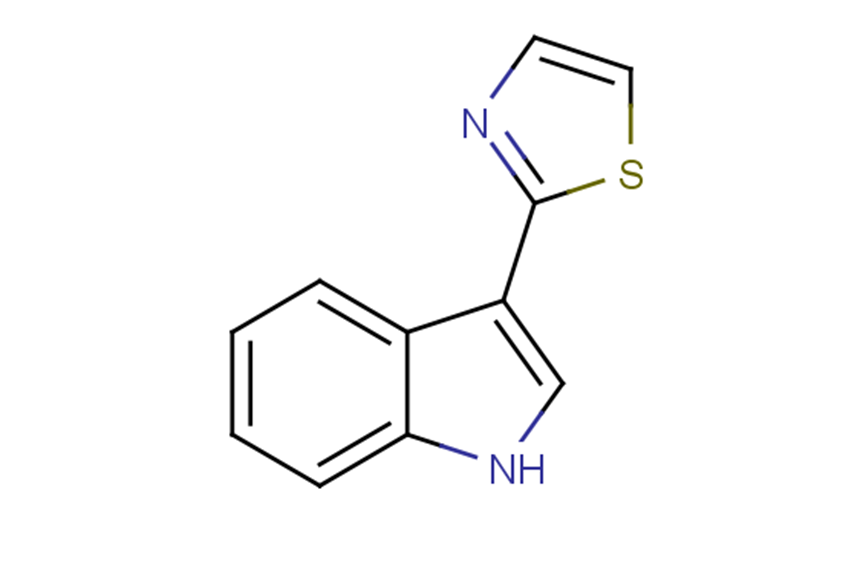
Camalexin
CAS No. 135531-86-1
Camalexin( —— )
Catalog No. M22164 CAS No. 135531-86-1
Camalexin is a phytoalexin isolated from Camelina sativa. It has antifungal, antibacterial, antiproliferative, and anticancer activities.
Purity : >98% (HPLC)
 COA
Datasheet
HNMR
HPLC
MSDS
Handing Instructions
COA
Datasheet
HNMR
HPLC
MSDS
Handing Instructions
| Size | Price / USD | Stock | Quantity |
| 1 mL x 10 mM in DMSO | 49 | In Stock |


|
| 2MG | 29 | In Stock |
|
| 5MG | 46 | In Stock |
|
| 10MG | 73 | In Stock |
|
| 25MG | 147 | In Stock |
|
| 50MG | 233 | In Stock |
|
| 100MG | 346 | In Stock |
|
| 200MG | Get Quote | In Stock |
|
| 500MG | Get Quote | In Stock |
|
| 1G | Get Quote | In Stock |
|
Biological Information
-
Product NameCamalexin
-
NoteResearch use only, not for human use.
-
Brief DescriptionCamalexin is a phytoalexin isolated from Camelina sativa. It has antifungal, antibacterial, antiproliferative, and anticancer activities.
-
DescriptionCamalexin is a phytoalexin isolated from Camelina sativa. It has antifungal, antibacterial, antiproliferative, and anticancer activities. Camalexin can induce ROS production.Camalexin shows antiproliferative activity against a human breast cancer cell line. For the oomycetes, Phytophthora and Pythium Nep1-like proteins are the initial triggers of Camalexin synthesis and formation of ROS. ROS appear to be of general relevance for Camalexin formation. In a screen for enhanced susceptibility to Alternaria brassicicola the esa1 mutant is identified, which shows delayed Camalexin induction. Particularly in response to ROS inducing agents reduced Camalexin levels are synthesized. This crucial role for ESA1 is confirmed by the inability of esa1 mutants to synthesize Camalexin in response to Leptosphaeria maculans.
-
In VitroCamalexin shows antiproliferative activity against a human breast cancer cell line.For the oomycetes Phytophthora and Pythium Nep1-like proteins (necrosis and ethylene-inducing peptide 1-like proteins) are the initial triggers of Camalexin synthesis and formation of reactive oxygen species (ROS). ROS appear to be of general relevance for Camalexin formation. Chemical induction of ROS, such as by application of acifluorfen, coincided with Camalexin synthesis. In a screen for enhanced susceptibility to Alternaria brassicicola the esa1 mutant is identified, which shows delayed Camalexin induction. Particularly in response to ROS inducing agents reduced Camalexin levels are synthesized. This crucial role for ESA1 is confirmed by the inability of esa1 mutants to synthesize Camalexin in response to Leptosphaeria maculans. An additional mutant that exhibits greatly reduced Camalexin accumulation is ups1, which is isolated on the basis of diminished expression of a tryptophan biosynthetic enzyme.
-
In Vivo——
-
Synonyms——
-
PathwayImmunology/Inflammation
-
TargetROS
-
RecptorROS
-
Research Area——
-
Indication——
Chemical Information
-
CAS Number135531-86-1
-
Formula Weight200.26
-
Molecular FormulaC11H8N2S
-
Purity>98% (HPLC)
-
SolubilityDMSO : 120 mg/mL (599.22 mM; Need ultrasonic)
-
SMILESC12=C(C=CC=C2)NC=C1C3=NC=CS3
-
Chemical Name——
Shipping & Storage Information
-
Storage(-20℃)
-
ShippingWith Ice Pack
-
Stability≥ 2 years
Reference
1. William A.Ayer, et al. Synthesis of camalexin and related phytoalexins. Tetrahedron. Volume 48, Issue 14, 1992, Pages 2919-2924.
molnova catalog



related products
-
(±)-Catechin hydrate
(±)-Catechin hydrate is a natural producthas antioxidant activity and is effective in reducing oxidative stress.?
-
(E/Z)-Squalene
(E/Z)-Squalene ((E/Z)-AddaVax) regulates intracellular reactive oxidant species (ROS) production, induces apoptosis and necrosis in a concentration- and time-dependent manner, accumulates in the liver, and lowers hepatic cholesterol and triglycerides.
-
ROS kinases-IN-1
ROS kinases-IN-1 is a ROS tyrosine kinase inhibitor with IC50 value of 1.22 μM. ROS kinases-IN-1 shows anti-tumor activity.
