


 Cart
Cart
 sales@molnova.com



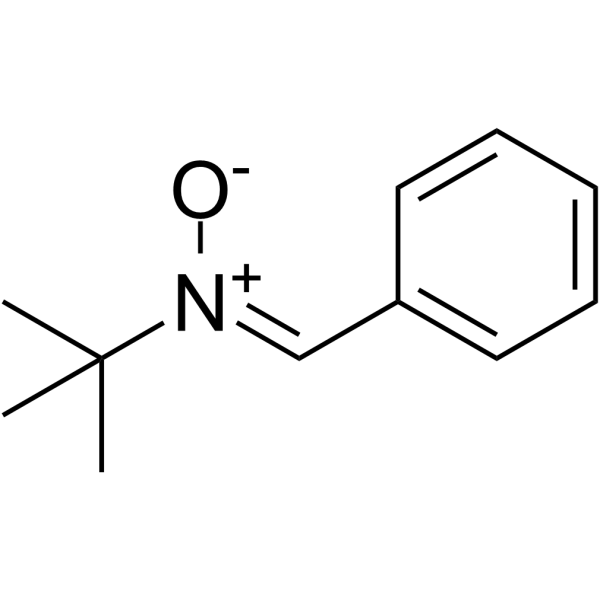
N-tert-butyl-α-Phenylnitrone
CAS No. 3376-24-7
N-tert-butyl-α-Phenylnitrone( (Z)-N-benzylidene-2-Methylpropan-2-aMine oxide )
Catalog No. M27667 CAS No. 3376-24-7
N-tert-butyl-α-Phenylnitrone inhibits COX2 catalytic activity.
Purity : >98% (HPLC)
 COA
Datasheet
HNMR
HPLC
MSDS
Handing Instructions
COA
Datasheet
HNMR
HPLC
MSDS
Handing Instructions
| Size | Price / USD | Stock | Quantity |
| 1 mL x 10 mM in DMSO | 48 | In Stock |


|
| 50MG | 34 | In Stock |
|
| 100MG | 48 | In Stock |
|
| 200MG | 73 | In Stock |
|
| 500MG | Get Quote | In Stock |
|
| 1G | Get Quote | In Stock |
|
Biological Information
-
Product NameN-tert-butyl-α-Phenylnitrone
-
NoteResearch use only, not for human use.
-
Brief DescriptionN-tert-butyl-α-Phenylnitrone inhibits COX2 catalytic activity.
-
DescriptionN-tert-butyl-α-Phenylnitrone inhibits COX2 catalytic activity. N-tert-butyl-α-Phenylnitrone possesses potent reactive oxygen species scavenging, anti-inflammatory, neuroprotective, anti-aging, and anti-diabetic activities, and can penetrate the blood-brain barrier.(In Vitro):Treatment of 25-100 μM N-tert-butyl-α-Phenylnitrone significantly reduces 2,2'-azobis (2-amidinopropane) dihydrochloride (AAPH)-induced intracellular ROS accumulation. N-tert-butyl-α-Phenylnitrone also attenuates AAPH-induced cytotoxicity, matrix degradation, and apoptosis, inhibiting AAPH-induced ERK/MAPK pathway activation. (In Vivo):In C57Bl/6 mice induced by lipopolysaccharide (LPS), intraperitoneal injection of 100 mg/kg N-tert-butyl-α-Phenylnitrone twice a day (on gestational day 8) abolishes LPS-induced lipid peroxidation, nitrate tyrosine residue levels and GSH depletion, and reduces the incidence of external malformations.
-
In VitroN-tert-Butyl-α-phenylnitrone (PBN) (25-100 μM) treatment leads to a significant decrease in 2,2'-azobis (2-amidinopropane) dihydrochloride (AAPH)-induced intracellular ROS accumulation. N-tert-Butyl-α-phenylnitrone also attenuates AAPH-induced cytotoxicity, matrix degradation, and apoptosis. N-tert-Butyl-α-phenylnitrone suppresses AAPH-induced activation of ERK/MAPK pathway. N-tert-Butyl-α-phenylnitrone has the potenial for intervertebral disc degeneration (IDD) research.
-
In VivoN-tert-Butyl-α-phenylnitrone (PBN; 100 mg/kg; intraperitoneal injection; twice a day; C57Bl/6 mice) treatment not only abolishes the LPS-induced lipid peroxidation, nitrotyrosine residue levels, and GSH depletion, but also decreases the incidence of external malformations. Animal Model:C57Bl/6 mice induced by lipopolysaccharide (LPS) Dosage:100 mg/kg Administration:Intraperitoneal injection; twice a day (on gestational day 8)Result:Abolished LPS-induced lipid peroxidation, nitrotyrosine residues, and GSH depletion.
-
Synonyms(Z)-N-benzylidene-2-Methylpropan-2-aMine oxide
-
PathwayImmunology/Inflammation
-
TargetROS
-
Recptor——
-
Research Area——
-
Indication——
Chemical Information
-
CAS Number3376-24-7
-
Formula Weight177.247
-
Molecular FormulaC11H15NO
-
Purity>98% (HPLC)
-
SolubilityIn Vitro:?DMSO : 100 mg/mL (564.21 mM)
-
SMILESCC(C)(C)[N+](\[O-])=C\c1ccccc1
-
Chemical Name——
Shipping & Storage Information
-
Storage(-20℃)
-
ShippingWith Ice Pack
-
Stability≥ 2 years
Reference
1.Hong XX, et al. New steroidal saponins from the bulbs of Lilium brownii var. viridulum. Carbohydr Res. 2012 Nov 1;361:19-26.
molnova catalog



related products
-
CL097
CL097 is an effective agonist of TLR7 and TLR8. CL097 induces pro-inflammatory cytokines in macrophages and NADPH oxidase priming, thereby increasing the fMLF-stimulated ROS production.
-
5-Hydroxyoxindole
5-Hydroxyoxindole has been identified as a urinary metabolite of indole, which is produced from tryptophane via the tryptophanase activity of gut bacteria.
-
Mitoquinone mesylate
Mitoquinone mesylate is a TPP-based, mitochondrially targeted antioxidant to protect against oxidative damage.
