


 Cart
Cart
 sales@molnova.com



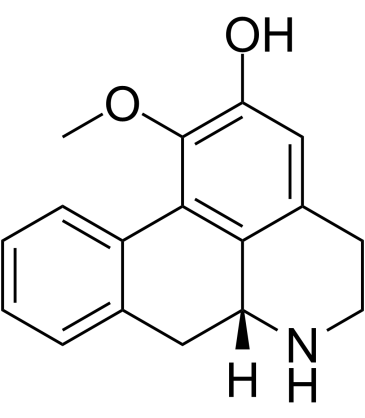
Asimilobine
CAS No. 6871-21-2
Asimilobine ( —— )
Catalog No. M21801 CAS No. 6871-21-2
Asimilobine is an aporphine isoquinoline alkaloid isolated from plant species of Magnolia obobata Thun.
Purity : >98% (HPLC)
 COA
Datasheet
HNMR
HPLC
MSDS
Handing Instructions
COA
Datasheet
HNMR
HPLC
MSDS
Handing Instructions
| Size | Price / USD | Stock | Quantity |
| 5MG | 247 | Get Quote |


|
| 100MG | Get Quote | Get Quote |
|
| 200MG | Get Quote | Get Quote |
|
| 500MG | Get Quote | Get Quote |
|
| 1G | Get Quote | Get Quote |
|
Biological Information
-
Product NameAsimilobine
-
NoteResearch use only, not for human use.
-
Brief DescriptionAsimilobine is an aporphine isoquinoline alkaloid isolated from plant species of Magnolia obobata Thun.
-
DescriptionAsimilobine is an aporphine isoquinoline alkaloid isolated from plant species of Magnolia obobata Thun. Asimilobine is a dopamine biosynthesis inhibitor and a serotonergic receptor antagonist. Asimilobine shows an antimalarial and anti-cancer activity.
-
In VitroAsimilobine (0.05-0.2 μM; for 24 h) shows a significant inhibition of intracellular dopamine levels in a concentration-dependent manner with an IC50 value of 0.13 μM. Asimilobine (0.15 μM) inhibits tyrosine hydroxylase (TH) and aromatic L-amino acid decarboxylase (AADC) activities at 24 h. Asimilobine also decreases TH mRNA levels and intracellular cyclic AMP levels.
-
In Vivo——
-
Synonyms——
-
PathwayOthers
-
TargetOther Targets
-
Recptor——
-
Research Area——
-
Indication——
Chemical Information
-
CAS Number6871-21-2
-
Formula Weight——
-
Molecular Formula——
-
Purity>98% (HPLC)
-
Solubility——
-
SMILES——
-
Chemical Name——
Shipping & Storage Information
-
Storage(-20℃)
-
ShippingWith Ice Pack
-
Stability≥ 2 years
Reference
molnova catalog



related products
-
Kinetin
Kinetin is a type of cytokinin, a class of plant hormone that promotes cell division.
-
SR8278
SR8278 is an REV-ERBα antagonist(EC50 = 0.47 μM) blocking activation of the receptor by the synthetic agonist GSK 4112.
-
2-Hydroxybenzylamine
2-Hydroxybenzylamine, a potent small molecule scavenger of IsoLGs, sequesters the reactive species as inert adducts.
