


 Cart
Cart
 sales@molnova.com



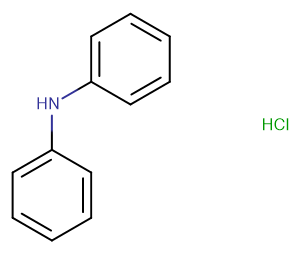
Diphenylamine Hydrochloride
CAS No. 537-67-7
Diphenylamine Hydrochloride( —— )
Catalog No. M21556 CAS No. 537-67-7
Diphenylamine Hydrochloride is a natural product that used mainly for its antioxidant properties.
Purity : >98% (HPLC)
 COA
Datasheet
HNMR
HPLC
MSDS
Handing Instructions
COA
Datasheet
HNMR
HPLC
MSDS
Handing Instructions
| Size | Price / USD | Stock | Quantity |
| 1 mL x 10 mM in DMSO | 28 | In Stock |


|
| 100MG | Get Quote | In Stock |
|
| 200MG | Get Quote | In Stock |
|
| 500MG | Get Quote | In Stock |
|
| 1G | 27 | In Stock |
|
Biological Information
-
Product NameDiphenylamine Hydrochloride
-
NoteResearch use only, not for human use.
-
Brief DescriptionDiphenylamine Hydrochloride is a natural product that used mainly for its antioxidant properties.
-
DescriptionDiphenylamine Hydrochloride is a natural product that used mainly for its antioxidant properties.
-
In Vitro——
-
In Vivo——
-
Synonyms——
-
PathwayOthers
-
TargetOther Targets
-
RecptorOthers
-
Research Area——
-
Indication——
Chemical Information
-
CAS Number537-67-7
-
Formula Weight205.68
-
Molecular FormulaC12H12ClN
-
Purity>98% (HPLC)
-
SolubilityDMSO:41 mg/mL (199.33 mM)
-
SMILESC1=CC=C(C=C1)NC2=CC=CC=C2.Cl
-
Chemical Name——
Shipping & Storage Information
-
Storage(-20℃)
-
ShippingWith Ice Pack
-
Stability≥ 2 years
Reference
1.Safe S Hutzinger O Crocker J F S et al. Identification of toxic impurities in commercial Diphenylamine[J]. Bulletin of Environmental Contamination and Toxicology 1977 17(2):204-207.
molnova catalog



related products
-
(4R)-3-[2-(4-chlorop...
(4R)-3-[2-(4-chlorophenoxy)-2-methylpropanoyl]-1,3-thiazolidine-4-carboxylic acid is a chemical compound.
-
Total flavonoids fro...
Total flavonoids from Astragali radix
-
L-Norvaline
Norvaline is a non-proteinogenic branched-chain amino acid. It has previously been reported to be a natural component of an antifungal peptide of Bacillus subtilis. Norvaline and other modified branched chain amino acids have received attention in recent studies as they appear to be incorporated in some recombinant proteins found in E. coli.
