


 Cart
Cart
 sales@molnova.com



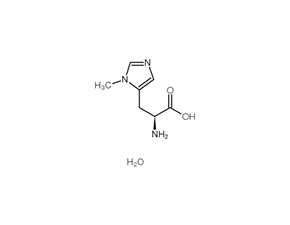
3-Methyl-L-histidine
CAS No. 368-16-1
3-Methyl-L-histidine( —— )
Catalog No. M21431 CAS No. 368-16-1
3-Methylhistidine belongs to the class of organic compounds known as histidine and derivatives. Histidine and derivatives are compounds containing cysteine or a derivative thereof resulting from reaction of cysteine at the amino group or the carboxy group or from the replacement of any hydrogen of glycine by a heteroatom.
Purity : >98% (HPLC)
 COA
Datasheet
HNMR
HPLC
MSDS
Handing Instructions
COA
Datasheet
HNMR
HPLC
MSDS
Handing Instructions
| Size | Price / USD | Stock | Quantity |
| 25MG | 35 | In Stock |


|
| 100MG | Get Quote | In Stock |
|
| 200MG | Get Quote | In Stock |
|
| 500MG | Get Quote | In Stock |
|
| 1G | Get Quote | In Stock |
|
Biological Information
-
Product Name3-Methyl-L-histidine
-
NoteResearch use only, not for human use.
-
Brief Description3-Methylhistidine belongs to the class of organic compounds known as histidine and derivatives. Histidine and derivatives are compounds containing cysteine or a derivative thereof resulting from reaction of cysteine at the amino group or the carboxy group or from the replacement of any hydrogen of glycine by a heteroatom.
-
Description3-Methylhistidine belongs to the class of organic compounds known as histidine and derivatives. Histidine and derivatives are compounds containing cysteine or a derivative thereof resulting from reaction of cysteine at the amino group or the carboxy group or from the replacement of any hydrogen of glycine by a heteroatom. It is also a biomarker for the consumption of soy products. 3-Methylhistidine is a very strong basic compound (based on its pKa). 3-Methylhistidine exists in all eukaryotes ranging from yeast to humans. In humans 3-methylhistidine is involved in methylhistidine metabolism. 3-Methylhistidine with regard to humans has been found to be associated with several diseases such as diabetes mellitus type 2 eosinophilic esophagitis and kidney disease; 3-methylhistidine has also been linked to the inborn metabolic disorder propionic acidemia. The measurement of 3-methylhistidine provides an index of the rate of muscle protein breakdown. 3-Methylhistidine is a product of peptide bond synthesis and methylation of actin and myosin. 3-Methylhistidine is a biomarker for meat consumption especially chicken.
-
In Vitro——
-
In Vivo——
-
Synonyms——
-
PathwayProteasome/Ubiquitin
-
TargetEndogenous Metabolite
-
RecptorHuman Endogenous Metabolite
-
Research AreaMetabolic Disease
-
IndicationIntestinal Diseases
Chemical Information
-
CAS Number368-16-1
-
Formula Weight169.18
-
Molecular FormulaC7H11N3O2
-
Purity>98% (HPLC)
-
SolubilityIn Vitro:?H2O : 100 mg/mL (591.09 mM)
-
SMILESCn1c(C[C@@H](C(O)=O)N)cnc1
-
Chemical Name——
Shipping & Storage Information
-
Storage(-20℃)
-
ShippingWith Ice Pack
-
Stability≥ 2 years
Reference
molnova catalog



related products
-
Dinoprost
Dinoprost is a naturally occurring prostaglandin. It is used in medicine to induce labor and as an abortifacient.
-
Phosphonoacetic acid
Phosphonoacetate also known as fosfonet or phosphonacetic acid belongs to the class of organic compounds known as organic phosphonic acids.Within the cell phosphonoacetate is primarily located in the cytoplasm. Phosphonoacetate can be biosynthesized from phosphonic acid and acetic acid.
-
4-Methoxycinnamic ac...
4-Methoxycinnamic acid is an unusual phenylpropanoid involved in phenylphenalenone biosynthesis in Anigozanthos preissi.
