


 Cart
Cart
 sales@molnova.com



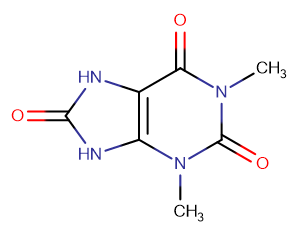
13-Dimethyluric acid
CAS No. 944-73-0
13-Dimethyluric acid( —— )
Catalog No. M21423 CAS No. 944-73-0
13-Dimethyluric acid is a product of theophylline metabolism in man. It is one of the purine components in urinary calculi.
Purity : >98% (HPLC)
 COA
Datasheet
HNMR
HPLC
MSDS
Handing Instructions
COA
Datasheet
HNMR
HPLC
MSDS
Handing Instructions
| Size | Price / USD | Stock | Quantity |
| 1 mL x 10 mM in DMSO | 28 | In Stock |


|
| 50MG | 27 | In Stock |
|
| 100MG | Get Quote | In Stock |
|
| 200MG | Get Quote | In Stock |
|
| 500MG | Get Quote | In Stock |
|
| 1G | Get Quote | In Stock |
|
Biological Information
-
Product Name13-Dimethyluric acid
-
NoteResearch use only, not for human use.
-
Brief Description13-Dimethyluric acid is a product of theophylline metabolism in man. It is one of the purine components in urinary calculi.
-
Description13-Dimethyluric acid is a product of theophylline metabolism in man. It is one of the purine components in urinary calculi.
-
In Vitro——
-
In Vivo——
-
Synonyms——
-
PathwayProteasome/Ubiquitin
-
TargetEndogenous Metabolite
-
RecptorHuman Endogenous Metabolite
-
Research Area——
-
Indication——
Chemical Information
-
CAS Number944-73-0
-
Formula Weight196.16
-
Molecular FormulaC7H8N4O3
-
Purity>98% (HPLC)
-
SolubilityIn Vitro:?DMSO : 5 mg/mL (25.49 mM)
-
SMILESCN(C(N1)=C(C(N2C)=O)NC1=O)C2=O
-
Chemical Name——
Shipping & Storage Information
-
Storage(-20℃)
-
ShippingWith Ice Pack
-
Stability≥ 2 years
Reference
molnova catalog



related products
-
Angiotensin III, hum...
Angiotensin III is an agonist of angiotensin 1 (AT1) and AT2 receptor.
-
L-23-Diaminopropioni...
L-23-diaminopropionic acid is an amino acid that is a precursor of antibiotics and staphyloferrin B a siderophore produced by Staphylococcus aureus.
-
(S)-b-aminoisobutyri...
(S)-b-aminoisobutyric acid is a non-protein amino acid originating from the catabolism of thymine and valine.
