


 Cart
Cart
 sales@molnova.com



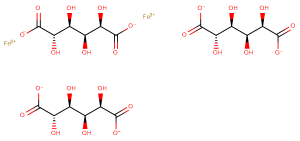
Iron sucrose
CAS No. 8047-67-4
Iron sucrose( Iron saccharate | Sucroferric oxyhydroxide )
Catalog No. M21199 CAS No. 8047-67-4
Iron sucrose is treatment of iron deficiency anemia.
Purity : >98% (HPLC)
 COA
Datasheet
HNMR
HPLC
MSDS
Handing Instructions
COA
Datasheet
HNMR
HPLC
MSDS
Handing Instructions
| Size | Price / USD | Stock | Quantity |
| 1 mL x 10 mM in DMSO | 37 | In Stock |


|
| 100MG | 36 | In Stock |
|
| 200MG | 51 | In Stock |
|
| 500MG | 85 | In Stock |
|
| 1G | Get Quote | In Stock |
|
Biological Information
-
Product NameIron sucrose
-
NoteResearch use only, not for human use.
-
Brief DescriptionIron sucrose is treatment of iron deficiency anemia.
-
DescriptionIron sucrose is treatment of iron deficiency anemia.(In Vitro):Intravenous Iron sucrose results in a statistically significant increase in hemoglobin, mean corpuscular volume, serum iron, ferritin, and % iron saturation, with a corresponding decrease in total iron binding capacity.In vitro survival assays show that 10 mM ascorbate exposure (2h) clonogenically inactivated 40-80% of exponentially growing colon cancer cell lines (HCT116 and HT29). When colon cancer cells are treated in the presence or absence of 250 μM Iron sucrose, then rinsed, and treated with 10 mM ascorbate, the cells demonstrate increased levels of labile iron that results in significantly increased clonogenic cell killing, compared to pharmacological ascorbate alone.The expression levels of intracellular cell adhesion molecule-1 (ICAM-1) and vascular cell adhesion molecule-1 (VCAM-1) and adhesion of U937 cells increased in Iron sucrose-treated human aortic endothelial cells through upregulated NADPH oxidase (NOx) and NF-κB signaling. Iron sucrose significantly induces a time-dependent increase in intracellular ROS production in HAECs between 1 and 3 hours at a concentration of 160 μg/mL, but the effect diminished at 4 hours.(In Vivo):Iron sucrose significantly increases tissue superoxide production, expression of tissue cell adhesion molecules, and endothelial adhesiveness in mice with subtotal nephrectomy. Iron sucrose exacerbates atherosclerosis in the aorta of ApoE-/- mice with uninephrectomy.
-
In VitroIntravenous Iron sucrose results in a statistically significant increase in hemoglobin, mean corpuscular volume, serum iron, ferritin, and % iron saturation, with a corresponding decrease in total iron binding capacity. In vitro survival assays show that 10 mM ascorbate exposure (2h) clonogenically inactivated 40-80% of exponentially growing colon cancer cell lines (HCT116 and HT29). When colon cancer cells are treated in the presence or absence of 250 μM Iron sucrose, then rinsed, and treated with 10 mM ascorbate, the cells demonstrate increased levels of labile iron that results in significantly increased clonogenic cell killing, compared to pharmacological ascorbate alone. The expression levels of intracellular cell adhesion molecule-1 (ICAM-1) and vascular cell adhesion molecule-1 (VCAM-1) and adhesion of U937 cells increased in Iron sucrose-treated human aortic endothelial cells through upregulated NADPH oxidase (NOx) and NF-κB signaling. Iron sucrose significantly induces a time-dependent increase in intracellular ROS production in HAECs between 1 and 3 hours at a concentration of 160 μg/mL, but the effect diminished at 4 hours.
-
In VivoIron sucrose significantly increases tissue superoxide production, expression of tissue cell adhesion molecules, and endothelial adhesiveness in mice with subtotal nephrectomy. Iron sucrose exacerbates atherosclerosis in the aorta of ApoE-/- mice with uninephrectomy.
-
SynonymsIron saccharate | Sucroferric oxyhydroxide
-
PathwayOthers
-
TargetOther Targets
-
Recptorothers
-
Research AreaCardiovascular Disease
-
IndicationIron?Deficiency Anemia
Chemical Information
-
CAS Number8047-67-4
-
Formula Weight736.1
-
Molecular FormulaC18H24Fe2O24
-
Purity>98% (HPLC)
-
SolubilityDMSO:100 mg/mL (135.85 mM)H2O:100 mg/mL (135.85 mM)
-
SMILESO=C([O-])[C@@H](O)[C@@H](O)[C@H](O)[C@@H](O)C(=O)[O-].O=C([O-])[C@@H](O)[C@@H](O)[C@H](O)[C@@H](O)C(=O)[O-].O=C([O-])[C@@H](O)[C@@H](O)[C@H](O)[C@@H](O)C(=O)[O-].[Fe+3].[Fe+3]
-
Chemical Name——
Shipping & Storage Information
-
Storage(-20℃)
-
ShippingWith Ice Pack
-
Stability≥ 2 years
Reference
1.Breborowicz M Polubinska A Tam P et al. Effect of iron sucrose on human peritoneal mesothelial cells[J]. European Journal of Clinical Investigation 2003 33(12):1038-1044.
molnova catalog



related products
-
Seviteronel R enanti...
Seviteronel R enantiomer (VT-464 R enantiomer) is a Seviteronel isomer produced during the manufacturing process.
-
Biotin-ACTH (1-39), ...
Biotin-ACTH (1-39), human
-
Interleukin-1β Conve...
Interleukin-1β Convertase Substrate
