


 Cart
Cart
 sales@molnova.com



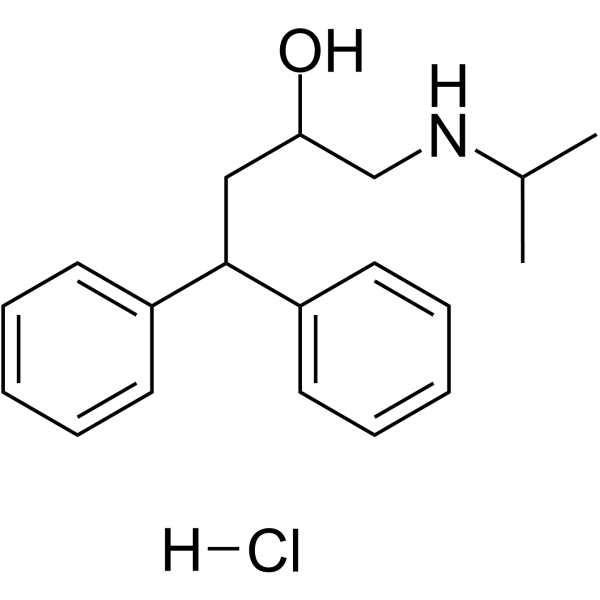
Drobuline hydrochloride
CAS No. 68162-52-7
Drobuline hydrochloride( —— )
Catalog No. M26177 CAS No. 68162-52-7
Drobuline hydrochloride has the action of cardiac inhibitor, often used for anti-arrhythmia.
Purity : >98% (HPLC)
 COA
Datasheet
HNMR
HPLC
MSDS
Handing Instructions
COA
Datasheet
HNMR
HPLC
MSDS
Handing Instructions
| Size | Price / USD | Stock | Quantity |
| 1 mL x 10 mM in DMSO | 307 | In Stock |


|
| 5MG | 283 | In Stock |
|
| 10MG | 413 | In Stock |
|
| 25MG | 644 | In Stock |
|
| 50MG | 848 | In Stock |
|
| 100MG | 1097 | In Stock |
|
| 200MG | Get Quote | In Stock |
|
| 500MG | 2213 | In Stock |
|
| 1G | Get Quote | In Stock |
|
Biological Information
-
Product NameDrobuline hydrochloride
-
NoteResearch use only, not for human use.
-
Brief DescriptionDrobuline hydrochloride has the action of cardiac inhibitor, often used for anti-arrhythmia.
-
DescriptionDrobuline hydrochloride has the action of cardiac inhibitor, often used for anti-arrhythmia.
-
In Vitro——
-
In Vivo——
-
Synonyms——
-
PathwayOthers
-
TargetOther Targets
-
RecptorMKLP-2
-
Research Area——
-
Indication——
Chemical Information
-
CAS Number68162-52-7
-
Formula Weight319.87
-
Molecular FormulaC19H26ClNO
-
Purity>98% (HPLC)
-
Solubility——
-
SMILESCl.CC(C)NCC(O)CC(c1ccccc1)c1ccccc1
-
Chemical Name——
Shipping & Storage Information
-
Storage(-20℃)
-
ShippingWith Ice Pack
-
Stability≥ 2 years
Reference
1.Labrière C, et al. Further investigation of Paprotrain:Towards the conception of selective and multi-targeted CNS kinase inhibitors. Eur J Med Chem. 2016 Nov 29;124:920-934.
molnova catalog



related products
-
Methyl jasmonate
Methyl jasmonate is a phytohormone involved in plant defenses under stress conditions. Methyl jasmonate can improve antioxidant properties of blueberry leaf extracts (mainly anthocyanins), and decrease the viability and migration capacity of AGS cells. Anticarcinogenic activity.
-
Lactoferrin (17-41) ...
This is amino acids 17 to 41 fragment of lactoferrin, known as lactoferricin B. This peptide shows anti-fungal properties in combination of other anti-fungal agents.Candida Albicans is one of the targets of the lactoferricin B.
-
Benzylurea
Benzylurea competitively inhibits dehydrogenase/cytokinin oxidase.
