


 Cart
Cart
 sales@molnova.com



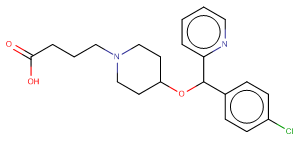
Bepotastine
CAS No. 125602-71-3
Bepotastine ( —— )
Catalog No. M21128 CAS No. 125602-71-3
Bepotastine free base is a histamine 1 (H1) receptor antagonis.
Purity : >98% (HPLC)
 COA
Datasheet
HNMR
HPLC
MSDS
Handing Instructions
COA
Datasheet
HNMR
HPLC
MSDS
Handing Instructions
| Size | Price / USD | Stock | Quantity |
| 1 mL x 10 mM in DMSO | 51 | In Stock |


|
| 2MG | 29 | In Stock |
|
| 5MG | 46 | In Stock |
|
| 10MG | 71 | In Stock |
|
| 25MG | 144 | In Stock |
|
| 50MG | 212 | In Stock |
|
| 100MG | 323 | In Stock |
|
| 200MG | 479 | In Stock |
|
| 500MG | Get Quote | In Stock |
|
| 1G | Get Quote | In Stock |
|
Biological Information
-
Product NameBepotastine
-
NoteResearch use only, not for human use.
-
Brief DescriptionBepotastine free base is a histamine 1 (H1) receptor antagonis.
-
DescriptionBepotastine free base is a histamine 1 (H1) receptor antagonis.
-
In VitroBepotastine (10, 100, 1000 μM; preincubates for 120 min) decreases the release of histamine induced by A23187 treatment, which reaches a statistically significant reduces level at 1000 μM.Bepotastine (50 μM; 1 h) suppresses the expression of NGF mRNA in NHEKs.Cell Viability Assay Cell Line:RPMCs Concentration:10, 100, 1000 μM Incubation Time:120 min (preincubate)Result:Decreased the release of histamine.Western Blot Analysis Cell Line:NHEKs Concentration:50 μM (preincubation)Incubation Time:1 hResult:Suppressed the expression of NGF mRNA in NHEKs.
-
In VivoBepotastine (10 g/L; eye drop; 3 times at intervals of 20 min in one eye) demonstrates significant inhibition of PAF-induced conjunctival eosinophil infiltration.Bepotastine (3 mg/kg; p.o.; once) suppresses scratching behavior to a frequency of 59.0 and a duration of 14.57 seconds, which are almost the same levels compares with the control.Bepotastine (10 mg/kg; p.o.; once) significantly suppresses serum LTB 4 levels to 711.3 pg/mL at 1 h and 858.8 pg/mL at 2 h in NC/Nga mice with a rash. Animal Model:Guinea pigs (6-week-old).Dosage:10 g/L (1.0% (w/v)) for 10 μL.Administration:Eye drop; 3 times at intervals of 20 min (in one eye).Result:Inhibited PAF-induced conjunctival eosinophil infiltration.Animal Model:Male BALB/c mice(12-week-old); NC/Nga mice.Dosage:3, 10 mg/kg Administration:Oral administration; once (1 h before induces scratching behavior of Male BALB/c mice).Result:Significantly inhibited histamine-mediated scratching behavior in male BALB/c mice.Significantly suppressed serum LTB 4 levels in NC/Nga mice with a rash.
-
Synonyms——
-
PathwayOthers
-
TargetOther Targets
-
Recptorothers
-
Research Area——
-
Indication——
Chemical Information
-
CAS Number125602-71-3
-
Formula Weight388.89
-
Molecular FormulaC21H25ClN2O3
-
Purity>98% (HPLC)
-
SolubilityIn Vitro:?DMSO : 100 mg/mL (257.14 mM)
-
SMILESO=C(O)CCCN1CCC(OC(c2ccc(Cl)cc2)c2ccccn2)CC1
-
Chemical Name——
Shipping & Storage Information
-
Storage(-20℃)
-
ShippingWith Ice Pack
-
Stability≥ 2 years
Reference
1.Kanzaki S Hashiguchi K Wakabayashi K I et al. Histamine antagonist Bepotastine suppresses nasal symptoms caused by Japanese cedar and cypress pollen exposure[J]. journal of drug assessment 2016 5(1):15-23.
molnova catalog



related products
-
N-Isopropylacrylamid...
N-Isopropylacrylamide is widely used in biomedical applications due to its thermo-responsive effects.
-
Neratinib Maleate
Irreversible ErbB receptor tyrosine kinase inhibitor.
-
Tetradehydropodophyl...
Tetradehydropodophyllotoxin has anti-tumor activity.
