


 Cart
Cart
 sales@molnova.com



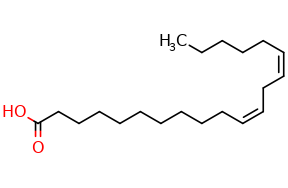
Eicosadienoic acid
CAS No. 2091-39-6
Eicosadienoic acid( —— )
Catalog No. M20937 CAS No. 2091-39-6
Eicosadienoic acid is a rare naturally occurring n-6 polyunsaturated fatty acid found mainly in animal tissues.
Purity : >98% (HPLC)
 COA
Datasheet
HNMR
HPLC
MSDS
Handing Instructions
COA
Datasheet
HNMR
HPLC
MSDS
Handing Instructions
| Size | Price / USD | Stock | Quantity |
| 1 mL x 10 mM in DMSO | 43 | Get Quote |


|
| 5MG | 39 | Get Quote |
|
| 10MG | 54 | Get Quote |
|
| 50MG | 90 | Get Quote |
|
| 100MG | 138 | Get Quote |
|
| 200MG | Get Quote | Get Quote |
|
| 500MG | Get Quote | Get Quote |
|
| 1G | Get Quote | Get Quote |
|
Biological Information
-
Product NameEicosadienoic acid
-
NoteResearch use only, not for human use.
-
Brief DescriptionEicosadienoic acid is a rare naturally occurring n-6 polyunsaturated fatty acid found mainly in animal tissues.
-
DescriptionEicosadienoic acid is a rare naturally occurring n-6 polyunsaturated fatty acid found mainly in animal tissues.
-
In VitroEicosadienoic acid inhibits the binding of [3H]-LTB4 to pig neutrophil membranes with a Ki of 3 μM.
-
In Vivo——
-
Synonyms——
-
PathwayProteasome/Ubiquitin
-
TargetEndogenous Metabolite
-
RecptorHuman Endogenous Metabolite
-
Research Area——
-
Indication——
Chemical Information
-
CAS Number2091-39-6
-
Formula Weight308.5
-
Molecular FormulaC20H36O2
-
Purity>98% (HPLC)
-
SolubilityIn Vitro:?DMSO : 100 mg/mL (324.15 mM)
-
SMILESCCCCC/C=C\C/C=C\CCCCCCCCCC(=O)O
-
Chemical Name——
Shipping & Storage Information
-
Storage(-20℃)
-
ShippingWith Ice Pack
-
Stability≥ 2 years
Reference
1.Sofia Gol Ramona et al. A polymorphism in the fatty acid desaturase-2 gene is associated with the arachidonic acid metabolism in pigs.[J]. Scientific reports 2018.
molnova catalog



related products
-
1-Methyl-6-oxo-16-di...
1-Methyl-6-oxo-16-dihydropyridine-3-carboxamide is one of the end degradation products of nicotinamide-adenine dinucleotide (NAD).
-
trans-Aconitic acid
Trans-Aconitic acid is normally present in normal human urine and it has been suggested that is present in larger amounts with Reye's syndrome and organic aciduria. trans-Aconitic acid is a substrate of enzyme trans-aconitate 2-methyltransferase (EC 2.1.1.144).
-
Dodecanedioic acid
Dodecanedioic acid is a dicarboxylic acid used in the synthesis of the engineering plastic nylon 612.Dodecanedioic acid is used as a base oil in industrial production.
