


 Cart
Cart
 sales@molnova.com



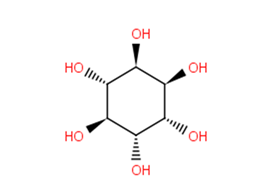
D-chiro-Inositol
CAS No. 643-12-9
D-chiro-Inositol( D-(+)-CHIRO-INOSITOL )
Catalog No. M20601 CAS No. 643-12-9
D-chiro-Inositol is an epimer of myo-inositol that is found in certain mammalian glycosylphosphatidylinositol protein anchors and inositol phosphoglycans possessing insulin-like bioactivity.
Purity : >98% (HPLC)
 COA
Datasheet
HNMR
HPLC
MSDS
Handing Instructions
COA
Datasheet
HNMR
HPLC
MSDS
Handing Instructions
| Size | Price / USD | Stock | Quantity |
| 100MG | 32 | In Stock |


|
| 200MG | Get Quote | In Stock |
|
| 500MG | Get Quote | In Stock |
|
| 1G | Get Quote | In Stock |
|
Biological Information
-
Product NameD-chiro-Inositol
-
NoteResearch use only, not for human use.
-
Brief DescriptionD-chiro-Inositol is an epimer of myo-inositol that is found in certain mammalian glycosylphosphatidylinositol protein anchors and inositol phosphoglycans possessing insulin-like bioactivity.
-
DescriptionD-chiro-Inositol is an epimer of myo-inositol that is found in certain mammalian glycosylphosphatidylinositol protein anchors and inositol phosphoglycans possessing insulin-like bioactivity.
-
In Vitro——
-
In Vivo——
-
SynonymsD-(+)-CHIRO-INOSITOL
-
PathwayProteasome/Ubiquitin
-
TargetEndogenous Metabolite
-
RecptorHuman Endogenous Metabolite
-
Research Area——
-
Indication——
Chemical Information
-
CAS Number643-12-9
-
Formula Weight180.16
-
Molecular FormulaC6H12O6
-
Purity>98% (HPLC)
-
SolubilityH2O:75 mg/mL (416.30 mM; Need ultrasonic)
-
SMILESO[C@H]1[C@@H](O)[C@H](O)[C@H](O)[C@@H](O)[C@@H]1O
-
Chemical Name——
Shipping & Storage Information
-
Storage(-20℃)
-
ShippingWith Ice Pack
-
Stability≥ 2 years
Reference
1.Ostlund RE Jr Seemayer R Gupta S et al.A stereospecific myo-inositol/D-chiro-inositol transporter in HepG2 liver cells.?Identification with D-chiro-[3-3H]inositol[J].J Biol Chem. 1996 Apr 26;271(17):10073-8.
molnova catalog



related products
-
5-Methyltetrahydrofo...
5-Methyltetrahydrofolic acid is a biologically active form of folic acid and a methylated derivate of tetrahydrofolate.
-
Methionine B
Methionine (D-Methionine) (MRX-1024; D-Methionine) is an effective chemoprotective agent which can also inhibit the neuronal activity through GABAA receptor activation.
-
DL-3-AMINOISOBUTYRIC...
beta-aminoisobutyric acid is the product from the conversion of N-carbamyl-beta-aminoisobutyric acid by the enzyme Beta-ureidopropionase (EC 3.5.1.6) the last step in pyrimidine degradation. Beta-ureidopropionase deficiency is an inborn error of pyrimidine degradation associated with neurological abnormalities.
