


 Cart
Cart
 sales@molnova.com



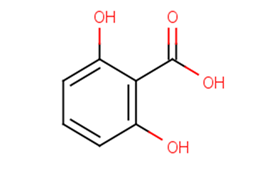
26-Dihydroxybenzoic acid
CAS No. 303-07-1
26-Dihydroxybenzoic acid( —— )
Catalog No. M20573 CAS No. 303-07-1
26-Dihydroxybenzoic acid is a secondary metabolite of salicylic acid which has been hydrolyzed by liver enzymes during phase I metabolism.
Purity : >98% (HPLC)
 COA
Datasheet
HNMR
HPLC
MSDS
Handing Instructions
COA
Datasheet
HNMR
HPLC
MSDS
Handing Instructions
| Size | Price / USD | Stock | Quantity |
| 1 mL x 10 mM in DMSO | 42 | In Stock |


|
| 100MG | Get Quote | In Stock |
|
| 200MG | Get Quote | In Stock |
|
| 500MG | 27 | In Stock |
|
| 1G | Get Quote | In Stock |
|
Biological Information
-
Product Name26-Dihydroxybenzoic acid
-
NoteResearch use only, not for human use.
-
Brief Description26-Dihydroxybenzoic acid is a secondary metabolite of salicylic acid which has been hydrolyzed by liver enzymes during phase I metabolism.
-
Description26-Dihydroxybenzoic acid is a secondary metabolite of salicylic acid which has been hydrolyzed by liver enzymes during phase I metabolism.
-
In Vitro——
-
In Vivo——
-
Synonyms——
-
PathwayProteasome/Ubiquitin
-
TargetEndogenous Metabolite
-
RecptorHuman Endogenous Metabolite
-
Research Area——
-
Indication——
Chemical Information
-
CAS Number303-07-1
-
Formula Weight154.12
-
Molecular FormulaC7H6O4
-
Purity>98% (HPLC)
-
SolubilityDMSO:30 mg/mL (194.65 mM)
-
SMILESOC(=O)c1c(O)cccc1O
-
Chemical Name——
Shipping & Storage Information
-
Storage(-20℃)
-
ShippingWith Ice Pack
-
Stability≥ 2 years
Reference
1.Cokgor E U Insel G Katipoglu T et al. Biodegradation kinetics of peptone and 26-dihydroxybenzoic acid by acclimated dual microbial culture[J]. Bioresource Technology 2011 102(2):567-575.
molnova catalog



related products
-
Alanylphenylalanine
Alanylphenylalanine (Ala-phe) is a compound isolated from the brainstem of calves.
-
H-Asn(glcnac-beta-D)...
H-Asn(glcnac-beta-D)-OH can be isolated from egg protein and animal tissues and can be hydrolyzed by glycosylasparaginase.
-
5-Methylcytidine
5-Methylcytidine is a modified nucleoside derived from 5-methylcytosine and is a minor constituent of RNA as well as DNA for certain organisms.
