


 Cart
Cart
 sales@molnova.com



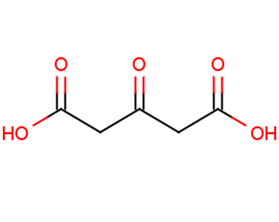
3-Oxopentanedioic acid
CAS No. 542-05-2
3-Oxopentanedioic acid( 13-Acetonedicarboxylic acid | 3-Oxoglutaric acid )
Catalog No. M20272 CAS No. 542-05-2
3-oxoglutaric acid or acetonedicarboxylic acid is a simple carboxylic acid which may be used as a building block in organic chemistry. It has been found to be a microbial metabolite.
Purity : >98% (HPLC)
 COA
Datasheet
HNMR
HPLC
MSDS
Handing Instructions
COA
Datasheet
HNMR
HPLC
MSDS
Handing Instructions
| Size | Price / USD | Stock | Quantity |
| 100MG | 38 | In Stock |


|
| 200MG | Get Quote | In Stock |
|
| 500MG | Get Quote | In Stock |
|
| 1G | Get Quote | In Stock |
|
Biological Information
-
Product Name3-Oxopentanedioic acid
-
NoteResearch use only, not for human use.
-
Brief Description3-oxoglutaric acid or acetonedicarboxylic acid is a simple carboxylic acid which may be used as a building block in organic chemistry. It has been found to be a microbial metabolite.
-
Description3-oxoglutaric acid or acetonedicarboxylic acid is a simple carboxylic acid which may be used as a building block in organic chemistry. It has been found to be a microbial metabolite.
-
In Vitro——
-
In Vivo——
-
Synonyms13-Acetonedicarboxylic acid | 3-Oxoglutaric acid
-
PathwayProteasome/Ubiquitin
-
TargetEndogenous Metabolite
-
RecptorHuman Endogenous Metabolite
-
Research Area——
-
Indication——
Chemical Information
-
CAS Number542-05-2
-
Formula Weight146.1
-
Molecular FormulaC5H6O5
-
Purity>98% (HPLC)
-
SolubilityDMSO:10 mM
-
SMILESOC(=O)CC(=O)CC(O)=O
-
Chemical Name——
Shipping & Storage Information
-
Storage(-20℃)
-
ShippingWith Ice Pack
-
Stability≥ 2 years
Reference



-
Propionic acid
Propionic acid (PA) is widely used as an antifungal agent in food. It is present naturally at low levels in dairy products and occurs ubiquitously together with other short-chain fatty acids (SCFA) in the gastro-intestinal tract of humans and other mammals as an end-product of the microbial digestion of carbohydrates.
-
Tuftsin diacetate
Tuftsin diacetate, a tetrapeptide, is a macrophage/microglial activator. Tuftsin is a tetrapeptide, Thr-Lys-Pro-Arg, which resides in the Fc-domain of the heavy chain of immunoglobulin G. Tuftsin possesses a broad spectrum of activities related primarily to the immune system function and exerts on phagocytic cells, notably on macrophages.
-
3-Hydroxyglutaric ac...
3-Hydroxyglutaric acid is one of several metabolites produced when insufficient levels of GCDH are available. It is used as a biomarker of GCDH deficiency.
