


 Cart
Cart
 sales@molnova.com



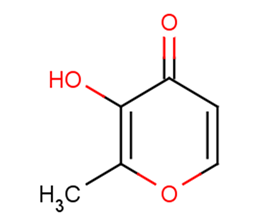
Maltol
CAS No. 118-71-8
Maltol( Larixinic acid | Palatone | Veltol )
Catalog No. M20239 CAS No. 118-71-8
Maltol is a naturally occurring organic compound that is flavour enhancer and flavouring agent. Maltol also is a potent antioxidative agent.
Purity : >98% (HPLC)
 COA
Datasheet
HNMR
HPLC
MSDS
Handing Instructions
COA
Datasheet
HNMR
HPLC
MSDS
Handing Instructions
| Size | Price / USD | Stock | Quantity |
| 1 mL x 10 mM in DMSO | 28 | In Stock |


|
| 100MG | Get Quote | In Stock |
|
| 200MG | Get Quote | In Stock |
|
| 500MG | 27 | In Stock |
|
| 1G | Get Quote | In Stock |
|
Biological Information
-
Product NameMaltol
-
NoteResearch use only, not for human use.
-
Brief DescriptionMaltol is a naturally occurring organic compound that is flavour enhancer and flavouring agent. Maltol also is a potent antioxidative agent.
-
DescriptionMaltol is a naturally occurring organic compound that is flavour enhancer and flavouring agent. Maltol also is a potent antioxidative agent.
-
In Vitro——
-
In Vivo——
-
SynonymsLarixinic acid | Palatone | Veltol
-
PathwayOthers
-
TargetAntioxidant
-
RecptorAntioxidant
-
Research Area——
-
Indication——
Chemical Information
-
CAS Number118-71-8
-
Formula Weight126.11
-
Molecular FormulaC6H6O3
-
Purity>98% (HPLC)
-
SolubilityDMSO: 10 mg/mL;Water: 10 mg/mL (79.29 mM);Ethanol: 35 mg/mL
-
SMILESCc1occc(=O)c1O
-
Chemical Name——
Shipping & Storage Information
-
Storage(-20℃)
-
ShippingWith Ice Pack
-
Stability≥ 2 years
Reference
1.Hong S et al. Neuroprotective and neurite outgrowth effects of maltol on retinal ganglion cells under oxidative stress. Mol Vis. 2014 Oct 17;20:1456-62.
molnova catalog



related products
-
PD-173955
PD173955 is src family-selective tyrosine kinase inhibitor with IC50 of ~22 nM for Src, Yes and Abl kinase; less potent for FGFRα and no activity on InsR and PKC.
-
Astragaloside III
Astragaloside III has cardioprotective effects as well as causing improvement in cognitive function. It can be used in the prevention of cardio-cerebral vascular diseases. It also is antioxidant.
-
Valencene
Valencene (NSC-148969) is a sesquiterpenoid isolated from Cyperus rotundus and is an aroma component of citrus fruits and citrus-derived odors.ValenceneValencene has anti-allergic, anti-inflammatory, anti-melanogenic, and antioxidant activities.
