


 Cart
Cart
 sales@molnova.com



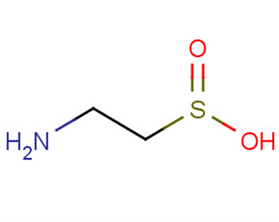
Hypotaurine
CAS No. 300-84-5
Hypotaurine( 2-Aminoethanesulfinic acid | 2-Aminoethylsulfinic acid )
Catalog No. M20061 CAS No. 300-84-5
Hypotaurine an intermediate in taurine biosynthesis from cysteine in astrocytes is an endogenous inhibitory amino acid of the glycine receptor.
Purity : >98% (HPLC)
 COA
Datasheet
HNMR
HPLC
MSDS
Handing Instructions
COA
Datasheet
HNMR
HPLC
MSDS
Handing Instructions
| Size | Price / USD | Stock | Quantity |
| 10MG | 29 | In Stock |


|
| 25MG | 44 | In Stock |
|
| 50MG | 60 | In Stock |
|
| 100MG | Get Quote | In Stock |
|
| 200MG | Get Quote | In Stock |
|
| 500MG | Get Quote | In Stock |
|
| 1G | Get Quote | In Stock |
|
Biological Information
-
Product NameHypotaurine
-
NoteResearch use only, not for human use.
-
Brief DescriptionHypotaurine an intermediate in taurine biosynthesis from cysteine in astrocytes is an endogenous inhibitory amino acid of the glycine receptor.
-
DescriptionHypotaurine an intermediate in taurine biosynthesis from cysteine in astrocytes is an endogenous inhibitory amino acid of the glycine receptor.
-
In VitroHypotaurine and taurine are found to reside within the cytosolic compartment of the cell. The ratio of taurine to hypotaurine is approx 50:1. The cytosolic concentration of taurine is approx. 50 mM. The concentration of hypotaurine decreases by 80% when resting neutrophils are converted into actively respiring cells by exposure to opsonized zymosan. Hypotaurine activates hypoxia signaling through the competitive inhibition of prolyl hydroxylase domain-2. This leads to the activation of hypoxia signaling as well as to the enhancement of glioma cell proliferation and invasion.
-
In VivoHypotaurine has antinociceptive effects on thermal, mechanical, and chemical nociception in the spinal cord. In CCI rats, hypotaurine alleviates mechanical allodynia and thermal hyperalgesia. Intrathecal hypotaurine suppresses acute, inflammatory, and neuropathic pain. Hypotaurine may regulate nociceptive transmission physiologically by activating glycinergic neurons in the spinal cord.
-
Synonyms2-Aminoethanesulfinic acid | 2-Aminoethylsulfinic acid
-
PathwayMembrane Transporter/Ion Channel
-
TargetChloride Channel
-
RecptorGlycine receptor
-
Research Area——
-
Indication——
Chemical Information
-
CAS Number300-84-5
-
Formula Weight109.15
-
Molecular FormulaC2H7NO2S
-
Purity>98% (HPLC)
-
SolubilityH2O:150 mg/mL (1374.26 mM)
-
SMILESNCCS(O)=O
-
Chemical Name——
Shipping & Storage Information
-
Storage(-20℃)
-
ShippingWith Ice Pack
-
Stability≥ 2 years
Reference
1.Green TR et al. Antioxidant role and subcellular location of hypotaurine and taurine in human neutrophils. Biochim Biophys Acta. 1991 Jan 23;1073(1):91-7.
molnova catalog



related products
-
Org 25543
Org 25543 is the development of an N-Acyl amino acid that selectively inhibits the glycine transporter 2 to produce analgesia in a rat model of chronic pain.
-
Afoxolaner
Afoxolaner is an isoxazoline insecticide/acaricide against Ixodes scapularis in dogs.
-
T16Ainh-A01
T16Ainh-A01 is an inhibitor of the calcium-activated chloride channel TMEM16A.
