


 Cart
Cart
 sales@molnova.com



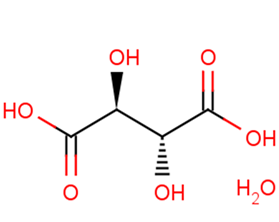
meso-Tartaric acid monohydrate
CAS No. 5990-63-6
meso-Tartaric acid monohydrate( —— )
Catalog No. M19864 CAS No. 5990-63-6
Tartaric acid occurs naturally in many plants particularly grapes and tamarinds and is one of the main acids found in wine.
Purity : >98% (HPLC)
 COA
Datasheet
HNMR
HPLC
MSDS
Handing Instructions
COA
Datasheet
HNMR
HPLC
MSDS
Handing Instructions
| Size | Price / USD | Stock | Quantity |
| 1 mL x 10 mM in DMSO | 43 | In Stock |


|
| 25MG | 29 | In Stock |
|
| 50MG | 38 | In Stock |
|
| 100MG | 53 | In Stock |
|
| 200MG | 80 | In Stock |
|
| 500MG | Get Quote | In Stock |
|
| 1G | Get Quote | In Stock |
|
Biological Information
-
Product Namemeso-Tartaric acid monohydrate
-
NoteResearch use only, not for human use.
-
Brief DescriptionTartaric acid occurs naturally in many plants particularly grapes and tamarinds and is one of the main acids found in wine.
-
DescriptionTartaric acid occurs naturally in many plants particularly grapes and tamarinds and is one of the main acids found in wine. It is used as an antioxidant. Salts of tartaric acid are known as tartrates. Tartaric acid is a muscle toxin which works by inhibiting the production of malic acid and in high doses causes paralysis and death.
-
In Vitro——
-
In Vivo——
-
Synonyms——
-
PathwayOthers
-
TargetAntioxidant
-
RecptorAntioxidant
-
Research Area——
-
Indication——
Chemical Information
-
CAS Number5990-63-6
-
Formula Weight168.1
-
Molecular FormulaC4H8O7
-
Purity>98% (HPLC)
-
SolubilityDMSO:10 mM
-
SMILESO.O[C@@H]([C@@H](O)C(O)=O)C(O)=O
-
Chemical Name——
Shipping & Storage Information
-
Storage(-20℃)
-
ShippingWith Ice Pack
-
Stability≥ 2 years
Reference
1.Regueiro J et al. Urinary tartaric acid as a potential biomarker for the dietary assessment of moderate wine consumption: a randomised controlled trial. Br J Nutr. 2014 May;111(9):1680-5.
molnova catalog



related products
-
4-Hydroxyquinoline
4-Hydroxyquinoline is a hydroxylated quinoline derivative with antimicrobial activity.
-
Ethyl pyruvate
Ethyl pyruvate is a simple aliphatic ester of pyruvic acid and has been shown to have robust neuroprotective effects via its anti-inflammatory anti-oxidative and anti-apoptotic functions.
-
MnTBAP chloride
MnTBAP chloride (Mn(III)TBAP) is a cell-permeable superoxide dismutase (SOD) mimetic and peroxynitrite scavenger that reduces the doubling time of SOD-E. coli by a factor of 2.
