


 Cart
Cart
 sales@molnova.com



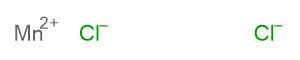
Manganese chloride
CAS No. 7773-01-5
Manganese chloride( —— )
Catalog No. M19828 CAS No. 7773-01-5
Manganese chloride inhibits proliferation in a dose- and time-dependent manner induces G0/G1 and S phase arrest and apoptosis in A549 cells.
Purity : >98% (HPLC)
 COA
Datasheet
HNMR
HPLC
MSDS
Handing Instructions
COA
Datasheet
HNMR
HPLC
MSDS
Handing Instructions
| Size | Price / USD | Stock | Quantity |
| 10MG | 49 | In Stock |


|
| 25MG | 76 | In Stock |
|
| 50MG | 115 | In Stock |
|
| 100MG | Get Quote | In Stock |
|
| 200MG | Get Quote | In Stock |
|
| 500MG | Get Quote | In Stock |
|
| 1G | Get Quote | In Stock |
|
Biological Information
-
Product NameManganese chloride
-
NoteResearch use only, not for human use.
-
Brief DescriptionManganese chloride inhibits proliferation in a dose- and time-dependent manner induces G0/G1 and S phase arrest and apoptosis in A549 cells.
-
DescriptionManganese chloride inhibits proliferation in a dose- and time-dependent manner induces G0/G1 and S phase arrest and apoptosis in A549 cells.
-
In Vitro——
-
In Vivo——
-
Synonyms——
-
PathwayApoptosis
-
TargetApoptosis
-
RecptorApoptosis
-
Research Area——
-
Indication——
Chemical Information
-
CAS Number7773-01-5
-
Formula Weight125.84
-
Molecular FormulaCl2Mn
-
Purity>98% (HPLC)
-
SolubilityWater:794.7 mM
-
SMILES[Cl-].[Cl-].[Mn++]
-
Chemical Name——
Shipping & Storage Information
-
Storage(-20℃)
-
ShippingWith Ice Pack
-
Stability≥ 2 years
Reference
1.Zhao P et al. Manganese chloride-induced G0/G1 and S phase arrest in A549 cells. Toxicology. 2008 Aug 19;250(1):39-46.
molnova catalog



related products
-
Mitoguazone
Mitoguazone (Methyl-GAG) is a selective S-adenosyl-methionine decarboxylase inhibitor that penetrates the blood-brain barrier and disrupts polyamine biosynthesis.
-
Resolvin D1
Resolvin D1 (RvD1) is an endogenous pro-inflammatory mediator that blocks pro-inflammatory neutrophil migration by regulating actin polymerization.
-
Ginsenoside F5
Ginsenoside F5 is a natural product from Panax ginseng C. A. Mey, remarkably inhibits the growth of HL-60 cells by the apoptosis pathway.
