


 Cart
Cart
 sales@molnova.com



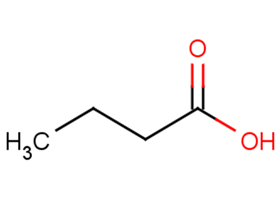
Butyric acid
CAS No. 107-92-6
Butyric acid( Butanoic acid )
Catalog No. M19749 CAS No. 107-92-6
Butyric acid is a fatty acid isolated from many dairy products that exhibits anticancer activity. Butyric acid inhibits histone deacetylases (HDACs) and induces apoptosis and G1 phase cell cycle arrest in glioma cells.
Purity : >98% (HPLC)
 COA
Datasheet
HNMR
HPLC
MSDS
Handing Instructions
COA
Datasheet
HNMR
HPLC
MSDS
Handing Instructions
| Size | Price / USD | Stock | Quantity |
| 100MG | Get Quote | Get Quote |


|
| 200MG | Get Quote | Get Quote |
|
| 500MG | Get Quote | Get Quote |
|
| 1G | Get Quote | Get Quote |
|
Biological Information
-
Product NameButyric acid
-
NoteResearch use only, not for human use.
-
Brief DescriptionButyric acid is a fatty acid isolated from many dairy products that exhibits anticancer activity. Butyric acid inhibits histone deacetylases (HDACs) and induces apoptosis and G1 phase cell cycle arrest in glioma cells.
-
DescriptionButyric acid is a fatty acid isolated from many dairy products that exhibits anticancer activity. Butyric acid inhibits histone deacetylases (HDACs) and induces apoptosis and G1 phase cell cycle arrest in glioma cells. Additionally butyric acid stimulates epithelial cell proliferation at low doses and inhibits proliferation at high doses.
-
In VitroButyric acid is a HDAC inhibitor. Butyric acid induces morphological changes, inhibits cell proliferation and impairs cell viability in NPC cells. Sodium Butyrate (1, 5, 10 mM) is cytotoxic to NPC cells, inducing a dose- and time-dependent decrease in cell viability, in both 5-8F and 6-10B cells. Sodium Butyrate induces nasopharyngeal carcinoma cell apoptosis by activating the mitochondrial apoptotic axis. Moreover, SOCE inhibition and disruption of the CRAC channel can attenuate the apoptosis induced by Sodium Butyrate. Sodium butyrate significantly decreases cell viability, accompanied by reduced levels of p-mTOR and PCNA protein. Sodium butyrate dose-dependently induces cell cycle arrest in G0/G1 phase and reduces the numbers of cells in S phase. In addition, relative expression of p21, p27, and pro-apoptosis bak genes, and protein levels of p21Waf1/Cip1, p27Kip1, cyclinD3, CDK4, and Cleave-caspase3 are increased by higher concentrations of sodium butyrate (1, 5, 10 mM), and the levels of cyclin D1 and CDK6 are reduced by 5 and 10 mM butyrate.
-
In VivoSodium Butyrate (300 mg/kg, s.c.) provides almost complete neuroprotection in comparison with non-treated animals. Sodium butyrate results in an increased number of microglial cells to 150% of vehicle-treated animals in the ipsilateral side. Sodium butyrate promotes the polarization of microglia from M1- to M2-like phenotype after neonatal hypoxia-ischemia. Sodium butyrate (300 mg/kg, s.c.) in combination with AK-7 (20 mg/kg, i.p.) significantly alleviates this reduction of the time spent exploring new objects, ameliorates the reduction of the number of Ki67-positive cells and DCX-immunoreactive neuroblasts in the dentate gyrus of the mice. In addition, sodium butyrate reverses SIRT2-related age phenotypes.
-
SynonymsButanoic acid
-
PathwayProteasome/Ubiquitin
-
TargetEndogenous Metabolite
-
RecptorHuman Endogenous Metabolite
-
Research Area——
-
Indication——
Chemical Information
-
CAS Number107-92-6
-
Formula Weight88.11
-
Molecular FormulaC4H8O2
-
Purity>98% (HPLC)
-
SolubilityDMSO:10 mM
-
SMILESCCCC(O)=O
-
Chemical NameButanoic acid
Shipping & Storage Information
-
Storage(-20℃)
-
ShippingWith Ice Pack
-
Stability≥ 2 years
Reference
1.Mcmillan L Butcher S K Pongracz J et al. Opposing effects of butyrate and bile acids on apoptosis of human colon adenoma cells: differential activation of PKC and MAP kinases[J]. British Journal of Cancer 2003 88(5):748-753.
molnova catalog



related products
-
Squalene
Squalene is a natural organic compound originally obtained for commercial purposes primarily from shark liver oil though there are botanical sources as well including rice bran wheat germ and olives.
-
Petroselinic acid
Petroselinic acid is a monounsaturated omega-12 fatty acid found naturally in plant and animal oils and fats.
-
2-Ketoglutaric acid
2-Ketoglutaric acid is a key molecule in the tricarboxylic acid cycleis also connected to glutamic acid and glutamine metabolisms through the transamination reactions.
