


 Cart
Cart
 sales@molnova.com



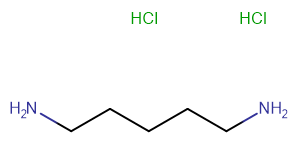
Cadaverine dihydrochloride
CAS No. 1476-39-7
Cadaverine dihydrochloride( Pentane-1 | 5-diamine dihydrochloride )
Catalog No. M19735 CAS No. 1476-39-7
Cadaverine dihydrochloride dihydrochloride salt of cadaverine (a diamine) is a biogenic amine
Purity : >98% (HPLC)
 COA
Datasheet
HNMR
HPLC
MSDS
Handing Instructions
COA
Datasheet
HNMR
HPLC
MSDS
Handing Instructions
| Size | Price / USD | Stock | Quantity |
| 1 mL x 10 mM in DMSO | 28 | In Stock |


|
| 100MG | Get Quote | In Stock |
|
| 200MG | 28 | In Stock |
|
| 500MG | Get Quote | In Stock |
|
| 1G | Get Quote | In Stock |
|
Biological Information
-
Product NameCadaverine dihydrochloride
-
NoteResearch use only, not for human use.
-
Brief DescriptionCadaverine dihydrochloride dihydrochloride salt of cadaverine (a diamine) is a biogenic amine
-
DescriptionCadaverine dihydrochloride dihydrochloride salt of cadaverine (a diamine) is a biogenic amine.
-
In Vitro——
-
In Vivo——
-
SynonymsPentane-1 | 5-diamine dihydrochloride
-
PathwayProteasome/Ubiquitin
-
TargetEndogenous Metabolite
-
RecptorHuman Endogenous Metabolite
-
Research Area——
-
Indication——
Chemical Information
-
CAS Number1476-39-7
-
Formula Weight175.1
-
Molecular FormulaC5H16Cl2N2
-
Purity>98% (HPLC)
-
SolubilityDMSO:28.8 mM
-
SMILESCl.Cl.NCCCCCN
-
Chemical Name——
Shipping & Storage Information
-
Storage(-20℃)
-
ShippingWith Ice Pack
-
Stability≥ 2 years
Reference
1.Ramaswamy S. & Muthy M. (1992). Crystal structure of cadaverine dihydrochloride monohydrate.?Indian J Biochem Biophys?29(5) 402-6.
molnova catalog



related products
-
N2,N2-Dimethylguanos...
N2,N2-Dimethylguanosine is an urinary nucleoside. The mean levels of urinary N2,N2-Dimethylguanosine in patients with colorectal cancer are significantly higher than those in patients with intestinal villous adenoma or healthy adults.
-
Allolithocholic acid
Allolithocholic acid (allo-LCA) is found in the urine of infants with biliary atresia and is often excreted as sulfate-conjugated bile acids.Allolithocholic acid promotes intestinal and hepatic metabolism.
-
Palmitoyl CoA lithiu...
Palmitoyl CoA lithium (Palmitoyl coenzyme A lithium) is a major component of fatty acids involved in the carnitine shuttle system, beta-oxidation, and the tricarboxylic acid cycle, and can be used to study metabolic disorders in the body.
