


 Cart
Cart
 sales@molnova.com



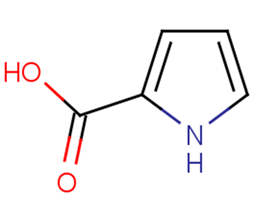
Pyrrole-2-carboxylic acid
CAS No. 634-97-9
Pyrrole-2-carboxylic acid( 2-Pyrrolecarboxylic acid | Minaline )
Catalog No. M19652 CAS No. 634-97-9
Pyrrole-2-carboxylic acid was first identified as a degradation product of sialic acids then as a derivative of the oxidation of the D-hydroxyproline isomers by mammalian D-amino acid oxidase.
Purity : >98% (HPLC)
 COA
Datasheet
HNMR
HPLC
MSDS
Handing Instructions
COA
Datasheet
HNMR
HPLC
MSDS
Handing Instructions
| Size | Price / USD | Stock | Quantity |
| 1 mL x 10 mM in DMSO | 28 | In Stock |


|
| 100MG | Get Quote | In Stock |
|
| 200MG | Get Quote | In Stock |
|
| 500MG | 37 | In Stock |
|
| 1G | 43 | In Stock |
|
Biological Information
-
Product NamePyrrole-2-carboxylic acid
-
NoteResearch use only, not for human use.
-
Brief DescriptionPyrrole-2-carboxylic acid was first identified as a degradation product of sialic acids then as a derivative of the oxidation of the D-hydroxyproline isomers by mammalian D-amino acid oxidase.
-
DescriptionPyrrole-2-carboxylic acid was first identified as a degradation product of sialic acids then as a derivative of the oxidation of the D-hydroxyproline isomers by mammalian D-amino acid oxidase. The latter relationship results from the lability of the direct oxidation product A'-pyrroline-4-hydroxy-2-carboxylic acid which loses water spontaneously to form the pyrrole. A similar reaction is catalyzed by the more specific allohydroxy-D-proline oxidase of Pseudomonas. In whole animal observations pyrrole-2-carboxylate (PCA) ' was identified in rat or human urine after administration of the D-isomers of hydroxyproline a finding ascribable to the action of D-amino acid oxidase. Urinary excretion of N-(pyrrole-2-carboxyl) glycine has been reported in a 5-year-old affected with type II hyperprolinemia; The child has mild developmental delay recurrent seizures of the grand mal type and EEG alterations.
-
In Vitro——
-
In Vivo——
-
Synonyms2-Pyrrolecarboxylic acid | Minaline
-
PathwayProteasome/Ubiquitin
-
TargetEndogenous Metabolite
-
RecptorEndogenous Metabolite
-
Research Area——
-
Indication——
Chemical Information
-
CAS Number634-97-9
-
Formula Weight111.1
-
Molecular FormulaC5H5NO2
-
Purity>98% (HPLC)
-
SolubilityDMSO:10uM;Methanol: Soluble
-
SMILESOC(=O)c1ccc[nH]1
-
Chemical Name——
Shipping & Storage Information
-
Storage(-20℃)
-
ShippingWith Ice Pack
-
Stability≥ 2 years
Reference
1.He XX et al. Pelopuradazole a new imidazole derivative alkaloid from the marine bacteria Pelomonas puraquae sp. nov. Nat Prod Res. 2014;28(9):680-2.
molnova catalog



related products
-
Ochratoxin B
Ochratoxin B is produced by a variety of Aspergillus and Penicillium species and is an analog of the mycotoxin Ochratoxin A, which can contaminate agricultural products.
-
4-Hydroxyphenylaceto...
4-Hydroxyphenylacetonitrile shows strong antioxidative activity. 4-Hydroxyphenylacetonitrile showed strong antioxidative activity evaluated by the ferric thiocyanate method.
-
Butyric acid
Butyric acid is a fatty acid isolated from many dairy products that exhibits anticancer activity. Butyric acid inhibits histone deacetylases (HDACs) and induces apoptosis and G1 phase cell cycle arrest in glioma cells.
