


 Cart
Cart
 sales@molnova.com



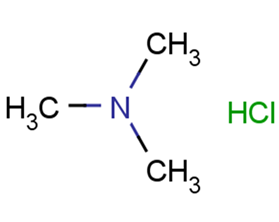
Trimethylamine hydrochloride
CAS No. 593-81-7
Trimethylamine hydrochloride( —— )
Catalog No. M19642 CAS No. 593-81-7
Trimethylamine is a product of decomposition of plants and animals. It is the substance mainly responsible for the fishy odor often associated with fouling fish bacterial vagina infections and bad breath. It is also associated with taking large doses of choline.
Purity : >98% (HPLC)
 COA
Datasheet
HNMR
HPLC
MSDS
Handing Instructions
COA
Datasheet
HNMR
HPLC
MSDS
Handing Instructions
| Size | Price / USD | Stock | Quantity |
| 1 mL x 10 mM in DMSO | 28 | In Stock |


|
| 50MG | 49 | In Stock |
|
| 100MG | Get Quote | In Stock |
|
| 200MG | Get Quote | In Stock |
|
| 500MG | Get Quote | In Stock |
|
| 1G | Get Quote | In Stock |
|
Biological Information
-
Product NameTrimethylamine hydrochloride
-
NoteResearch use only, not for human use.
-
Brief DescriptionTrimethylamine is a product of decomposition of plants and animals. It is the substance mainly responsible for the fishy odor often associated with fouling fish bacterial vagina infections and bad breath. It is also associated with taking large doses of choline.
-
DescriptionTrimethylamine is a product of decomposition of plants and animals. It is the substance mainly responsible for the fishy odor often associated with fouling fish bacterial vagina infections and bad breath. It is also associated with taking large doses of choline . Trimethylaminuria is a genetic disorder in which the body is unable to metabolize trimethylamine from food sources. Patients develop a characteristic fish odour of their sweat urine and breath after the consumption of choline-rich foods. Trimethylaminuria is an autosomal recessive disorder involving a trimethylamine oxidase deficiency. Trimethylaminuria has also been observed in a certain breed of Rhode Island Red chicken that produces eggs with a fishy smell . Trimethylamine in the urine is a biomarker for the consumption of legumes.
-
In Vitro——
-
In Vivo——
-
Synonyms——
-
PathwayOthers
-
TargetOther Targets
-
RecptorOthers
-
Research Area——
-
Indication——
Chemical Information
-
CAS Number593-81-7
-
Formula Weight95.57
-
Molecular FormulaC3H10ClN
-
Purity>98% (HPLC)
-
SolubilityDMSO:10 mM
-
SMILESCl.CN(C)C
-
Chemical Name——
Shipping & Storage Information
-
Storage(-20℃)
-
ShippingWith Ice Pack
-
Stability≥ 2 years
Reference
1.Nicholson J K Foxall P J D Spraul M et al. 750 MHz 1H and 1H-13C NMR Spectroscopy of Human Blood Plasma[J]. Analytical Chemistry 1995 67(5):793-811.
molnova catalog



related products
-
Guaifenesin
Guaifenesin is an expectorant that also has some muscle relaxing action.
-
(Tyr0)-Apelin-13 (hu...
(Tyr0)-Apelin-13 (human, bovine, mouse, rat)
-
H-Cys-Ser-Arg-Ala-Ar...
PA22-2 (free acid) (Cys-Laminin A chain 2091-2108) is a peptide that supports neurite outgrowth and stimulates neuronal-like process formation. PA22-2 (free acid) can be used to culture human adenoid cystic carcinoma cells, and in the preparation of peptide-functionalized supported phospholipid bilayers.
