


 Cart
Cart
 sales@molnova.com



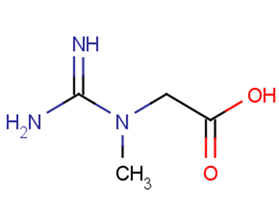
Creatine
CAS No. 57-00-1
Creatine( Methylguanidoacetic acid )
Catalog No. M19635 CAS No. 57-00-1
Creatine is an amino acid that occurs in vertebrate tissues and in urine. In muscle tissue creatine generally occurs as phosphocreatine.
Purity : >98% (HPLC)
 COA
Datasheet
HNMR
HPLC
MSDS
Handing Instructions
COA
Datasheet
HNMR
HPLC
MSDS
Handing Instructions
| Size | Price / USD | Stock | Quantity |
| 100MG | Get Quote | In Stock |


|
| 200MG | Get Quote | In Stock |
|
| 500MG | 39 | In Stock |
|
| 1G | 41 | In Stock |
|
Biological Information
-
Product NameCreatine
-
NoteResearch use only, not for human use.
-
Brief DescriptionCreatine is an amino acid that occurs in vertebrate tissues and in urine. In muscle tissue creatine generally occurs as phosphocreatine.
-
DescriptionCreatine is an amino acid that occurs in vertebrate tissues and in urine. In muscle tissue creatine generally occurs as phosphocreatine. Creatine is excreted as creatinine in the urine. Creatine functions as part of the cell's energy shuttle. The high energy phosphate group of ATP is transferred to creatine to form phosphocreatine in the following reaction: Cr + ATP <-> PCr + ADP. This reaction is reversibly catalyzed by creatine kinase. In the human body creatine is synthesized mainly in the liver by the use of parts from three different amino acids: arginine glycine and methionine. 95% of it is later stored in the skeletal muscles and the rest is stored in the brain heart and testes.
-
In Vitro——
-
In Vivo——
-
SynonymsMethylguanidoacetic acid
-
PathwayProteasome/Ubiquitin
-
TargetEndogenous Metabolite
-
RecptorEndogenous Metabolite
-
Research AreaNeurological Disease
-
IndicationAmyotrophic lateral sclerosis; Huntington's disease; Metabolic disorders; Neuromuscular disorders; Parkinson's disease
Chemical Information
-
CAS Number57-00-1
-
Formula Weight131.13
-
Molecular FormulaC4H9N3O2
-
Purity>98% (HPLC)
-
SolubilityDMSO:10uM;Water:24 mg/mL(183 mM)
-
SMILESCN(CC(O)=O)C(N)=N
-
Chemical NameGlycine N-(aminoiminomethyl)-N-methyl-
Shipping & Storage Information
-
Storage(-20℃)
-
ShippingWith Ice Pack
-
Stability≥ 2 years
Reference
1.Subramanian A Gupta A Saxena S et al. Proton MR CSF analysis and a new software as predictors for the differentiation of meningitis in children[J]. NMR in biomedicine 2005 18(4):213-225.
molnova catalog



related products
-
Ethyl nonanoate
Ethyl nonanoate (Ethyl pelargonate) is an abundant ester in spirits, and its presence is usually associated with the aroma of alcoholic beverages.
-
3-Methyl-2-oxovaleri...
3-Methyl-2-oxovaleric acid is an abnormal metabolite that arises from the incomplete breakdown of branched-chain amino acids. 3-Methyl-2-oxovaleric acid is a neurotoxin an acidogen and a metabotoxin. A neurotoxin causes damage to nerve cells and nerve tissues.
-
Phosphocholine chlor...
Phosphorylcholine is a small haptenic molecule is found in a wide variety of organisms. Human hepatic tumors undergo an elevation in the concentration of phosphorylcholine as the principal metabolic change is observed .
