


 Cart
Cart
 sales@molnova.com



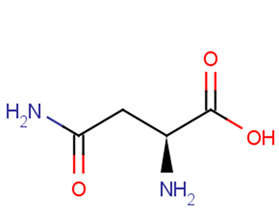
L-Asparagine
CAS No. 70-47-3
L-Asparagine( Asparagine | Altheine | Agedoite | L-Asparagine | NSC 82391 )
Catalog No. M19019 CAS No. 70-47-3
L-asparagine is a non-essential amino acid that is involved in the metabolic control of cell functions in nerve and brain tissue.
Purity : >98% (HPLC)
 COA
Datasheet
HNMR
HPLC
MSDS
Handing Instructions
COA
Datasheet
HNMR
HPLC
MSDS
Handing Instructions
| Size | Price / USD | Stock | Quantity |
| 100MG | 37 | In Stock |


|
| 200MG | Get Quote | In Stock |
|
| 500MG | 86 | In Stock |
|
| 1G | 124 | In Stock |
|
Biological Information
-
Product NameL-Asparagine
-
NoteResearch use only, not for human use.
-
Brief DescriptionL-asparagine is a non-essential amino acid that is involved in the metabolic control of cell functions in nerve and brain tissue.
-
DescriptionAsparagine is a non-essential amino acid that is involved in the metabolic control of cell functions in nerve and brain tissue. It is biosynthesized from ASPARTIC ACID and AMMONIA by asparagine synthetase.
-
In Vitro——
-
In Vivo——
-
SynonymsAsparagine | Altheine | Agedoite | L-Asparagine | NSC 82391
-
PathwayGPCR/G Protein
-
TargetAntibacterial
-
RecptorOthers
-
Research Area——
-
Indication——
Chemical Information
-
CAS Number70-47-3
-
Formula Weight132.11
-
Molecular FormulaC4H8N2O3
-
Purity>98% (HPLC)
-
SolubilityH2O : 6.67 mg/mL 50.48 mM
-
SMILESC(C(C(=O)O)N)C(=O)N
-
Chemical NameL-asparagine
Shipping & Storage Information
-
Storage(-20℃)
-
ShippingWith Ice Pack
-
Stability≥ 2 years
Reference
molnova catalog



related products
-
Durlobactam
Durlobactam is a novel beta-lactamase inhibitor for treatment of resistant bacterial infections.
-
Fenpropidin
Fenpropidin, a fungicide, is a specific inhibitor of sterol 14-reductase and biosynthesis.
-
LolCDE-IN-1
LolCDE-IN-1 is an inhibitor of the Lol proteins (LolCDE) complex with antibacterial activity.
