


 Cart
Cart
 sales@molnova.com



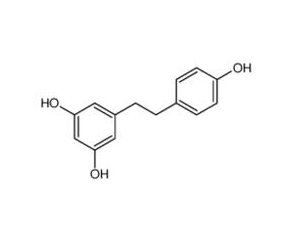
Dihydroresveratrol
CAS No. 58436-28-5
Dihydroresveratrol( Dihydroresveratrol | Di-hydroresveratrol )
Catalog No. M18846 CAS No. 58436-28-5
Dihydroresveratrol is a major metabolite of resveratrol that is produced by animal-associated bacteria, including the gut microbiota. Dihydroresveratrol and dihydroresveratrol monosulfate are detectable in urine.
Purity : >98% (HPLC)
 COA
Datasheet
HNMR
HPLC
MSDS
Handing Instructions
COA
Datasheet
HNMR
HPLC
MSDS
Handing Instructions
| Size | Price / USD | Stock | Quantity |
| 1 mL x 10 mM in DMSO | 50 | In Stock |


|
| 2MG | 29 | In Stock |
|
| 5MG | 49 | In Stock |
|
| 10MG | 81 | In Stock |
|
| 25MG | 147 | In Stock |
|
| 50MG | 231 | In Stock |
|
| 100MG | 347 | In Stock |
|
| 200MG | 511 | In Stock |
|
| 500MG | Get Quote | In Stock |
|
| 1G | Get Quote | In Stock |
|
Biological Information
-
Product NameDihydroresveratrol
-
NoteResearch use only, not for human use.
-
Brief DescriptionDihydroresveratrol is a major metabolite of resveratrol that is produced by animal-associated bacteria, including the gut microbiota. Dihydroresveratrol and dihydroresveratrol monosulfate are detectable in urine.
-
DescriptionDihydroresveratrol is a major metabolite of resveratrol that is produced by animal-associated bacteria, including the gut microbiota. Dihydroresveratrol and dihydroresveratrol monosulfate are detectable in urine. The physiological effects of dihydroresveratrol have not been investigated.
-
In VitroTreatment with 0.1 nM-0.1 μM of Dihydroresveratrol significantly increases the growth of PC-3 prostate cancer cells.
-
In Vivo——
-
SynonymsDihydroresveratrol | Di-hydroresveratrol
-
PathwayOthers
-
TargetOther Targets
-
RecptorOthers
-
Research Area——
-
Indication——
Chemical Information
-
CAS Number58436-28-5
-
Formula Weight230.3
-
Molecular FormulaC14H14O3
-
Purity>98% (HPLC)
-
SolubilityIn Vitro:?DMSO : 100 mg/mL (434.29 mM)
-
SMILESc1cc(ccc1CCc1cc(cc(c1)O)O)O
-
Chemical Name5-[2-(4-Hydroxyphenyl)ethyl]benzene-1,3-diol
Shipping & Storage Information
-
Storage(-20℃)
-
ShippingWith Ice Pack
-
Stability≥ 2 years
Reference
1.?Jung, C.M.,Heinze, T.M.,Schnackenberg, L.K.,?et al.?Interaction of dietary resveratrol with animal-associated bacteria.?FEMS Microbiology Letters. 2009, 297(2),?266-273.
molnova catalog



related products
-
Methyl mycophenolate
Methyl mycophenolate is found in the marine fungus Phaeosphaeria spartinae. Methyl mycophenolate is the methyl ester form of mycophenolic acid.
-
Notoginsenoside R4
Notoginsenoside R4 is a natural product for research related to life sciences.
-
Dimiracetam
Dimiracetam (NT-11624) is an orally active anti-neuropathy compound that inhibits hypersensitivity and neurological alterations and may be used in the study of cognitive disorders, depression and neuropathic pain.
