


 Cart
Cart
 sales@molnova.com



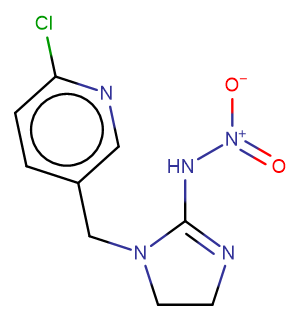
Imidacloprid
CAS No. 138261-41-3
Imidacloprid( —— )
Catalog No. M20535 CAS No. 138261-41-3
Imidacloprid is a systemic chloronicotinyl insecticide which can be effectively used in agriculture to control pests .
Purity : >98% (HPLC)
 COA
Datasheet
HNMR
HPLC
MSDS
Handing Instructions
COA
Datasheet
HNMR
HPLC
MSDS
Handing Instructions
| Size | Price / USD | Stock | Quantity |
| 1 mL x 10 mM in DMSO | 43 | In Stock |


|
| 50MG | 36 | In Stock |
|
| 100MG | 49 | In Stock |
|
| 200MG | 75 | In Stock |
|
| 500MG | Get Quote | In Stock |
|
| 1G | Get Quote | In Stock |
|
Biological Information
-
Product NameImidacloprid
-
NoteResearch use only, not for human use.
-
Brief DescriptionImidacloprid is a systemic chloronicotinyl insecticide which can be effectively used in agriculture to control pests .
-
DescriptionImidacloprid is a systemic chloronicotinyl insecticide which can be effectively used in agriculture to control pests .
-
In Vitro——
-
In Vivo——
-
Synonyms——
-
PathwayOthers
-
TargetOther Targets
-
RecptorOthers
-
Research Area——
-
Indication——
Chemical Information
-
CAS Number138261-41-3
-
Formula Weight255.66
-
Molecular FormulaC9H10ClN5O2
-
Purity>98% (HPLC)
-
SolubilityDMSO:300 mg/mL (1173.43 mM)
-
SMILES[O-][N+](=O)NC1=NCCN1Cc1ccc(Cl)nc1
-
Chemical Name1-(6-Chloropyridin-3-ylmethyl)-N-nitroimidazolidin-2-ylidenamine
Shipping & Storage Information
-
Storage(-20℃)
-
ShippingWith Ice Pack
-
Stability≥ 2 years
Reference
1.Kim J Park Y Yoon K S et al. Imidacloprid a neonicotinoid insecticide induces insulin resistance[J]. The Journal of Toxicological Sciences 2013 38(5):655-660.
molnova catalog



related products
-
CucurbitacinI
CucurbitacinI
-
Ursonic Acid
Ursonic acid belongs to the family of Ursane Triterpenes whose structure is based on the pentacyclic ursane skeleton. It has potential as HIV-1 Protease Inhibitor.
-
Quinocetone
Quinocetone is an animal growth promoter?and potential anti-tumor activity.
